Qatar Medical Licensing: DHP, PSV and Prometric

Qatar healthcare licensing starts with a simple question: what exact scope of practice will you apply for? A nurse, general practitioner, pharmacist, dentist and physiotherapist do not follow one interchangeable checklist. The Department of Healthcare Professions (DHP), within Qatar’s Ministry of Public Health, regulates registration and licensing, while approved verification providers check credentials and Prometric delivers qualifying examinations where a scope requires one. Treating those as one step is the fastest way to create avoidable delays.
This refreshed guide replaces broad claims and old “QCHP” shortcuts with a current, source-led workflow. It is designed to help you organise the process, not to promise eligibility. DHP can assess individual cases differently, and the live profession guideline should always overrule a recruiter’s message, a social-media checklist or an older blog post.
Confirm your DHP scope first. Then verify the right documents, check whether an examination applies, and only then build your application plan.
The quick answer: DHP, PSV and Prometric do different jobs
DHP is the regulator. Its Registration and Licensing Section evaluates healthcare practitioners and maintains profession-specific teams for physicians, dentists, nurses, pharmacists and allied healthcare practitioners. The current DHP registration overview explains that the department verifies qualifications, experience and other licensing requirements (accessed 21 October 2026).
Primary source verification (PSV) checks credentials with their issuers. DHP’s current PSV page says the verification report should be obtained before registration or evaluation and attached to the online application (accessed 21 October 2026). The same page currently presents DataFlow, Quadrabay and Approved Verification Services as approved routes. This means “PSV is required” is a better rule than “every applicant must use one particular provider”.
Prometric is the examination delivery company. DHP’s qualifying-examination page lists the scopes for which a computer-based examination applies, while the Prometric DHP page handles scheduling information (both accessed 21 October 2026). Some scopes or credentials may follow an exemption or case-by-case route, so do not book from an unofficial checklist.
What current Qatar posting data shows
Licensing preparation matters because regulated roles appear across several parts of Qatar’s job market. A live aggregate query on 21 October 2026 found 408 healthcare-related title matches among 13,394 active Qatar postings scraped in the trailing 30 days. This is based on postings tracked by Base Career and a transparent title-keyword classification; it is not a count of unique vacancies, a forecast, or proof that every posting offers sponsorship.
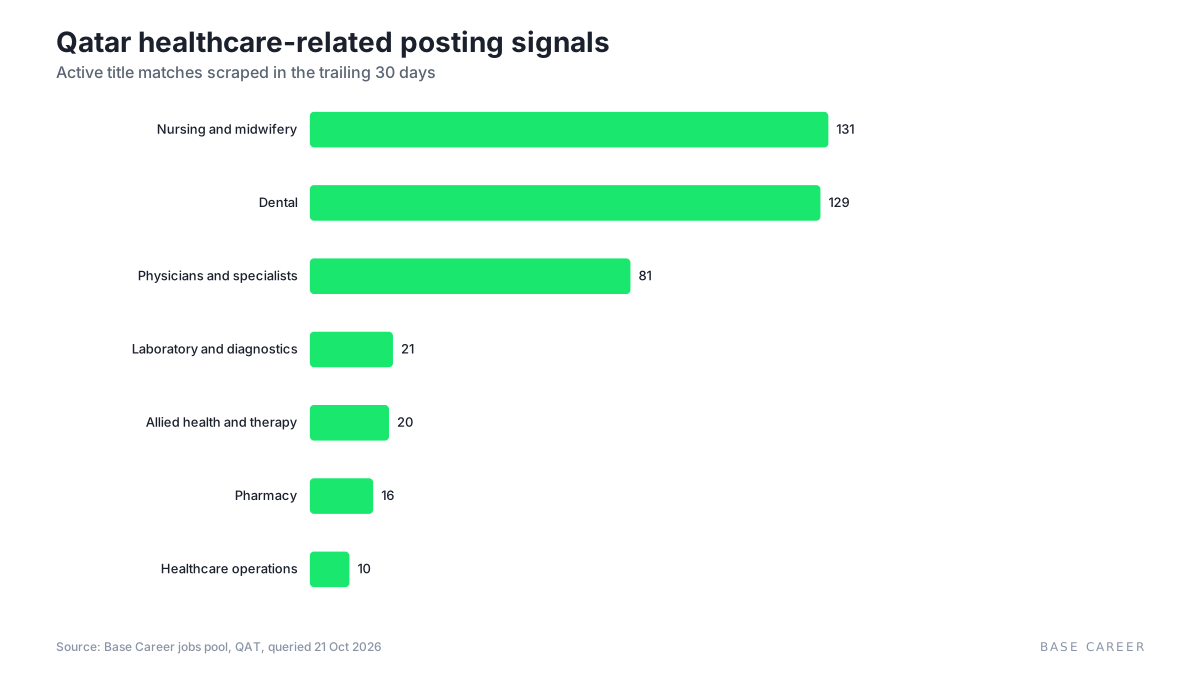
The largest matching groups were nursing and midwifery with 131 postings, dental with 129, and physicians and medical specialists with 81. Laboratory and diagnostics accounted for 21, allied health and therapy for 20, pharmacy for 16, and healthcare operations for 10. Use these figures as search-direction signals only. A job title may be classified differently by the employer, and DHP eligibility depends on your actual education, registration, experience and intended scope—not on the wording of an advert.
A safer Qatar medical-licensing workflow
Step one: identify the exact scope before paying anyone
Start on DHP’s guidelines and useful links page, which links separate current guidance for physicians, dentists, nurses, pharmacists and allied healthcare practitioners (accessed 21 October 2026). Match the role offered by the facility to the closest DHP scope. If an advert says only “medical staff”, “technician” or “therapist”, ask the employer for the intended DHP title before beginning verification.
This distinction changes the document set, experience test and examination route. The current nursing guideline and physician guideline each contain their own evaluation, temporary-licence, licensing and renewal pathways (accessed 21 October 2026). A checklist copied from one profession is not a safe substitute for another.
Step two: build one consistent evidence file
Create a private working folder for the documents named in your profession guideline. Common categories include identity, academic qualifications and transcripts, professional registrations, recent experience evidence, a curriculum vitae, and any scope-specific certificates. The exact list can vary, so use the live DHP document rather than collecting every item mentioned in third-party forums.
- Use the same name order and spelling across your passport, qualification, professional licence and experience records.
- Keep original files unedited and make clear scans; do not recreate stamps, signatures or dates.
- Record the issuing institution’s current contact details separately so a verifier can reach it.
- Check whether a document needs an official translation into Arabic or English under your profession guideline.
- Ask the intended employer which stage its representative must review or submit in the DHP system.
Name mismatches and incomplete employment dates are not cosmetic problems. PSV providers contact issuing bodies, and DHP reviews the resulting report. If a document is genuinely inconsistent, obtain a correction or a formal explanation from the issuer instead of editing the evidence yourself.
Step three: complete primary source verification through an approved route
DHP describes PSV as the process of checking education, training, experience and other professional credentials directly enough to establish that they are genuine. Its live PSV page says practitioners should complete verification before registration or evaluation. It also links the approved provider portals, which is the safest place to start because approved-provider arrangements can change.
DataFlow remains one approved option and its DHP service page describes verification as a prerequisite to registration and evaluation (accessed 21 October 2026). However, the regulator’s current page—not an advert or an old receipt—should decide which providers and packages are accepted when you apply.

“I kept getting rejections from London. Base Career rewrote my CV for Dubai, and I landed Emirates in 3 weeks.”
Sarah M. · Marketing Manager · UK 🇬🇧 → Dubai 🇦🇪
No credit card required
- Open the provider from the DHP page rather than from a sponsored search advert or forwarded payment link.
- Choose the DHP authority and the correct profession or package for the documents you need checked.
- Upload only genuine, complete records and monitor requests for clarification.
- Keep the submitted document list and report reference so you can reconcile it with your DHP application.
- Do not assume a previous Gulf verification automatically covers the Qatar authority or every document.
Step four: submit evaluation through the current DHP system
The DHP useful-links page points applicants to the current electronic registration and licensing system. Profession guidelines explain how evaluation requests move through the applicant, the employer representative where applicable, the registration team and the verification review. That workflow is why a candidate can have a completed PSV report but still not have a licence.
Before submission, compare every upload with the profession checklist. Confirm that the chosen scope, experience record and exam evidence—if applicable—tell the same story. If the employer is involved, agree who owns each follow-up. A returned application should be corrected against the stated comment, not resubmitted unchanged.
Step five: check the qualifying-exam rule for your exact scope
Prometric is not a universal first step. DHP’s live examination page lists general, specialty and dental examinations and also links its current exemption information. The correct question is not “Does Qatar use Prometric?” but “Does DHP require a qualifying examination for my scope and credentials?”
Use the DHP page for the exam title, blueprint, references and any exemption route. Use Prometric only after you know the correct programme and have the required eligibility information. Avoid sellers offering “guaranteed questions” or a bypass. Even when an examination is required, passing it does not replace credential verification, evaluation or final licensing.
Step six: separate evaluation from permission to practise
An evaluation outcome, an exam pass and a PSV report are supporting parts of a licensing pathway; none should be treated as permission to start clinical work by itself. The profession guidelines contain separate licensing requirements and, in some cases, employer or facility responsibilities. Confirm the live licence status before delivering patient care.
If your case does not fit the standard path—because of a break in practice, a supervised scope, a changed profession title or an unusual qualification—use the official DHP contact route rather than guessing. The current DHP website and profession guidance are the right starting points for case-specific direction.
How to combine licensing preparation with a job search
Do not wait for a perfect file before researching employers, but be precise about your status. A credible application can say that your scope has been identified, PSV is in progress, an exam is scheduled where applicable, or evaluation has been submitted. It should not say “DHP licensed” until that is true.
- Search by the exact profession title and likely DHP scope, not only by a broad word such as healthcare.
- Ask whether the facility is licensed and whether it supports the employer-representative stage of the application.
- Keep a version of your CV aligned with the dates and titles in your verification documents.
- Treat requests to pay an individual, use an unlisted verifier or begin clinical work before licensing as red flags.
- Track applications separately from regulator tasks so a recruiter conversation cannot overwrite your official evidence.
You can review current Qatar jobs on Base Career and compare the profession-specific detail in our prior guide to working in pharmacy in Qatar. Both internal links were verified live on 21 October 2026.
Common mistakes that create avoidable delays
Using “QCHP” search results without checking the date
QCHP is the former name still visible in old URLs, forum posts and some provider pages. Prometric’s current programme page explicitly identifies DHP as the authority formerly known as QCHP. The old acronym can help you find historical material, but the current DHP page should govern your application.
Treating DataFlow and PSV as identical terms
DataFlow is a provider; PSV is the regulatory verification requirement. DHP’s live page currently lists more than one approved provider. This difference matters when a candidate is told that “DataFlow is not needed”: the statement may only mean a different approved provider is being used, not that credential verification has disappeared.
Booking the wrong examination
Job titles used by employers do not always map neatly to DHP scopes. Booking before confirming the official scope can waste money and time. Check the DHP examination table and profession guideline first, then follow the authorised booking route.
Assuming one timeline or fee fits every application
Provider packages, document counts, profession routes, employer actions and DHP reviews differ. This guide therefore does not quote a universal budget or completion promise. Read the live provider checkout and DHP application screen immediately before payment, save the receipt, and treat unofficial fee tables as estimates rather than authority.
Working from inconsistent dates or titles
A CV written for marketing can still conflict with the evidence sent for PSV. Before submission, reconcile employer names, start and end dates, registration periods and qualification titles. If there is a legitimate gap or change, explain it honestly instead of smoothing it over.
A practical pre-submission checklist
- The exact DHP profession and scope match the intended job.
- The current profession guideline has been read from the DHP site.
- Passport name, qualifications, professional licences and experience records are consistent.
- PSV was started through a provider linked by DHP and covers the required documents.
- The qualifying-exam requirement or exemption route was checked for the exact scope.
- The employer-representative responsibility is clear where the workflow requires it.
- The application does not claim licensed status before DHP grants it.
- Receipts, report references and regulator messages are stored in one private tracker.
Frequently asked questions
Frequently Asked Questions
Is QCHP the same as DHP in Qatar?+
Is DataFlow mandatory for every Qatar healthcare applicant?+
Does every healthcare professional need a Prometric exam?+
Can I apply for jobs before completing DHP licensing?+
How long does Qatar medical licensing take?+
What should I do if a recruiter says no PSV is required?+
Sources checked for this refresh
All external sources below were accessed on 21 October 2026. Requirements can change, so reopen the official page before you submit or pay.
- DHP: Registration and Licensing
- DHP: Primary Source Verification
- DHP: Qualifying Examination
- DHP: Guidelines and Useful Links
- DHP: Guidelines for Nurses
- DHP: Guidelines for Physicians
- Prometric: Qatar DHP programme
- DataFlow: DHP verification service
- Qatar University: health-profession licensing application guidance
Base Career provides practical job-search information, not a licensing decision or legal advice. DHP and the approved provider reviewing your documents remain authoritative for your case.
Land 4x more interviews in 27 days. Join Base Career Today.
Track applications, tailor resumes, and follow up faster in one UAE job search system.
Start freeNo credit card required

James T.
Canada 🇨🇦 → Riyadh 🇸🇦
“50 applications, zero replies with my Canadian CV. Base Career got me 4 Riyadh interviews and a Series B offer.”
Written by Base Career Research Team
Produced by the Base Career Research Team with AI, using Base Career job-market data, and published automatically. How our articles are made
Related Posts

Is it Easy to Get a Job in Dubai From Overseas? The Honest Truth
Dreaming of a tax-free salary in Dubai but living abroad? We analyze the challenges of international applications and share a strategic roadmap for success.

Landing Your First Dubai Job: A Roadmap for Freshers and Graduates
Breaking into the UAE job market with zero experience is tough but not impossible. Here is your strategic roadmap to landing that first role in Dubai.