DHA to EASA: The Most Profitable Technical Licenses in the UAE
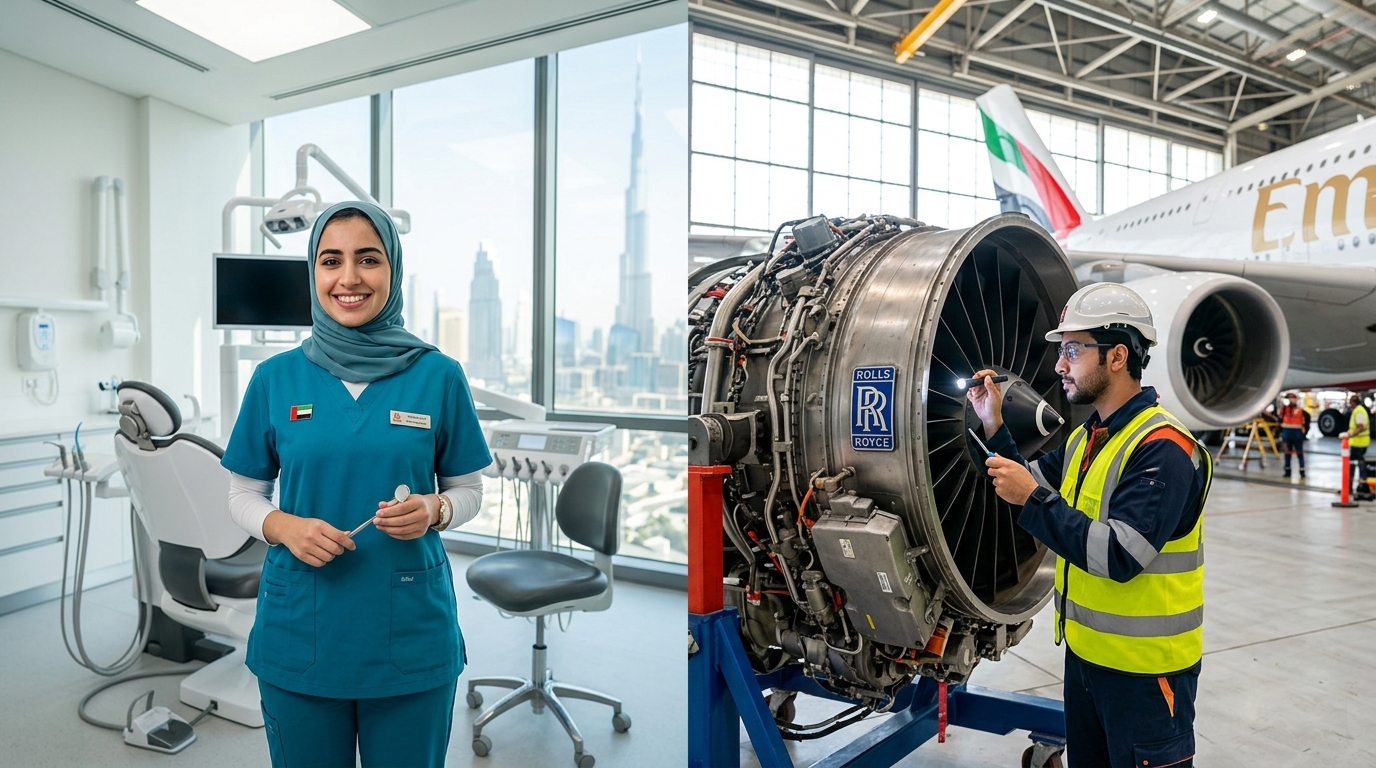
Dubai’s job market is notoriously competitive. Every single day, thousands of highly educated expatriates land in the UAE, armed with bachelor’s and master’s degrees, all competing for the same corporate roles. In this environment, academic inflation has made standard university degrees the bare minimum for entry. If you want to command a premium salary, avoid the endless cycle of resume rejections, and secure a role that offers long-term stability, you need something more tangible. You need a specialized technical license. Certifications that grant you immediate regulatory approval to perform specific, highly skilled tasks are the true currency of the UAE employment market.
This reality is especially prominent in highly regulated industries such as healthcare and aviation. A generic engineering or nursing degree proves that you have the theoretical knowledge, but a specialized license proves that you have the legal right to execute your job under UAE or international law. Employers in Dubai are increasingly shifting away from hiring raw potential and moving toward hiring plug-and-play professionals. They do not want to spend six months waiting for a candidate to clear local regulatory exams; they want someone who can legally bill hours, sign off on maintenance logs, or treat patients from day one.
Inspired by recurring discussions among job seekers regarding the immense value of becoming a #DHAAssistant or landing high-paying #AviationJobs, this comprehensive guide breaks down the high return on investment (ROI) of technical certifications. We will explore the exact costs, the rigorous exam processes, and the dramatic salary leaps associated with specialized licenses like the DHA (Dubai Health Authority) and EASA (European Union Aviation Safety Agency). By the end of this guide, you will understand why investing in these credentials is the most strategic career move you can make in the Middle East.
Why Specialized Technical Licenses Outperform General Degrees in Dubai
To understand the premium placed on technical licenses, you must look at the UAE job market from an employer's perspective. In heavily regulated sectors, an unlicensed employee is a liability and an overhead cost. If a major hospital hires a dental assistant or a nurse who does not yet possess a DHA license, that employee cannot legally touch a patient. They must be supervised, they cannot be billed out to insurance companies, and they consume the valuable time of senior staff. The company essentially pays a salary for someone who cannot fully perform their duties until their paperwork clears.
Conversely, when an employer hires a candidate who already holds the required local or international license, that employee begins generating revenue immediately. This is why recruiters are often instructed to filter out unlicensed candidates automatically, regardless of how prestigious their home-country university might be. In many ways, proving your compliance with local frameworks is more critical than your academic pedigree. In fact, for many technical fields, employers prioritize skills and specific regulatory requirements over generic degrees, especially when visas and local labor laws are factored into the hiring equation.
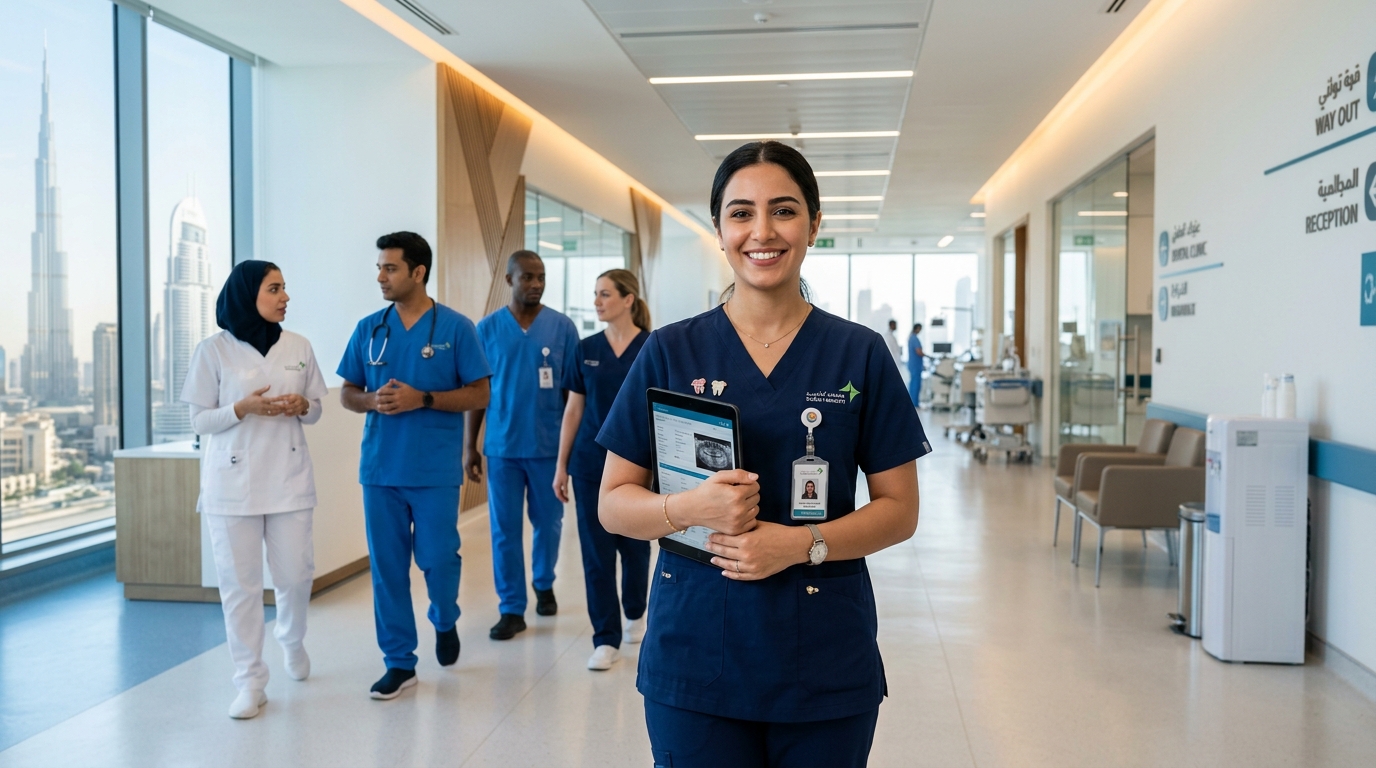
The DHA License: The Golden Ticket for UAE Healthcare Professionals
Dubai’s healthcare sector is experiencing exponential growth, driven by an expanding population, mandatory health insurance laws, and a booming medical tourism industry. From luxury dental clinics in Jumeirah to massive multi-specialty hospitals in Healthcare City, the demand for qualified staff is relentless. However, this demand is strictly for licensed professionals. The Dubai Health Authority (DHA) regulates all healthcare practices in the emirate, and obtaining a DHA license is the absolute prerequisite for doctors, nurses, allied health professionals, and dental assistants.
For many allied health workers, such as dental assistants or laboratory technicians, arriving in Dubai without a DHA license often leads to predatory job offers. Unlicensed candidates may be offered "trainee" or "receptionist" roles with salaries hovering around 3,000 to 4,000 AED per month. However, once that same individual passes the DHA exams and receives their eligibility letter, their market value skyrockets. A DHA-licensed dental assistant can easily command between 7,000 and 12,000 AED per month, depending on the clinic's prestige and the candidate's communication skills. Earning this license is one of the most effective methods for escaping the low salary trap in Dubai.
Step-by-Step Breakdown of the DHA Licensing Process
The process of obtaining a DHA license is rigorous but entirely transparent. It is designed to ensure that only competent, legitimately qualified professionals enter the #DubaiHealthcare system. The journey begins with a self-assessment on the Sheryan portal, DHA's online licensing system, to determine if your home-country qualifications meet Dubai's specific tier requirements.
The most time-consuming phase is the Primary Source Verification (PSV), conducted by a third-party agency called Dataflow. Dataflow contacts your university, your previous employers, and your home-country licensing board to verify that every document you submitted is authentic. This process prevents credential fraud and typically takes between 4 to 8 weeks. While you wait for your Dataflow report to clear, you can begin preparing for the Prometric exam.
The DHA Prometric exam is a computer-based multiple-choice test tailored to your specific specialty. For instance, a dental assistant will face questions on infection control, dental radiography, chairside assistance, and medical emergencies. The exam is conducted at designated testing centers globally, meaning you can often pass the exam before you even book your flight to the UAE. Once you pass the exam and your Dataflow report comes back positive, you are issued a DHA Eligibility Letter. This document proves to employers that you are ready to be fully licensed the moment they hire you, dramatically increasing your callback rate.

“I kept getting rejections from London. Base Career rewrote my CV for Dubai, and I landed Emirates in 3 weeks.”
Sarah M. · Marketing Manager · UK 🇬🇧 → Dubai 🇦🇪
No credit card required
EASA Certification: Fast-Tracking Aviation Engineering Careers
If the DHA license is the golden ticket for healthcare, the EASA Part-66 license is the crown jewel for the aviation sector. The UAE is a global aviation powerhouse. With Emirates, Etihad, FlyDubai, and Air Arabia operating massive, modern fleets, and the impending multi-billion dollar expansion of Al Maktoum International Airport (DWC), the demand for aircraft maintenance professionals is set to soar through 2030. However, commercial aviation is arguably the most strictly regulated industry on the planet. Airlines cannot afford mistakes, and they require highly certified engineers to maintain their fleets.
Many #EngineeringStudents graduate with aerospace or mechanical engineering degrees and assume they are ready to work on commercial jets. This is a misconception. A university degree provides engineering theory, but an EASA Part-66 license provides the legal authorization to perform and sign off on aircraft maintenance. Without this license, you are generally hired as an unlicensed mechanic or a helper, a role that comes with a lower salary and limited upward mobility. With an EASA B1 (Mechanical) or B2 (Avionics) license, you transition into the role of a Licensed Aircraft Engineer (LAE), a position that commands deep respect and a highly lucrative compensation package.
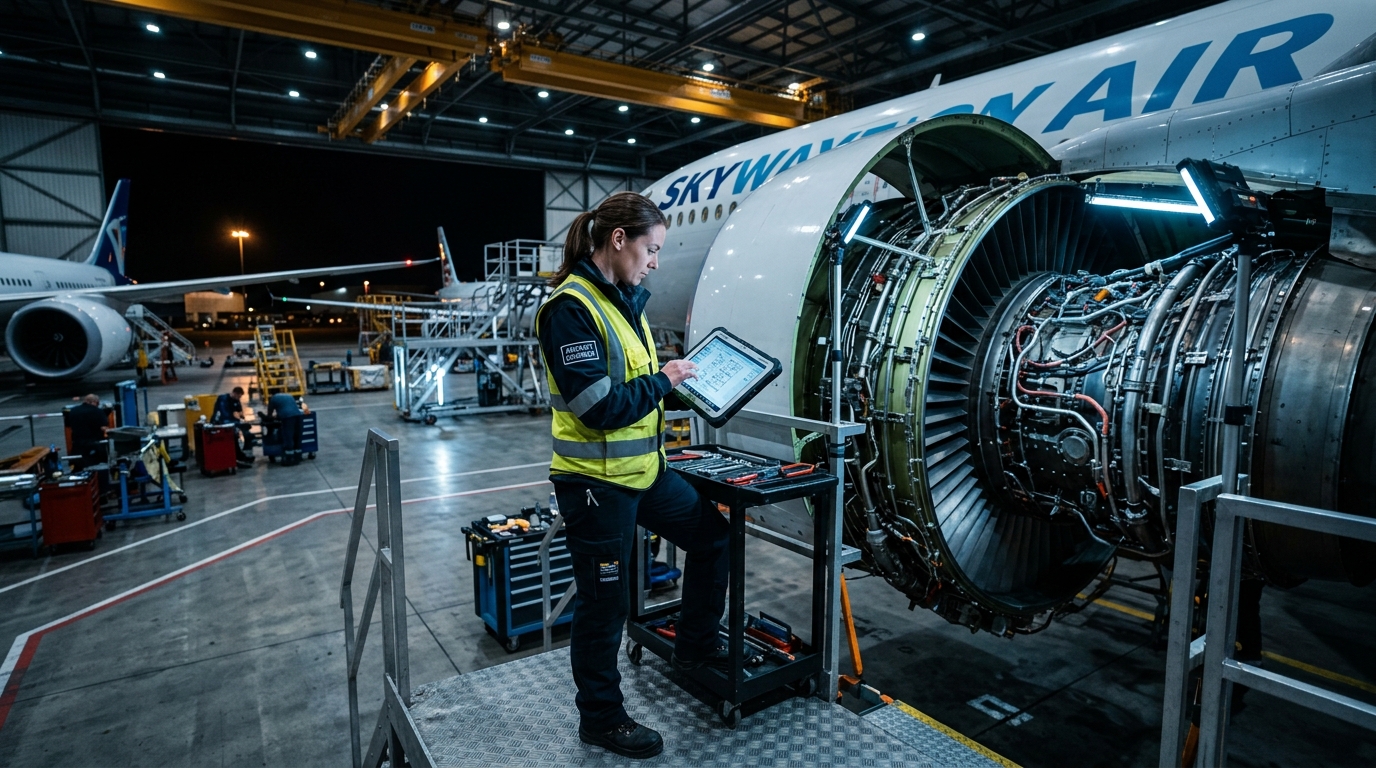
The Rigorous EASA Exam Process and Logbook Requirements
Obtaining an EASA license is not for the faint of heart. It is a grueling, multi-year process that requires intense dedication. The Part-66 syllabus is divided into 13 to 17 modules, depending on the specific category you are pursuing (such as airplanes with turbine engines vs. piston engines). These modules cover complex subjects ranging from aerodynamics and aircraft structures to digital techniques, human factors, and aviation legislation.
Candidates can self-study and sit for these modular exams at EASA-approved Part-147 training organizations, many of which have testing facilities right here in the UAE. Passing the exams is only half the battle. To be granted the actual license, you must also demonstrate practical experience. If you complete an approved basic training course, the experience requirement is reduced to two years. If you are self-studying as an independent mechanic, you must log three to five years of documented, hands-on maintenance experience in a real-world aviation environment. This dual requirement of theoretical mastery and practical execution is exactly why airlines place such a massive premium on EASA-certified engineers.
Cost-Benefit Analysis: Calculating Your Return on Investment (ROI)
When advising candidates on whether to pursue these specialized licenses, the conversation always comes down to the math. Are the upfront costs and the months of studying actually worth the financial return? Let's break down the return on investment for both the healthcare and aviation sectors.
For a DHA license, the initial financial outlay is relatively modest. The Dataflow verification fee is roughly 1,000 to 1,200 AED, the Prometric exam fee is approximately 800 to 1,000 AED, and minor translation or administrative fees might add another 500 AED. The total investment is usually under 3,000 AED. If an unlicensed assistant makes 4,000 AED a month, but a DHA eligibility letter bumps that starting salary to 8,000 AED, the candidate realizes a 4,000 AED monthly increase. This means the entire cost of the DHA licensing process pays for itself in the very first month of employment. Furthermore, possessing this ready-to-work status significantly reduces how long it takes to get hired, saving you months of expensive unemployment in Dubai.
The ROI for an EASA license is even more staggering, though the timeline is longer. Each of the 13 to 17 modular exams costs between 200 and 400 AED to sit for, meaning the pure examination costs can range from 3,000 to 6,000 AED. If you attend a specialized academy to prepare, tuition can run into the tens of thousands. However, the salary jump is life-changing. An unlicensed aviation mechanic in the GCC might earn between 5,000 and 8,000 AED. A fully licensed EASA B1 or B2 engineer working line maintenance for a major carrier can easily earn between 25,000 and 40,000+ AED per month, plus comprehensive family benefits, premium housing allowances, and flight tickets. The lifetime earning potential unlocked by an EASA license dwarfs the initial educational investment.

Other Highly Profitable Technical Licenses in the UAE
While healthcare and aviation provide the clearest examples of regulatory-driven salary premiums, they are not the only sectors where technical certifications reign supreme. If you are navigating your career in the Middle East, consider how these other high-yield licenses could transform your earning potential:
- NEBOSH IGC (Occupational Health & Safety): In the UAE's massive construction, oil & gas, and manufacturing sectors, safety is heavily regulated. The NEBOSH International General Certificate is the gold standard for Health, Safety, and Environment (HSE) professionals. Without it, breaking into safety management is nearly impossible. With it, HSE managers command highly lucrative packages.
- CISSP & CISA (Cybersecurity & IT Audit): Dubai is rapidly positioning itself as a global tech and smart-city hub. Corporate data protection is mandated by strict local laws. Holding high-level cybersecurity certifications like the CISSP proves to employers that you can safeguard their infrastructure against global threats, often resulting in salaries well over 30,000 AED for senior roles.
- RERA Certification (Real Estate): You cannot legally broker property transactions in Dubai without passing the Real Estate Regulatory Agency (RERA) exam. While it is a faster and cheaper process than EASA or DHA, it is the mandatory key that unlocks access to one of the most lucrative commission-based markets in the world.
Ultimately, the unifying theme across all these credentials is risk mitigation for the employer. Companies in the UAE operate in a fast-paced, high-stakes environment where regulatory non-compliance results in massive fines, operational shutdowns, or reputational damage. When you walk into an interview holding a DHA eligibility letter, an EASA logbook, or a NEBOSH certificate, you are not just presenting a piece of paper; you are presenting yourself as a risk-free, compliant, and immediately profitable asset.
As you plan your next career move, ensure you evaluate not just the jobs you want, but the structural barriers to entry for those roles. If you need a comprehensive overview of how to structure your job hunt, optimize your resume for these technical roles, and time your applications perfectly, be sure to review our complete guide to getting a job in Dubai.
Frequently Asked Questions
How much does it cost to get a DHA license in Dubai?+
Can I take EASA aviation exams while living in the UAE?+
Do technical licenses guarantee a higher salary in the UAE?+
How long does the DHA licensing process take?+
Conclusion: Invest in Your Legal Employability
The days of securing a high-paying executive or technical role in the UAE purely on the back of a generic university degree are fading. As the market matures, the demand for highly specialized, heavily regulated expertise will only continue to rise. Whether you are aiming to treat patients in Dubai Healthcare City or maintain the engines of the world’s largest A380 fleet at Dubai International Airport, obtaining the right technical license is the most reliable way to separate yourself from the massive influx of expatriate talent.
Yes, the exams are difficult. Yes, the verification processes can be frustrating and time-consuming. But the financial ROI is undeniable. A few thousand dirhams and a few months of dedicated study can permanently shift your career trajectory from the low-paying fringes of your industry to the highly compensated, highly respected core. Stop competing on generalities and start competing on technical compliance.
Ready to take the next step in your Middle Eastern career journey and ensure your applications get in front of the right hiring managers? Sign up at basecareer.co today to streamline your job search, optimize your profile, and connect with top-tier employers across the UAE.
Get hired faster in 25 days. Join Base Career Today.
Run a more organized search so you can reach better-fit roles with more leverage.
Start freeNo credit card required

James T.
Canada 🇨🇦 → Riyadh 🇸🇦
“50 applications, zero replies with my Canadian CV. Base Career got me 4 Riyadh interviews and a Series B offer.”
Written by Base Career Research Team
Produced by the Base Career Research Team with AI, using Base Career job-market data, and published automatically. How our articles are made
Related Posts

Building 'Wasta' from Scratch: Networking Strategies for Dubai Expats
Frustrated by 1,000+ applicants on LinkedIn? Learn how to build 'Wasta'—your professional network—from zero to access the UAE's hidden job market.

Landing Your First Dubai Job: A Roadmap for Freshers and Graduates
Breaking into the UAE job market with zero experience is tough but not impossible. Here is your strategic roadmap to landing that first role in Dubai.