Moving from Dubai to Riyadh: Is the KSA Salary Premium Worth It?
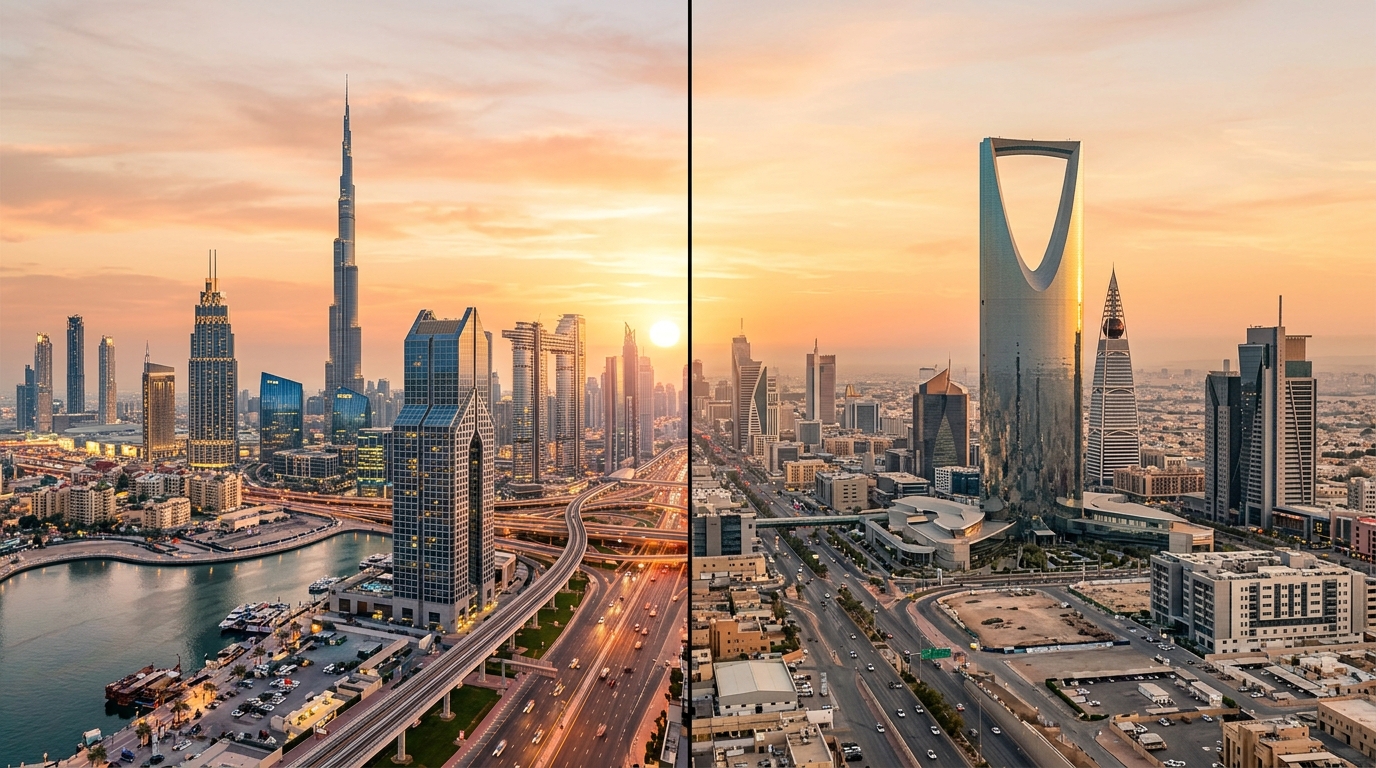
If you have scrolled through LinkedIn or Instagram recently, you have likely noticed a recurring theme among UAE professionals: the great debate over moving from Dubai to Riyadh. Driven by hashtags like #DubaiToRiyadh, #KSACareers, and #RiyadhJobs, the conversation usually centers around one tempting proposition: the "KSA Premium." As Saudi Arabia aggressively scales up its Vision 2030 initiatives, the Kingdom is attempting to lure top-tier expat talent across the border with promises of significantly higher paychecks, rapid career acceleration, and a front-row seat to one of the most ambitious economic transformations in modern history.
But is the grass actually greener in the Kingdom? For years, the standard narrative has been that moving to Saudi Arabia comes with a mandatory 20% to 30% salary increase to offset lifestyle adjustments and attract talent away from the highly established, expat-friendly hubs of Dubai and Abu Dhabi. However, as Riyadh rapidly modernizes and global corporations shift their bases due to the Regional Headquarters (RHQ) mandate, the dynamics of this financial equation are changing. For many professionals considering the jump, a critical question remains: once you factor in the rising cost of rent, schooling, and living in Riyadh, does that 30% premium actually translate to more money in the bank?
In this comprehensive guide, we will break down the reality of the KSA salary premium, compare the true cost of living between Dubai and Riyadh, and explore the cultural shifts in the hiring process that catch many UAE expats off guard. Whether you are actively interviewing for a role in the Kingdom or just browsing the market, understanding these nuances is crucial for negotiating the right package.
Unpacking the "KSA Premium": Is it Still 20-30%?
Historically, the "KSA Premium" (often referred to as a hardship allowance in decades past) was a financial necessity for companies trying to recruit international talent. Expatriates expected a significant bump in base pay, plus comprehensive allowances for housing in secure compounds, annual flights, and private schooling. Today, Saudi Arabia is a very different place, but the premium largely persists—albeit for different reasons. The Kingdom is experiencing hyper-growth, particularly in gigaprojects (like NEOM, Red Sea Global, and Qiddiya) and sectors such as tech, finance, and infrastructure. They need experienced leaders immediately, and the easiest place to source ready-made, region-adapted talent is the UAE.
Currently, candidates moving from Dubai to Riyadh can typically negotiate a 20% to 30% increase on their total compensation package. In highly specialized, talent-scarce fields like artificial intelligence, executive-level project management, or specialized finance, we have seen premiums push as high as 40%. This is particularly true if you are targeting the sectors hiring right now across the GCC that are central to Vision 2030.
However, the structure of these packages is evolving. While the headline number might be 30% higher, the way it is distributed matters. In the past, companies offered "split packages" (base salary plus distinct, generous allowances for housing and transport). Today, there is a strong trend toward "single-line" or "all-inclusive" packages. This means the employer offers you a lump sum every month, leaving you responsible for managing your own rent and school fees. If you do not calculate these costs accurately before accepting, your 30% "premium" can easily be swallowed up by Riyadh's skyrocketing real estate market.

The Impact of the Regional Headquarters (RHQ) Mandate
Another major factor driving UAE expats to consider the move is Saudi Arabia's Regional Headquarters (RHQ) mandate. Put simply, the Saudi government has stated that state agencies and government-backed entities will only sign contracts with foreign companies that have their Middle East regional headquarters based in the Kingdom. For multinational corporations historically based in Dubai Internet City or DIFC, this has forced a massive operational shift.
As a result, many Dubai-based professionals are being asked by their current employers to relocate to Riyadh. When this happens as an internal transfer, negotiating the KSA premium becomes a delicate dance. Companies often try to argue that since the cost of living in Riyadh is "comparable" to Dubai, a lateral move (with a minimal 5-10% bump) is fair. As an employee, you must be prepared to push back with hard data on compound housing costs and relocation expenses to secure a true financial uplift.
Cost of Living: Dubai vs. Riyadh Breakdown
To understand if the KSA premium is actually worth it, you have to treat your salary as a math equation where expenses are subtracted from the gross income. Many expats moving from the UAE assume Riyadh is cheaper across the board. While certain daily expenses like petrol and local groceries can be marginally lower, the big-ticket items—housing and education—have surged due to the massive influx of expatriates over the last three years. If you are already evaluating whether Dubai is a financial step up for expats, running the numbers for Riyadh is even more critical.
Housing: Compounds vs. City Apartments
Housing is the biggest shock for Dubai expats moving to Riyadh. In Dubai, you have a vast, highly developed real estate market with options ranging from affordable studios in JVC to luxury villas in Arabian Ranches. In Riyadh, the market is historically divided into two categories: expat compounds and local city housing (apartments/villas in standard neighborhoods).
Expats, particularly Western expats or those with families, heavily prefer compounds. These walled communities offer Western-style amenities (pools, gyms, cafes), a more relaxed dress code internally, and a strong social network. However, because demand drastically outstrips supply, compound rents in Riyadh have skyrocketed. A standard 3-bedroom villa in a highly desirable Riyadh compound can easily cost between 200,000 to 350,000 SAR (approx. AED 195,000 to 343,000) per year. Furthermore, waitlists can be six to twelve months long.
If you opt for an apartment in the city—which is becoming increasingly common for single expats and young couples—the prices are more reasonable (ranging from 60,000 to 120,000 SAR for high-quality, modern units in North Riyadh). However, you sacrifice the built-in social life and amenities of compound living. When negotiating your package, you must price out exactly where you intend to live; otherwise, your 30% salary increase will entirely disappear into your landlord's pocket.
Education and Schooling Costs
If you are relocating with a family, education is your next major hurdle. Dubai boasts hundreds of international schools across British, American, IB, and Indian curriculums. The sheer volume of schools in the UAE creates competition, which helps regulate prices and ensures availability. Riyadh's international school infrastructure is growing rapidly, but it is currently playing catch-up.

“I kept getting rejections from London. Base Career rewrote my CV for Dubai, and I landed Emirates in 3 weeks.”
Sarah M. · Marketing Manager · UK 🇬🇧 → Dubai 🇦🇪
No credit card required
Premium international schools in Riyadh (such as the British International School Riyadh or American International School) charge tuitions that are on par with, or sometimes slightly higher than, top-tier Dubai schools. Expect to pay between 50,000 and 100,000 SAR per child, per year. More importantly, securing a seat can be incredibly difficult due to high demand. If your new KSA job offer does not include a dedicated schooling allowance (and you are relying entirely on an "all-inclusive" base salary), you need to ensure your pay bump covers this critical expense after housing.
Cultural Shifts in the Hiring Process
The financial math is only half the battle. Job seekers moving from the UAE often experience culture shock during the hiring process itself. While Dubai has positioned itself as an ultra-fast, transactional hub of global commerce, Saudi Arabia’s business culture is deeply rooted in relationship-building, trust, and alignment with national goals.
Relationship-Driven vs. Transactional Hiring
If you are accustomed to the standard interview process in Dubai, you might expect a quick succession of HR screening, a technical assessment, and a final meeting with a line manager, all wrapped up in three weeks. In Riyadh, the timeline is often much more deliberate. Interviews in Saudi Arabia frequently assess cultural fit, long-term commitment to the Kingdom, and your ability to mentor local talent.
Saudi employers are looking for candidates who are genuinely excited about Vision 2030, rather than mercenaries who are just there to collect a tax-free paycheck for a year and leave. During interviews, expect more conversational detours. Hiring managers want to know who you are as a person. Building rapport and demonstrating patience is critical. If you find yourself wondering how long it takes to get hired in Dubai, be prepared to add an extra 4 to 6 weeks to your timeline when applying for roles in KSA, particularly with government-linked entities or PIF (Public Investment Fund) companies where approval matrices are complex.
Saudization (Nitaqat) vs. Emiratisation
Another vital factor is the localization of the workforce. In the UAE, Emiratisation policies are in place, but expats still make up the vast majority of the private sector workforce. In Saudi Arabia, the local population is much larger, and Saudization (known as the Nitaqat program) is aggressively enforced. The Kingdom is focused on employing its own young, highly educated citizens.
As an expat, this means you are not just being hired to do a job; you are often being hired to transfer knowledge. The most successful expats in KSA position themselves as mentors and capacity-builders. In your resume and interviews, you should heavily emphasize your experience in training teams, building frameworks from scratch, and upskilling junior staff. If a Saudi national can do the job, the company is legally and culturally incentivized to hire them over you. Expats are hired for the specialized expertise they can inject into the local ecosystem.
Lifestyle and Social Adjustments: What Expats are Saying
A quick dive into Reddit threads and Instagram hashtags reveals the unfiltered reality of making the move. While Dubai offers a plug-and-play expat lifestyle with minimal friction, moving to Riyadh requires adaptability. Here are the most common lifestyle shifts discussed by UAE professionals who have made the move:
- Entertainment and Dining: Riyadh's dining and entertainment scene has exploded. From the Riyadh Season festivals to high-end restaurants in Via Riyadh and Bujairi Terrace, there is no shortage of things to do. However, unlike Dubai, alcohol is strictly prohibited in Saudi Arabia. For some expats, this requires a shift in how they socialize and network.
- Traffic and Commuting: Riyadh is a massive, sprawling city, significantly larger in land mass than Dubai. Commutes can be notoriously long and traffic is heavy. Securing housing close to your workplace (or near the upcoming Riyadh Metro lines) is one of the most important decisions you will make to preserve your quality of life.
- Weather Differences: While Dubai is humid for half the year, Riyadh experiences a dry desert climate. The summers are incredibly hot but less humid, while the winters can actually get quite cold, sometimes dropping close to freezing at night. It is a welcome change for many expats tired of the UAE's coastal humidity.
The KSA premium isn't just about the extra 30% in your bank account; it's compensation for being a pioneer in a rapidly transforming market. If you embrace the change and embed yourself in the culture, the career acceleration is unmatched. But if you try to live exactly as you did in Dubai, you will find the transition incredibly frustrating.
Decision Matrix: Who Should Stay and Who Should Move?
Ultimately, deciding whether the KSA premium is worth it comes down to your personal career stage, family situation, and financial goals. To help you evaluate, consider the following decision matrix.
You Should Consider Moving to Riyadh If:
- You are offered a minimum 25-30% increase on your total package, or a lucrative equity/bonus structure in a gigaproject.
- Your housing and schooling costs have been meticulously calculated and are comfortably covered by the new salary.
- You are looking for rapid career progression; the sheer scale of projects in KSA means you will get hands-on experience with billion-dollar initiatives that simply don't exist elsewhere right now.
- You are single, or a couple without children, making the housing flexibility much easier to navigate.
You Should Consider Staying in Dubai If:
- The salary offer is a lateral move or a negligible increase (under 15%).
- You have multiple school-aged children and the employer is not providing a dedicated education allowance, which will wipe out any financial gains.
- You heavily value the established convenience, walkability (in certain areas), and liberal social lifestyle that Dubai offers.
- Your spouse also works in Dubai and will struggle to find equivalent employment in Riyadh immediately.

Preparing Your Job Search for the Saudi Market
If you have crunched the numbers and decided that the KSA premium is worth the move, your next step is to align your job search strategy. Do not simply recycle the CV you used to get hired in the UAE. Tailor your resume to highlight "capacity building," "knowledge transfer," and "large-scale project delivery." Mention your familiarity with the Middle East market, as Saudi employers highly value candidates who already understand GCC business nuances and don't require a steep cultural learning curve.
Networking is also fundamentally different. While LinkedIn is powerful in KSA, personal introductions and referrals carry immense weight. If you have former colleagues who have already made the jump from Dubai to Riyadh, reach out to them. They can provide invaluable insights into which companies are paying true premiums and which ones are attempting to lowball UAE expats under the guise of the RHQ mandate.
Frequently Asked Questions
Is income in Saudi Arabia completely tax-free like in the UAE?+
What is the average salary increase when moving from Dubai to Riyadh?+
Do Saudi employers still provide housing and schooling allowances?+
How long does the hiring process take in Saudi Arabia compared to Dubai?+
Make Your Next Career Move Count
The migration of talent from Dubai to Riyadh is one of the most defining trends in the Middle East job market today. The KSA premium is real, but it is no longer free money—it requires careful negotiation, financial planning, and a willingness to adapt to a vastly different corporate culture. If you do the math correctly and embrace the unique opportunities that Vision 2030 presents, relocating to Saudi Arabia can be a transformative step for your career and your finances.
Ready to explore high-paying roles across the GCC or optimize your application for the competitive Saudi market? Start automating your job search, tailoring your CV for specific Middle East markets, and landing interviews faster. Take the next step in your career journey and sign up at basecareer.co today.
Get hired faster in 25 days. Join Base Career Today.
Run a more organized search so you can reach better-fit roles with more leverage.
Start freeNo credit card required

James T.
Canada 🇨🇦 → Riyadh 🇸🇦
“50 applications, zero replies with my Canadian CV. Base Career got me 4 Riyadh interviews and a Series B offer.”
Written by Base Career Research Team
Produced by the Base Career Research Team with AI, using Base Career job-market data, and published automatically. How our articles are made
Related Posts

Landing Your First Dubai Job: A Roadmap for Freshers and Graduates
Breaking into the UAE job market with zero experience is tough but not impossible. Here is your strategic roadmap to landing that first role in Dubai.

Building 'Wasta' from Scratch: Networking Strategies for Dubai Expats
Frustrated by 1,000+ applicants on LinkedIn? Learn how to build 'Wasta'—your professional network—from zero to access the UAE's hidden job market.