UAE Remote Work Law: Can You Legally Work Abroad for a Dubai Company?
.png)
Ankush Wadhwa

Working for a Dubai-based company while living abroad sounds like the ultimate professional dream. The proposition offers the allure of a highly competitive, often tax-free UAE salary coupled with the lower cost of living, better climate, or proximity to family in a home country. The post-pandemic paradigm shift, the massive rise of digital nomadism, and widespread "work from anywhere" corporate policies have led countless professionals to ask one critical question: Can you legally work outside the UAE while remaining on a local Dubai employment contract?
The short answer is yes, but it is heavily conditional. The reality is far more complex than simply logging into a corporate VPN and setting up a virtual background from a beach in Bali or a café in London. According to recent insights from legal experts and The Law Reporters, while the UAE Labor Law does not explicitly prohibit employees from executing their professional duties outside the country's borders, maintaining a local employment contract while residing internationally triggers a massive web of legal, tax, and residency complications.
For anyone deeply involved in job hunting in the UAE, understanding these geographical and legal constraints is just as important as securing the job offer itself. Employers face severe corporate liabilities if their workforce scatters globally without proper documentation. This comprehensive guide breaks down the precise legalities of cross-border remote work under a UAE contract, the mandatory protocols for securing employer approval, and exactly how to safeguard your residency and financial status without breaching your employment terms.

The Legal Framework: UAE Labor Law and Remote Work
To accurately determine whether you can legally work outside the UAE for a Dubai-based company, we must examine the foundation of private-sector employment relations in the country: Federal Decree-Law No. 33 of 2021 on the Regulation of Labor Relations, commonly referred to as the New UAE Labor Law. When this legislation was enacted, it introduced a wave of modernized work models, formally recognizing part-time, flexible, and remote work arrangements in a way previous laws never did. This was a monumental shift from legacy legislation, which strictly catered to traditional, office-based, full-time employment models.
Under the current legal framework, employees and employers have the absolute freedom to agree on remote work arrangements. Article 7 of the Executive Regulations of the Labor Law specifically outlines that an employee may perform their assigned duties remotely, either within the United Arab Emirates or abroad, provided this arrangement is mutually agreed upon in the employment contract or introduced via a subsequent legal addendum. This means that, from a strictly labor law perspective, there is zero federal prohibition against you sitting in a foreign country while working for a mainland or free zone corporate entity based in Dubai.
However, it is vital to understand that "legal" does not mean "unregulated." A standard UAE employment contract, particularly one issued and governed by the Ministry of Human Resources and Emiratisation (MOHRE), inherently assumes that the employee’s primary place of work, taxation, and physical residence is within the borders of the United Arab Emirates. If an employee decides to relocate—whether temporarily for a few months or permanently—while maintaining that exact same contract, the employer must officially sanction the change in writing.
Employer Approval: Why Written Consent is Non-Negotiable
Many employees mistakenly believe that if their company already operates on a "work from home" model within Dubai, they can simply work from a home in another country without notifying HR. This is a dangerous misconception that can cost you your career. Working from an apartment in Downtown Dubai and working from an Airbnb in Europe present vastly different legal and corporate risk profiles for your employer.
First and foremost is the issue of legal jurisdiction and data security. When an employee connects to company servers from a foreign jurisdiction, they are subject to that country's internet regulations and potential cybersecurity vulnerabilities. The UAE Personal Data Protection Law (PDPL) mandates strict controls over how corporate and consumer data is handled, stored, and transferred. If an employee suffers a data breach while operating on an unsecured public Wi-Fi network abroad, the UAE company could face severe regulatory penalties and massive financial fines. Employers must know exactly where their data is being accessed from so they can deploy the appropriate VPNs, firewalls, and compliance protocols.
Furthermore, verbal consent from a line manager is entirely insufficient. If a manager casually says, "Sure, take a month and work from back home," this does not protect you legally if the HR department or company executives suddenly audit employee locations. Without formal, written consent via an official contract amendment or formal HR letter, the company can legally terminate your employment without notice for unauthorized absence. It is vital to formally request the arrangement and ensure the terms—including working hours across time zones, key performance indicators (KPIs), and data security measures—are fully documented. This documentation process is particularly crucial for those on alternative sponsorships, such as those navigating husband visa jobs in the UAE, where the dynamics of labor rights and remote work flexibility might differ slightly from traditional company-sponsored visas, requiring extra diligence in contract amendments.
The Visa Trap: Navigating the 180-Day Residency Rule
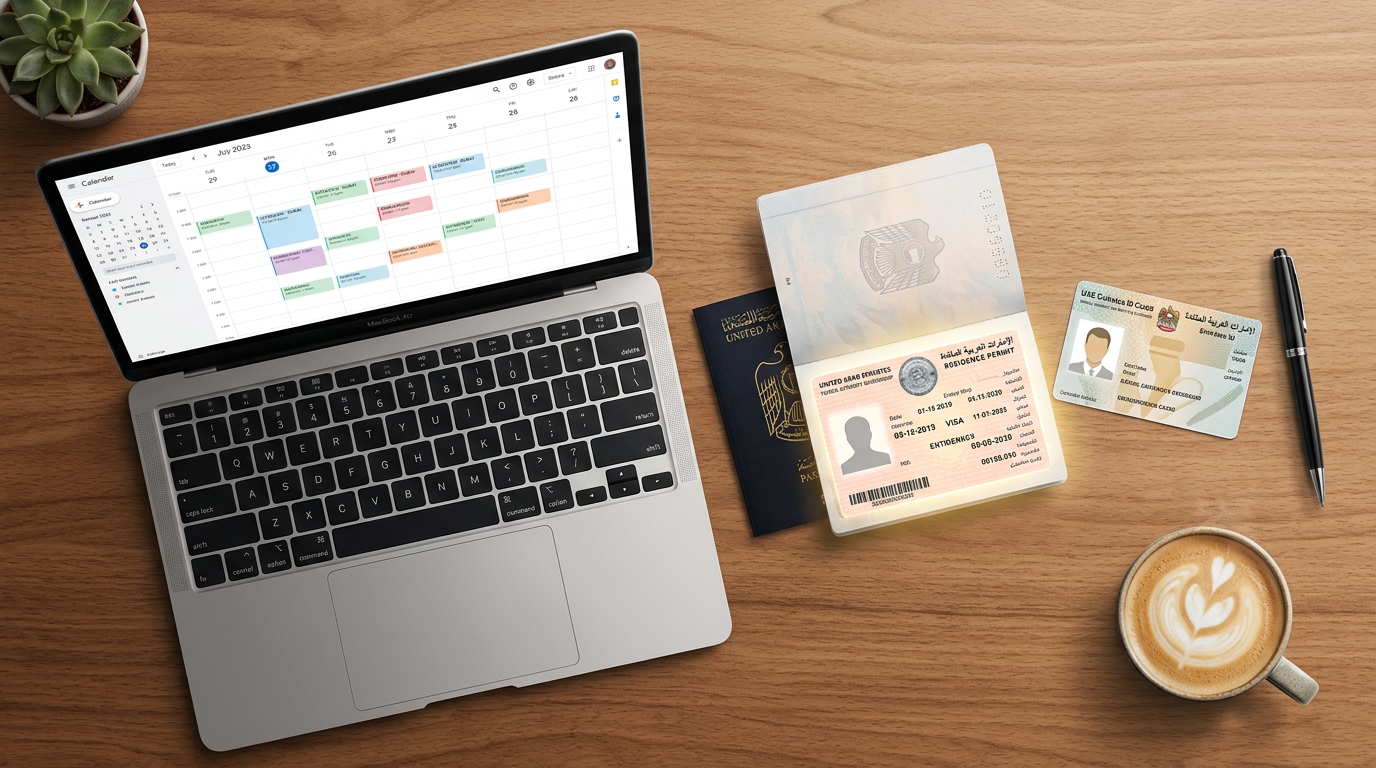
Perhaps the most significant logistical hurdle to working abroad on a Dubai contract is maintaining the validity of your UAE residency visa. The UAE government issues employment visas with the core expectation that the individual is actively residing in the country, contributing to the local economy, and participating in the societal ecosystem. For individuals holding a standard employment visa—which is typically valid for two years—the strict 180-day rule firmly applies.
Under this well-established immigration rule, if a resident stays outside the United Arab Emirates for more than 180 consecutive days (approximately six months), their residency visa is automatically nullified. There is no grace period, no warning email, and the cancellation occurs automatically in the federal immigration system the moment the threshold is crossed. If your visa is cancelled due to prolonged absence, your Emirates ID becomes instantly invalid. Consequently, your local bank accounts may be frozen or heavily restricted, your tenancy contracts can be nullified, and most importantly, your employment contract becomes legally compromised. UAE labor law strictly requires employees to possess valid work authorization and residency to remain on a local company's payroll.

“I kept getting rejections from London. Base Career rewrote my CV for Dubai, and I landed Emirates in 3 weeks.”
Sarah M. · Marketing Manager · UK 🇬🇧 → Dubai 🇦🇪
No credit card required
To bypass this hurdle, remote workers on standard visas must ensure they physically re-enter the UAE before the 180-day mark, even if just for a short weekend trip, to reset the immigration clock. However, there are notable exceptions. The UAE Golden Visa, a long-term 10-year residency granted to exceptional talents, real estate investors, and highly skilled professionals, does not have this restriction. Golden Visa holders can remain outside the UAE indefinitely without their residency status being affected. If you are aiming for a permanent digital nomad setup while keeping your Dubai job, upgrading to a Golden Visa (if eligible based on your monthly salary or university qualifications) is the most secure way to protect your residency.
International Tax Residency: Will You Still Earn a Tax-Free Salary?
The primary draw of a Dubai-based job is the highly coveted zero percent personal income tax. However, taking your tax-free salary to a high-tax jurisdiction can quickly unravel this massive financial benefit. A common myth among expats is that tax residency is determined by where your employer is based, or where your salary is deposited. This is entirely false. In international law, tax residency is almost exclusively determined by where you physically reside for the majority of the financial year.
Most countries across Europe, the Americas, and Asia operate on a 183-day tax residency rule. If you spend more than 183 days in a single country during a 12-month period, you generally become a legal tax resident of that nation. Let’s say you successfully negotiate a remote work agreement with your Dubai employer and spend eight months working from a family home in the United Kingdom. Despite being paid directly from Dubai into a UAE bank account, HM Revenue & Customs (HMRC) will legally classify you as a UK tax resident. This makes your entire global income—including your supposedly "tax-free" Dubai salary—subject to UK income tax brackets, which can be as high as 45%.
Similar aggressive taxation rules apply in India, Canada, Australia, and most European nations. For professionals looking to understand how to manage cross-border earnings, especially when exploring remote jobs in the UAE from India or Pakistan, consulting with a certified international tax advisor is non-negotiable. Failing to declare this income can lead to severe penalties for tax evasion.
Corporate Risk: Permanent Establishment and Employer Liabilities
It is not just the employee who faces financial risks when working abroad; the employer faces a massive, often hidden, corporate tax liability known as the "Permanent Establishment" (PE) risk. This is the exact reason why many HR departments outright reject requests to work from overseas on a permanent basis.
If a UAE company has an employee working permanently in another country, and that employee is generating revenue, signing contracts, or making executive decisions from that geographical location, the host country’s tax authorities might legally argue that the UAE company has established a "permanent corporate presence" there. Consequently, the Dubai-based company could suddenly find itself liable for corporate taxes in a foreign country simply because one employee decided to work from their living room in Berlin or Toronto.
To mitigate this massive financial risk, large corporations either strictly limit overseas remote work to 30 to 90 days per calendar year (ensuring the PE threshold is never triggered) or they utilize an Employer of Record (EOR) service. An EOR allows the company to formally hire the employee in their home country under local labor laws. However, transitioning to an EOR usually requires the employee to resign from their UAE labor contract entirely, shifting them to a localized salary and benefit structure that is fully taxed.

Health Insurance and End-of-Service Gratuity While Abroad
When you transition to working abroad, the practicalities of your employee benefits package immediately come under scrutiny. First, consider your mandatory health insurance. In Dubai, the Dubai Health Authority (DHA) mandates that employers provide private health insurance to all sponsored employees. However, a standard local UAE health insurance policy typically only provides regional coverage, with extremely limited emergency coverage internationally.
If you are residing abroad for an extended period, your local DHA-approved policy will likely not cover routine doctor visits, physical therapy, prescriptions, or non-emergency specialist care in your new location. Negotiating an international, comprehensive health plan or legally agreeing to source and fund your own local insurance in your host country must be part of your contract amendment dialogue with HR.
Secondly, the End-of-Service Gratuity (ESG) is a critical, legally mandated component of UAE employment. Working remotely does not legally forfeit your right to this gratuity, provided you remain on a valid, continuous UAE employment contract governed by MOHRE or your respective Free Zone authority. The gratuity will still accrue based on your basic salary as outlined in the labor law. However, if your employer decides that the corporate compliance risks are too high and forces you to resign so they can re-hire you through an international Employer of Record (EOR), your continuous service under UAE law terminates instantly. In this scenario, your accumulated end-of-service gratuity for the UAE portion of your employment must be paid out immediately, and your new EOR contract will provide zero UAE labor protections moving forward.
Step-by-Step Guide: How to Negotiate Overseas Remote Work
If you want to maintain your local Dubai contract while working abroad, you cannot simply present it to your manager as a personal lifestyle choice; you must present it as a risk-free, mutually beneficial business arrangement. Here is a strategic approach to negotiating this complex transition without raising red flags:
- Audit Your Role's Feasibility: Ensure your daily tasks require absolutely zero physical presence. Roles in digital marketing, software development, data analysis, and remote sales are easiest to pitch. If your role involves client-facing meetings in Dubai, physical site inspections, or handling physical documents, a permanent remote move will be swiftly rejected.
- Propose a Trial Period: Do not ask for a permanent relocation immediately. Pitch a 30-to-60-day "workation" to prove that your productivity, communication, and output remain completely unaffected across different time zones.
- Address the Tax and Legal Risks Upfront: Come prepared to the meeting. Assure HR that you will manage your own personal tax liabilities and will strictly adhere to the 180-day visa rule by returning to the UAE twice a year. By showing you intimately understand the legal landscape, you alleviate corporate anxiety.
- Offer Solutions for Data Security: Propose using an approved corporate VPN, undertaking strict data privacy protocols, and signing any additional non-disclosure agreements (NDAs) required by the company's IT and compliance departments.
- Draft a Formal Addendum: Work collaboratively with HR to draft a temporary or permanent addendum to your contract. This crucial document should outline your specific working hours (adjusted for the UAE time zone), KPI expectations, liability for internet and equipment costs, and a clear termination clause for the remote arrangement if performance drops.
By proactively handling the compliance, visa, and security concerns, you transform your request from a logistical nightmare for HR into a seamless administrative update. Keep in mind that hiring trends in the UAE job market increasingly favor flexible working environments, so progressive companies may be more open to this arrangement than you initially expect.
Frequently Asked Questions
Frequently Asked Questions
Can a Dubai company fire me if I work from another country without telling them?+
Do I lose my UAE residency visa if I work remotely from my home country?+
Will I have to pay taxes in my home country on my Dubai salary?+
Are remote workers outside the UAE entitled to end-of-service gratuity?+
Automate Your Job Search and Secure the Right Role
Navigating the legalities of working abroad on a Dubai contract requires a delicate balance of UAE Labor Law compliance, visa management, and international tax awareness. While the dream of earning a tax-free dirham salary from a beach in Southeast Asia or a home office in Europe is entirely possible, it is not a loophole you can exploit in secret. Success relies on absolute transparency with your employer, a solid legal addendum to your employment contract, and meticulous tracking of your days spent outside the UAE to protect your residency. If you try to bypass these steps, you will eventually discover the harsh reasons why Dubai recruiters ignore your CV once a previous employer terminates you for compliance breaches.
For professionals seeking ultimate geographic flexibility without the legal headaches, the key is to target forward-thinking companies that have already integrated remote work into their corporate DNA. If your current employer refuses to adapt to a globalized work model, it might be time to search for a role that matches your lifestyle ambitions. Platforms like Base Career automatically scan UAE job boards daily and match remote, hybrid, and flexible openings directly to your profile, so you stop missing relevant roles.
Ready to land a flexible UAE role that respects your freedom and matches your career goals? Try it free at https://app.basecareer.co/auth.
Stay ahead of the market. Join Base Career Today.
Turn market shifts into a clearer application workflow with resume tailoring and tracking in one place.
Start freeNo credit card required

James T.
Canada 🇨🇦 → Riyadh 🇸🇦
“50 applications, zero replies with my Canadian CV. Base Career got me 4 Riyadh interviews and a Series B offer.”
Written by Ankush Wadhwa
Helping you accelerate your career with AI-powered tools.
Related Posts

Building 'Wasta' from Scratch: Networking Strategies for Dubai Expats
Frustrated by 1,000+ applicants on LinkedIn? Learn how to build 'Wasta'—your professional network—from zero to access the UAE's hidden job market.

Landing Your First Dubai Job: A Roadmap for Freshers and Graduates
Breaking into the UAE job market with zero experience is tough but not impossible. Here is your strategic roadmap to landing that first role in Dubai.