Husband Visa Jobs in the UAE: Salary Expectations and Rights

If you have spent any amount of time scrolling through job boards in Dubai or Abu Dhabi, you have likely encountered the phrase: "Only candidates on Husband Visa or Dependent Visa need apply." For many expatriate families, this presents a unique gateway into the UAE workforce. It allows trailing spouses to find employment, contribute to the household income, and maintain their professional momentum without the stress of securing independent employment sponsorship.
However, the proliferation of job ads targeting the #SpouseVisaJobs and #FemaleJobsUAE demographics also reveals a complex dynamic in the local labor market. While these roles often provide desirable remote flexibility and part-time hours, they are also frequently associated with significantly lower starting salaries—sometimes dropping as low as AED 2,000 per month. This raises critical questions for job seekers: Why are employers so focused on this specific visa status? Are these ultra-low salaries justified? And most importantly, what are your legal rights when working for a company that does not officially sponsor your residency?
In this comprehensive guide, basecareer.co breaks down the economics behind the husband visa hiring trend, the legal frameworks you must navigate to avoid fines, and actionable strategies to ensure you are fairly compensated for your skills in the competitive UAE market.
The Hidden Economics: Why Employers Actively Seek "Husband Visa" Candidates
To understand why companies actively filter for candidates on a dependent or husband visa, you have to look at the financial realities of onboarding a new employee in the UAE. When a company hires a candidate on a standard employment contract and provides sponsorship, they are legally obligated to cover several upfront and recurring costs.
For a standard mainland or freezone hire, an employer must pay for the work permit, the residency visa processing, Emirates ID typing, medical fitness tests, and mandatory health insurance. Furthermore, many contracts include an annual flight allowance to the employee's home country. Depending on the company's classification and the emirate they operate in, these onboarding costs can easily range from AED 7,000 to over AED 12,000 per employee before a single dirham of salary is ever paid.

By hiring a candidate who is already legally residing in the country under their spouse's sponsorship, the employer completely bypasses the bulk of these expenses. The candidate's residency is secure, and in many cases, their health insurance is already covered under their sponsor's family policy. This makes candidates on a husband visa incredibly attractive to startups, small-to-medium enterprises (SMEs), and agencies operating on tight margins.
If you want to dive deeper into how different non-employment visas are viewed by recruiters, you can read our comprehensive breakdown on own visa jobs in Dubai and dependent permits. Understanding your value as a low-cost, low-risk hire is the first step in recognizing your leverage during the interview process.
The Reality of Starting Salaries: Why AED 2,000 is Common
One of the most heavily debated aspects of husband visa roles within expat communities—particularly evident in hashtags like #IndianJobsUAE—is the compensation structure. It is not uncommon to see entry-level administrative, telesales, social media management, or customer service roles offering between AED 2,000 and AED 3,500 per month.
Why is the floor so low? From the employer's perspective, they often assume that a candidate on a spouse visa does not need to cover the primary costs of living in the UAE, such as housing rent, utility bills, or school fees, because the primary breadwinner (the sponsor) is handling them. Consequently, the salary is positioned as "supplemental income" or "pocket money" rather than a primary living wage.
Additionally, because there is no visa cancellation penalty tying the employee to the company, employers sometimes view these roles as high-turnover positions. They offer lower salaries to mitigate the risk of the employee leaving after a few months. However, for highly qualified professionals—such as accountants, graphic designers, or HR specialists—accepting a salary of AED 2,000 deeply undervalues their expertise.

“I kept getting rejections from London. Base Career rewrote my CV for Dubai, and I landed Emirates in 3 weeks.”
Sarah M. · Marketing Manager · UK 🇬🇧 → Dubai 🇦🇪
No credit card required
Before accepting an offer based purely on the convenience of the visa status, it is crucial to benchmark the role against market standards. A part-time data entry role at AED 2,500 for 15 hours a week might be fair, but a full-time, 45-hour-a-week marketing manager position at the same rate is exploitative. For actionable insights on market rates, check out our guide on decoding UAE salary percentiles and negotiating with data.
Navigating UAE Labor Law: Can You Legally Work Without Company Sponsorship?
There is a dangerous and widespread misconception in the UAE that having a "husband visa" or "dependent visa" automatically gives you the legal right to work without any further paperwork. This is absolutely false.
Under UAE Labor Law (Decree Law No. 33 of 2021), any individual engaging in employment must have an official work permit issued by the Ministry of Human Resources and Emiratisation (MOHRE) or the relevant Freezone authority. If you work for a company "under the table" or without a registered labor card, you are working illegally. This exposes both you and the employer to severe consequences. If caught during a labor inspection, the employer can face fines of up to AED 50,000 per illegal worker, and you may face deportation or labor bans.
- Obtain a No Objection Certificate (NOC): Your sponsor (usually your husband) must provide a formally signed and sometimes notarized NOC stating they have no objection to you taking up employment.
- Employer Applies for the Permit: The hiring company submits your NOC, passport copy, visa copy, and a passport-sized photo to MOHRE or the Freezone authority to apply for a specialized work permit for individuals sponsored by their family.
- Sign the Standard Contract: You must sign an official labor contract detailing your salary, working hours, and job title. This contract is registered with the government.
- Receive Your Labor Card: Once approved, you are issued an electronic labor card, making your employment 100% legal while your residency remains attached to your spouse.
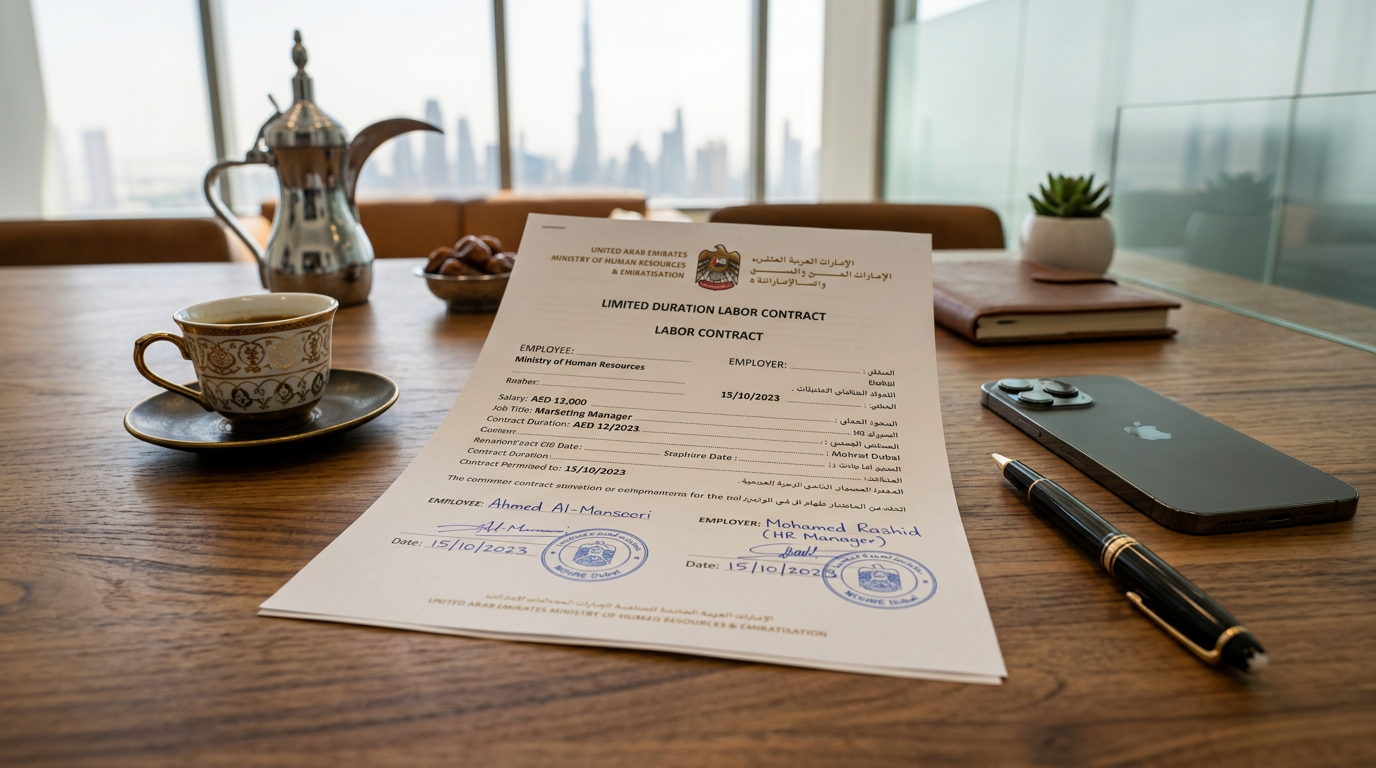
Protecting yourself legally is paramount. Unfortunately, some companies use the dependent visa status to evade offering formal contracts, pushing candidates into unregulated arrangements. Be incredibly cautious of employers who promise to pay "cash in hand" or insist on a purely commission-based structure without a base salary recorded in a labor contract. You can learn more about how to spot these red flags in our article detailing the legal risks of commission-only jobs in the UAE.
The Silver Lining: Remote Work, Flexibility, and Bridge Roles
Despite the challenges surrounding compensation, there are genuine, tangible benefits to targeting #WorkFromHomeUAE roles tailored for dependent visa holders. Because these companies are already saving on overhead costs, they are often much more willing to negotiate flexible working arrangements. This is a massive advantage for working mothers, individuals pursuing further education, or those managing household responsibilities.
The new UAE Labor Law introduced several flexible working models that align perfectly with the needs of dependent visa holders. You can now be legally contracted under Part-Time, Temporary, or Flexible work models. This means you can legally work 20 hours a week for one company while maintaining your family sponsorship, allowing for a highly balanced lifestyle.
Furthermore, taking on a husband visa job is an excellent strategic move for trailing spouses who are highly qualified but waiting for local certifications. For instance, doctors, nurses, and specialized engineers often face a waiting period of 3 to 6 months to clear their Dataflow, Prometric exams, or equivalency certificates. If you fall into this category, taking a flexible administrative or consulting role on your spouse's visa keeps your CV active and provides income. We cover this specific strategy in depth in our legal guide on working in the UAE while awaiting professional licenses.
How to Negotiate Fair Pay and Protect Your Rights
When you are offered a job that specifically requests your husband's visa, the power dynamic in the negotiation is not entirely one-sided. You bring immediate availability, zero relocation costs, and zero visa processing delays to the table. Employers value this speed and convenience immensely, which gives you leverage.
- Quantify the Savings: During salary negotiations, politely remind the employer of the savings you are providing. If they offer AED 3,000, you can counter with: "Given that the company will be saving approximately AED 8,000 on my visa, medical, and flight costs, I am looking for a base of AED 4,500, which still keeps my overall cost to the company highly competitive."
- Define the Scope of Work: If the employer is firm on a lower salary cap (e.g., AED 2,500), then negotiate the hours. Accept the salary, but mandate a part-time contract (e.g., Monday to Wednesday, or 4 hours a day). Do not accept a 48-hour workweek for a part-time salary.
- Secure Your Benefits: Ensure your MOHRE contract explicitly states your right to annual leave and public holidays. Under UAE law, even if you are on a dependent visa with a work permit, you are entitled to statutory labor rights, including end-of-service gratuity if you work full-time.
Remember, a successful job search in the UAE requires a mix of proper documentation, market knowledge, and negotiation skills. To refine your overall approach, from tailoring your CV to mastering interviews, explore our complete guide to getting a job in Dubai for 2026.
Frequently Asked Questions
Frequently Asked Questions
Can I work in Dubai on a husband visa without an employment visa?+
Does my husband need to provide an NOC for me to work?+
Am I entitled to end-of-service gratuity on a spouse visa?+
Who pays for my health insurance if I work on a husband visa?+
Conclusion: Maximizing the Value of Your Visa Status
Working on a husband visa in the UAE offers a fantastic pathway to re-enter the workforce, secure flexible hours, and build local Middle Eastern experience. Employers will always seek out dependent visa holders because of the undeniable cost savings and rapid onboarding timelines. However, your convenience as a hire should not be used as an excuse to undervalue your professional skills or strip you of your legal protections.
Always insist on a formal MOHRE work permit, secure an NOC from your sponsor, and do not be afraid to negotiate a salary that reflects both your expertise and the thousands of dirhams you are saving the company in visa fees. By understanding the legal framework and market rates, you can turn a "husband visa preferred" job advertisement into a mutually beneficial, highly rewarding career step.
Are you ready to find verified UAE employers who value your skills, respect labor laws, and offer fair compensation? Streamline your job search and connect with top companies by signing up at basecareer.co today.
Get hired faster in 25 days. Join Base Career Today.
Run a more organized search so you can reach better-fit roles with more leverage.
Start freeNo credit card required

James T.
Canada 🇨🇦 → Riyadh 🇸🇦
“50 applications, zero replies with my Canadian CV. Base Career got me 4 Riyadh interviews and a Series B offer.”
Written by Base Career Research Team
Produced by the Base Career Research Team with AI, using Base Career job-market data, and published automatically. How our articles are made
Related Posts

Landing Your First Dubai Job: A Roadmap for Freshers and Graduates
Breaking into the UAE job market with zero experience is tough but not impossible. Here is your strategic roadmap to landing that first role in Dubai.

Building 'Wasta' from Scratch: Networking Strategies for Dubai Expats
Frustrated by 1,000+ applicants on LinkedIn? Learn how to build 'Wasta'—your professional network—from zero to access the UAE's hidden job market.