UAE & Saudi Visa Guide: Police Clearance and MOFA Attestation
The Administrative Hurdle of GCC Work Visas
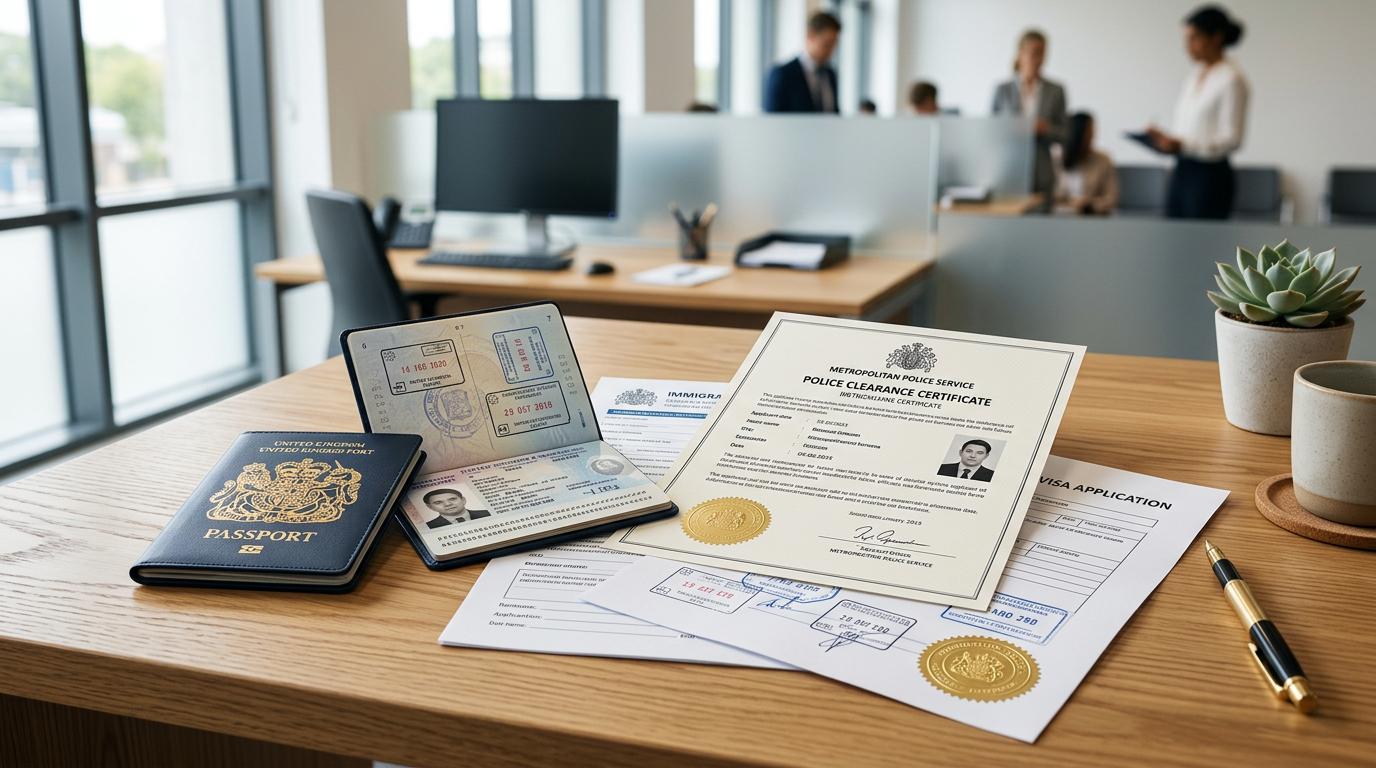
Securing a lucrative job offer in the Middle East is a massive career milestone, but the reality of relocating to the Gulf Cooperation Council (GCC) region involves far more than simply signing an employment contract. For expatriate professionals moving to the United Arab Emirates (UAE) or the Kingdom of Saudi Arabia (KSA), the real work begins the moment the offer letter is signed. You must now navigate a complex web of legal paperwork, document authentication, and background checks before a work permit can be issued.
Among the myriad of documents required, two specific administrative hurdles consistently cause the most anxiety and delays for candidates: the Police Clearance Certificate (PCC) and the Ministry of Foreign Affairs (MOFA) attestation. Whether you are an engineer relocating from Mumbai to Riyadh, a nurse moving from Lahore to Dubai, or an IT specialist shifting to Abu Dhabi, this paperwork is non-negotiable. Missing a single stamp, presenting a document with a mismatched name, or failing to follow the correct hierarchical chain of authentication can result in visa rejection, delayed deployment, and in worst-case scenarios, the revocation of your hard-earned job offer.
The process of authenticating documents for international use is often misunderstood. It is not enough to simply hand your employer your original university degree. Gulf nations operate under strict verification protocols designed to prevent fraud, ensure national security, and verify that incoming expatriates possess genuine qualifications and a clean criminal history. Delays in this process are one of the most common reasons candidates get offloaded at airports, so avoiding travel and visa mistakes starts with mastering your document attestation timeline.
This comprehensive guide is designed to demystify the legal paperwork required for UAE and Saudi work visas. We will break down exactly what a Police Clearance Certificate is, why it is heavily scrutinized, and how expats from major talent hubs like India and Pakistan can obtain one without losing their minds. We will also map out the complex chain of MOFA attestation, ensuring your educational and personal documents are legally recognized across the GCC.
Understanding the Police Clearance Certificate (PCC)
A Police Clearance Certificate (often referred to as a Good Conduct Certificate or Police Character Certificate) is an official document issued by a police department or authorized government agency. It confirms whether the applicant has any criminal record, pending legal proceedings, or convictions within that specific jurisdiction. In the context of GCC immigration, this certificate is a mandatory requirement to prove that you are a law-abiding citizen who poses no security threat to the host country.
Historically, the UAE implemented the PCC requirement for all foreign workers in 2018, though they occasionally revise the mandate based on the visa category, nationality, and the specific free zone or mainland jurisdiction issuing the work permit. Saudi Arabia, on the other hand, has maintained a notoriously strict stance on background checks, requiring a thoroughly attested PCC for almost all long-term employment visas. Even if you are pursuing own visa jobs on freelance or dependent permits, securing a Good Conduct Certificate locally from the Dubai Police or Abu Dhabi Police is a standard procedure for many licensing authorities.
Why is the PCC Heavily Scrutinized?
The GCC region prides itself on maintaining incredibly low crime rates and a secure environment for both citizens and expatriates. Background checks are the first line of defense in maintaining this security. Authorities in the UAE and Saudi Arabia use the PCC to filter out individuals involved in financial fraud, violent crimes, or activities that compromise state security. Furthermore, with the rise of digitized immigration systems, your home country's police records must be seamlessly authenticated and integrated into the host country's security database.
How Long is a Police Clearance Certificate Valid?
One of the most critical aspects of managing your visa paperwork is understanding document expiration. A Police Clearance Certificate is not a lifetime document. In the eyes of UAE and Saudi immigration authorities, a PCC is typically only valid for three to six months from the date of issuance. If your deployment is delayed by external factors—such as a slow visa quota approval or a pending medical exam—your PCC might expire before your employer can stamp your visa.
Therefore, timing is everything. Applying for a PCC too early means it might expire before you travel. Applying too late means you risk losing the job offer while waiting for the police department to clear your background check. Candidates must coordinate closely with their GCC employers or hiring agencies to initiate the PCC process at the exact right moment in the onboarding pipeline.

Step-by-Step: Obtaining a PCC in India and Pakistan
The process of acquiring a Police Clearance Certificate varies wildly depending on your country of origin. For expatriates from the Indian subcontinent—who make up the vast majority of the expatriate workforce in the GCC—the process has been significantly digitized in recent years, though physical visits to government centers are still required.
For Indian Expats: The Passport Seva Process
In India, the Ministry of External Affairs (MEA) handles the issuance of Police Clearance Certificates for citizens planning to work abroad. The most streamlined and officially recognized way to obtain a PCC for the UAE or Saudi Arabia is through the Passport Seva Kendra (PSK) network.
- Create an account on the official Passport Seva portal and select the 'Apply for Police Clearance Certificate' option.
- Fill out the extensive online form. You will need to specify the country for which the PCC is required (e.g., UAE or Saudi Arabia) and the purpose (e.g., Employment Visa).
- Pay the nominal government fee online and schedule an appointment at the nearest Passport Seva Kendra (PSK) or Post Office Passport Seva Kendra (POPSK).
- On the day of the appointment, arrive with all original documents, including your passport, proof of address, and a copy of the GCC employment offer letter.
- Undergo biometric verification and document scrutiny at the PSK.
- Wait for the physical police verification. If your current address matches the address on your passport, the PCC is sometimes issued on the spot or within a few days. If the addresses differ, a local police officer will visit your residence for verification, which can delay the process by two to three weeks.
Pro Tip for Indian Expats: Ensure that the address you provide matches exactly with where you currently reside. Many candidates face massive delays because they use a permanent hometown address but live in a different city for work. Local police verification will fail if you are not physically present at the address during the officer's visit.
For Pakistani Expats: Police Khidmat Markaz & NADRA

“I kept getting rejections from London. Base Career rewrote my CV for Dubai, and I landed Emirates in 3 weeks.”
Sarah M. · Marketing Manager · UK 🇬🇧 → Dubai 🇦🇪
No credit card required
For Pakistani professionals seeking employment in the UAE or Saudi Arabia, the Police Character Certificate process depends largely on your province of residence. Over the last few years, the process has been streamlined through the Police Khidmat Markaz (PKM) initiatives, particularly in Punjab and Sindh.
- Visit your local Police Khidmat Markaz or the designated police facilitation center in your district.
- Provide your original CNIC (Computerized National Identity Card), passport, and a copy of your GCC job offer or visa request.
- Submit two passport-sized photographs with a blue or white background, depending on provincial requirements.
- Provide an affidavit stating that you do not have a criminal record and detailing your purpose for traveling to the UAE or KSA.
- Pay the processing fee at the designated bank counter or via the approved digital payment method.
- Wait for the internal background check to clear. In many modern districts, the certificate is issued within 3 to 7 working days.
Overseas Pakistanis who are already residing in the GCC but need a new PCC from Pakistan (perhaps when switching jobs from the UAE to Saudi Arabia) can often process this through the relevant embassy or consulate, utilizing NADRA's digital systems, though this can take significantly longer as diplomatic pouches are used to transfer documents back to local police stations.
What is MOFA Attestation and Why Does It Matter?
Once you have your Police Clearance Certificate—and your university degrees, marriage certificates, and birth certificates—you cannot simply hand them over to your employer in Dubai or Riyadh. A piece of paper issued in Mumbai or Karachi holds no legal weight in the UAE or Saudi Arabia until it has been formally authenticated. This is where the Ministry of Foreign Affairs (MOFA) attestation comes into play.
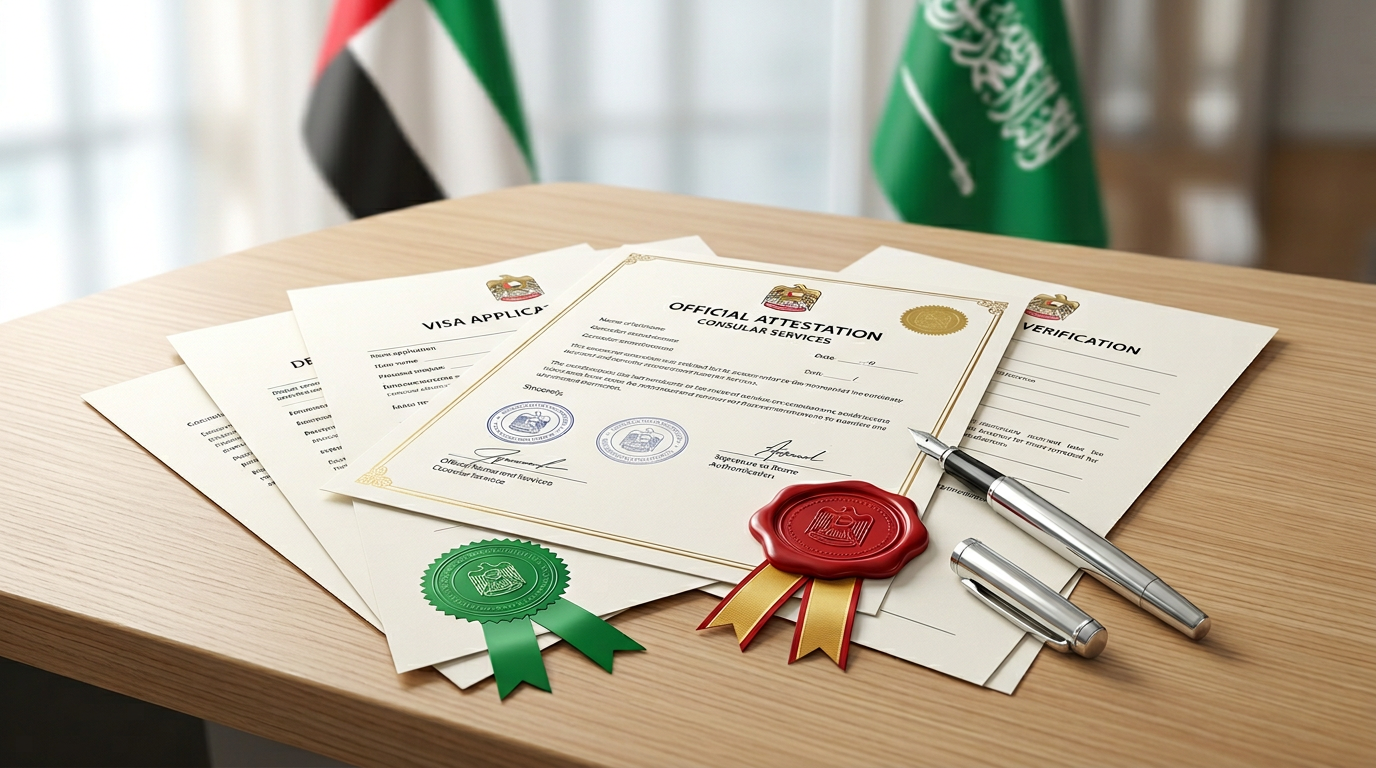
Attestation is the process of legally verifying the authenticity of a document's signature and seal. It confirms that the document was issued by a legitimate authority. Because the UAE and Saudi Arabia are not members of the Hague Apostille Convention, they require a rigorous, multi-step consular legalization process. An apostille stamp is not sufficient for GCC work visas; you must complete the full chain of authentication.
Without proper MOFA attestation on your educational degrees, you cannot be issued a skilled worker visa. You will be legally barred from taking on managerial, engineering, or medical titles. In fact, if you are working in the UAE while awaiting professional licenses, you know that regulatory bodies like the Dubai Health Authority (DHA) or the Saudi Council of Engineers (SCE) will freeze your application until your attested degrees are uploaded and verified.
The MOFA Attestation Process: A Complete Breakdown
The golden rule of attestation is that it must follow a strict hierarchy. A document must be verified at the local level, then the state/provincial level, then the national diplomatic level, and finally by the destination country's authorities. Skipping a step will result in an immediate rejection at the next counter.
Step 1: Local Notary and Home Department Authentication
The journey begins where the document was issued. For an educational degree, this means the document must first be verified by the issuing university or the regional higher education commission. In India, degrees must be verified by the State Human Resource Development (HRD) department of the state where the university is located. For personal documents like marriage or birth certificates, the State Home Department or the Sub-Divisional Magistrate (SDM) must provide the initial stamp. In Pakistan, educational degrees must first be attested by the Higher Education Commission (HEC), while personal documents go through the local magistrate and the Ministry of Foreign Affairs directly.
Step 2: Ministry of External Affairs (MEA) in Home Country
Once the local state authority has stamped the back of your document, it must travel to your country's capital (or regional diplomatic office) for federal authentication. In India, this is the Ministry of External Affairs (MEA). The MEA verifies the signature of the state HRD or Home Department official and applies their own seal. At this stage, your home country has officially declared the document to be genuine and ready for international presentation.
Step 3: UAE or Saudi Embassy Attestation
This is often the most time-consuming step. The MEA-attested document must now be submitted to the embassy or consulate of the destination country (UAE or Saudi Arabia) located within your home country. The foreign embassy will review the MEA stamp, collect a substantial processing fee, and affix a consular stamp. For Saudi Arabia, this step is notoriously stringent. Educational documents submitted to the Saudi Cultural Attaché often require a verified letter from your university confirming your enrollment as a regular, full-time student (distance learning degrees are frequently rejected for Saudi employment visas), especially if you also need to pass the Saudi Skills Verification Program (SVP).
Step 4: Final MOFA Attestation in the GCC
You might think you are done once you land in Dubai or Riyadh, but there is one final, crucial step. Before your employer can submit your documents to the Ministry of Human Resources and Emiratisation (MOHRE) in the UAE or the Ministry of Human Resources and Social Development (MHRSD) in Saudi Arabia, the local Ministry of Foreign Affairs must verify the embassy stamp.
In the UAE, this process has been highly digitized. You no longer need to stand in line at a government building. You can simply upload your documents to the MOFAIC (Ministry of Foreign Affairs and International Cooperation) smart app, pay the fee (typically around AED 150 for personal/educational documents), and arrange for a courier to pick up the original document, stamp it, and return it to your doorstep. In Saudi Arabia, you must book an appointment through the unified MOFA portal, pay via the SADAD system, and visit a MOFA branch to get the final green sticker placed on your degree.
Common Pitfalls and How to Avoid Rejections
Despite clear guidelines, hundreds of attestation applications are rejected daily due to simple, avoidable errors. These rejections can reset your entire timeline, costing you weeks of delay and hundreds of dollars in lost fees.
- Name Mismatches: This is the number one cause of rejection. If your passport says 'Mohammad Ali Khan' but your engineering degree says 'Mohd Ali Khan', you will face severe hurdles. You may need an official name-same affidavit sworn before a magistrate to bridge the discrepancy.
- Laminated Documents: Do not laminate your original degrees. Government officials need to stamp directly onto the paper. If your document is laminated, you will have to get it carefully de-laminated, risking damage to the original paper.
- Distance Learning Degrees: Saudi Arabia generally does not accept online, part-time, or distance education degrees for skilled work visas. Ensure you have a 'Bonafide Certificate' from your university explicitly stating you were a full-time, regular student.
- Expired PCCs: As mentioned, Police Clearance Certificates expire in 3 to 6 months. Never initiate a PCC until your employer confirms that the visa quota is approved and they are ready for the final submission.

Can I Use Agencies for Attestation?
Navigating state departments, federal ministries, and foreign embassies is practically a full-time job. For most working professionals, taking days off to queue at government offices is impossible. This is why a massive cottage industry of document attestation agencies exists.
Using a recognized attestation agency or a service like VFS Global is highly recommended. These agencies have established relationships with local HRD departments and embassies. They know the exact sequence required, the current fee structures, and the formatting preferences of different consular officials. While using an agency will cost you a premium, the peace of mind and speed they offer are usually well worth the investment when a high-paying GCC job is on the line.
However, beware of fraudulent operators. Never hand over your original university degree or passport to an unregistered agent operating out of a small kiosk. Always demand receipts, track your document's progress online, and ensure the agency is officially empaneled by the relevant embassy.
Frequently Asked Questions
Is an apostille sufficient for UAE or Saudi work visas?+
How much does MOFA attestation cost in the UAE?+
Do I need a Police Clearance Certificate for a UAE visit visa?+
What happens if my name on the degree does not match my passport?+
Final Thoughts: Master the Paperwork to Secure the Job
The excitement of accepting a job offer in Dubai, Abu Dhabi, or Riyadh can quickly turn into frustration when confronted with the reality of GCC document attestation. However, by understanding the strict hierarchy of the MOFA attestation process and timing your Police Clearance Certificate correctly, you can bypass the administrative bottlenecks that derail so many expatriate careers.
Start the process early. The moment you enter serious negotiations for a Middle Eastern role, begin gathering your original degrees, check them for spelling errors against your passport, and consider initiating the state-level HRD verification. The faster you can present properly attested documents to your future employer, the faster your visa will be issued, and the sooner you can begin your new life in the Gulf.
Ready to find an employer who values your skills and supports your relocation journey? Take control of your GCC job search by joining a platform designed for serious professionals. Sign up today at https://app.basecareer.co/auth and accelerate your career in the Middle East.
Land 4x more interviews in 27 days. Join Base Career Today.
Track applications, tailor resumes, and follow up faster in one UAE job search system.
Start freeNo credit card required

James T.
Canada 🇨🇦 → Riyadh 🇸🇦
“50 applications, zero replies with my Canadian CV. Base Career got me 4 Riyadh interviews and a Series B offer.”
Written by Base Career Research Team
Produced by the Base Career Research Team with AI, using Base Career job-market data, and published automatically. How our articles are made
Related Posts

Is it Easy to Get a Job in Dubai From Overseas? The Honest Truth
Dreaming of a tax-free salary in Dubai but living abroad? We analyze the challenges of international applications and share a strategic roadmap for success.

Building 'Wasta' from Scratch: Networking Strategies for Dubai Expats
Frustrated by 1,000+ applicants on LinkedIn? Learn how to build 'Wasta'—your professional network—from zero to access the UAE's hidden job market.