How to Avoid Costly Travel and Visa Mistakes Moving to the GCC

Landing a job in the Middle East is a major career milestone. After weeks of tailoring your resume, surviving intensive multi-round interviews, and navigating tough salary negotiations, receiving that finalized offer letter from a company in Dubai, Riyadh, or Doha feels like reaching the ultimate finish line. However, for many professionals, this moment of triumph is quickly overshadowed by the stressful reality of international relocation. The transition from simply signing an employment contract to actually stepping foot in the Gulf Cooperation Council (GCC) region is fraught with complex logistical hurdles. Recently, prominent travel agencies have been sounding the alarm about a growing wave of candidate "panic" at departure gates. From professionals being offloaded due to missing emigration clearances to massive hidden fees triggered by misunderstood transit visa requirements, the mistakes made during the actual move can be incredibly costly.
Moving your entire life across borders requires far more nuance than just booking the cheapest available flight on a travel aggregator. It demands a highly strategic approach to understanding your specific entry permits, optimizing your flight routing, accurately calculating baggage allowances, and complying strictly with your home country's emigration laws. A single administrative oversight at the airport can result in missed flights, lost housing deposits, or even the heartbreaking cancellation of your hard-earned job offer because you failed to arrive on your agreed-upon start date. If you are relocating to the GCC for the first time—particularly if you are traveling from South Asia—you must treat your travel logistics with the exact same level of professionalism and meticulous attention to detail that you applied to your job hunt.
This comprehensive guide addresses the harsh realities of moving to the GCC after securing a job. We will walk you through a practical, step-by-step checklist for handling confusing transit visas, selecting alternate flight routes to save money, complying with stringent home-country emigration rules, and avoiding the expensive errors that consistently trap first-time expats. By understanding the common pitfalls faced by professionals traveling from India, Pakistan, and the wider region, you can safeguard your finances, protect your mental health, and ensure your new career in the Middle East starts on a solid foundation.
The Foundation of Relocation: Understanding Your Entry Permit Status
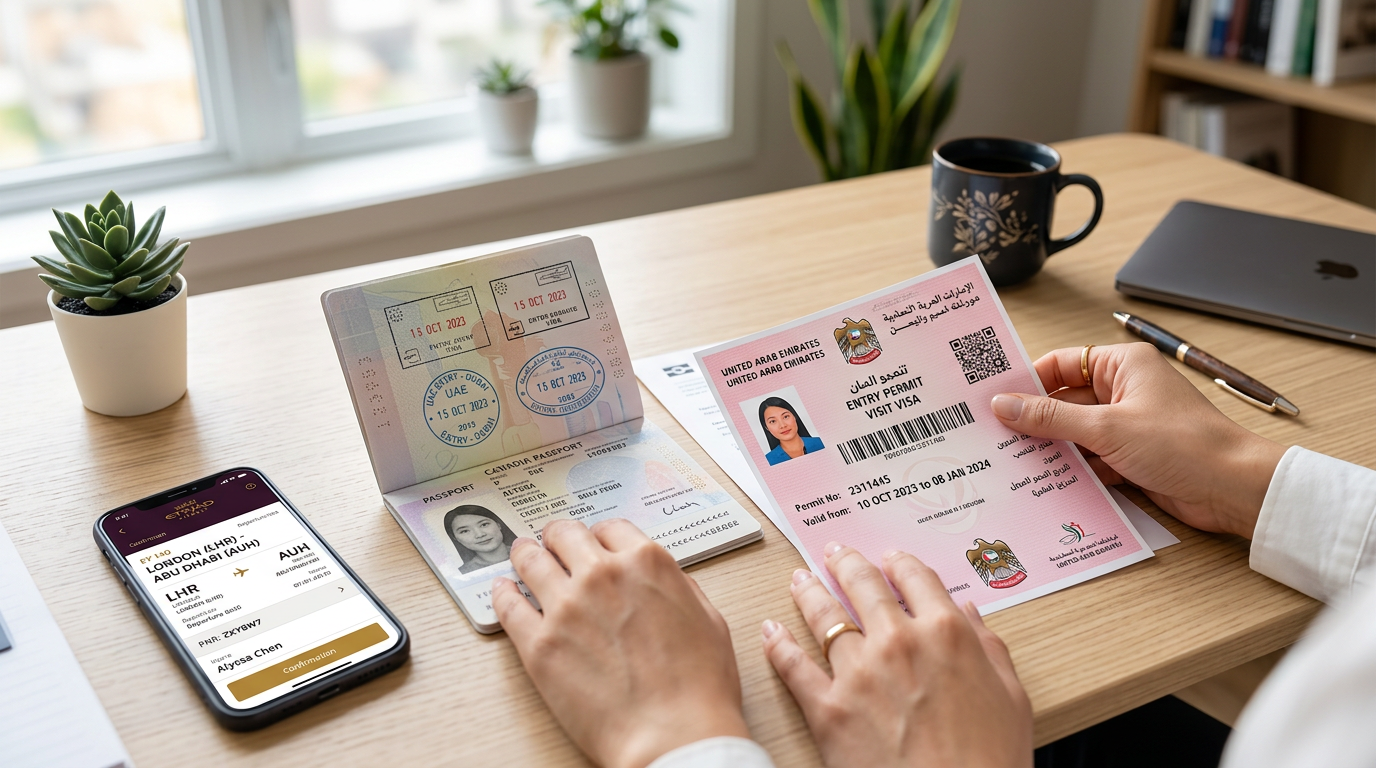
The very first mistake candidates make when preparing to relocate is misunderstanding the exact nature of the document that grants them entry into the host country. In the GCC, the rules governing how you enter the country dictate exactly how you must book your travel. There is a massive difference between flying into the UAE on a standard tourist visa with a promise of future employment, and flying in on an officially issued employment entry permit (often referred to as a "Pink Visa" in the UAE). Your flight booking strategy must directly align with your visa type to avoid being denied boarding by your airline.
If your employer is flying you out on a standard tourist or visit visa while your employment paperwork is being processed, you are legally entering the country as a tourist. This means airline check-in staff and immigration officers in your home country will treat you as one. A cardinal rule of traveling on a visit visa is that you must possess a confirmed return or onward flight ticket. Even if you hold a signed job offer letter, presenting only a one-way ticket while holding a visit visa is a guaranteed way to be offloaded at the departure gate. If you find yourself in a scenario where you are utilizing a visit visa for a Dubai job search or joining a company early, you must account for the cost of a return ticket, which you may eventually have to cancel or forfeit once your official employment visa is issued.
Conversely, if your employer has completed the preliminary labor approvals and issued an official employment entry permit, you are legally authorized to enter the country on a one-way ticket. In this scenario, presenting the printed entry permit along with your passport is sufficient to clear check-in. However, candidates must still be cautious. Ensure that your employer has sent you the high-resolution, final version of the e-visa and not just a screenshot of an application portal. Immigration officers will scan the barcode on the permit to verify its authenticity in the official government systems before stamping your passport. For those navigating the complexities of immediate joining requirements in the UAE, ensuring your documentation matches your flight itinerary is the most critical first step of your journey.
The Financial Trap of Transit Visas and Self-Transfer Flights
When faced with the expense of international relocation, it is incredibly tempting to hunt down the cheapest possible flight to your destination. First-time expats frequently utilize aggregate booking sites that piece together connecting flights on different airlines to offer a rock-bottom price. For example, a candidate moving from Mumbai to Riyadh might book a flight that routes through Muscat (Oman) on one airline, and then connects to Riyadh on a completely different budget carrier. While this might save you a few hundred dollars upfront, it frequently leads to one of the most devastating and expensive travel mistakes: the self-transfer transit visa trap.
When you book connecting flights on a single itinerary (a single PNR or booking reference number) with the same airline or partner airlines, your checked baggage is automatically transferred to your final destination. You remain in the international transit zone of the layover airport, which means you generally do not need a transit visa for that intermediate country. However, if you book a "self-transfer" flight—meaning you hold two separate tickets from two unpartnered airlines—you must physically collect your baggage from the carousel during your layover and check it in again at the departure counter for your next flight.
Here is where the disaster strikes: to collect your baggage, you must pass through passport control and legally enter the layover country. If you do not hold a valid visa for that country (e.g., Oman, Bahrain, or Kuwait), immigration will not allow you to enter. Because you cannot collect your bags and check in for your next flight, you will miss your connection entirely. Worse yet, airline check-in staff at your origin city know this rule. If they see you are on a self-transfer itinerary without the required transit visa, they will deny you boarding immediately. The panic of realizing your cheap flight is entirely invalid, coupled with the need to buy a last-minute, direct flight at the airport counter, can easily cost three to four times more than what you initially thought you saved.
To avoid this, stick to a simple rule: if you are relocating with heavy baggage and important belongings, always book your flights on a single PNR. Ensure the itinerary explicitly states that baggage will be checked through to the final destination. If you must use a self-transfer route, you are solely responsible for securing the necessary transit visas for any country where you have a layover, which adds layers of unnecessary paperwork and cost to your move.
Navigating Home Country Emigration Laws: ECR and e-Migrate

“I kept getting rejections from London. Base Career rewrote my CV for Dubai, and I landed Emirates in 3 weeks.”
Sarah M. · Marketing Manager · UK 🇬🇧 → Dubai 🇦🇪
No credit card required
One of the most heart-wrenching scenes at major airports in India and Pakistan involves fully packed, excited professionals being turned away by immigration officers just steps before their departure gate. The culprit is almost always a failure to comply with home-country emigration clearance laws. Governments in South Asia have strict regulations designed to protect their citizens from exploitation abroad, but failing to understand these rules can halt your relocation entirely.
For Indian professionals, the most critical detail is your passport status. Passports are categorized as either ECR (Emigration Check Required) or ECNR (Emigration Check Not Required). If your passport falls under the ECR category—typically issued to individuals who have not submitted proof of completing high school education during the application process—you cannot legally leave India for employment purposes without obtaining prior clearance from the Protector of Emigrants (POE). Even if you hold a valid employment visa for the UAE or Saudi Arabia, Indian immigration will offload you if you lack this clearance. Furthermore, Indian citizens holding ECR passports must ensure their prospective employer has processed their employment contract through the government's e-Migrate portal. Skipping this step is a fatal error.
Similarly, professionals in Pakistan must secure a "Protector" stamp on their passports from the Bureau of Emigration & Overseas Employment before traveling on a work visa. This process requires presenting your official job offer, employment visa, and a valid life insurance policy. For those learning how to apply for jobs in Dubai from Pakistan, understanding that securing the visa is only half the battle is crucial. Without the Protector stamp, Pakistani airport immigration will deny your exit. It is highly advised to complete these bureaucratic steps weeks before your planned departure, as government offices can face backlogs and delays that could jeopardize your start date.
- Check your passport status immediately. In India, look at the last page of your passport to see if it is stamped with 'Emigration Check Required'.
- If required, initiate the POE clearance or Protector stamp process the exact same day your employment visa is issued.
- Ensure all educational certificates are properly attested by the Ministry of Foreign Affairs (MOFA) and the relevant embassy before leaving your home country.
- Keep physical, colored copies of your employment contract, entry permit, and emigration clearance easily accessible in your hand luggage.

Strategic Flight Booking and Baggage Allowances
When you travel for a holiday, a 20-kilogram baggage allowance is usually sufficient. When you are relocating your entire life to a new country, 20 kilograms will barely cover your winter clothing and basic essentials. First-time expats frequently underestimate how much they need to pack, leading to severe financial penalties at the airport check-in counter. Low-cost carriers (LCCs) heavily market cheap base fares, but they penalize excess baggage aggressively. Buying an extra 10 to 15 kilograms of baggage allowance directly at the airport counter can sometimes cost more than the original flight ticket itself.
Travel agencies routinely witness the distressing "candidate panic" where individuals are forced to abandon personal belongings, expensive electronics, or irreplaceable mementos at the airport because they simply cannot afford the exorbitant excess baggage fees. To avoid this, you must conduct a thorough cost-benefit analysis before booking. Often, a ticket on a full-service carrier (such as Emirates, Qatar Airways, or Saudia) that includes 30 to 40 kilograms of checked baggage is actually cheaper in the long run than a low-cost ticket that requires you to purchase extra weight addons. If you are researching how to apply for jobs in Dubai from India and are planning your move, prioritize airlines that cater specifically to the South Asian expat demographic, as they frequently offer promotional "student" or "worker" fares with generous baggage allowances.
Furthermore, familiarize yourself with the customs regulations of your destination country regarding what you can and cannot bring. The GCC countries have strict rules regarding prohibited items, including certain prescription medications (which require a doctor's note and prior approval), poppy seeds, specific religious materials, and unauthorized communication devices. Having your belongings confiscated at customs in Dubai or Riyadh is a stressful and entirely preventable way to begin your new life.
Managing Initial Forex, Currency, and On-the-Ground Logistics
A critical miscalculation many relocating professionals make involves liquid cash and early financial survival. Even if you have signed a highly lucrative contract, you will not receive your first paycheck until you have completed your first 30 days of work. In the interim, you are solely responsible for your daily survival, transportation, food, and potentially temporary housing costs. Arriving in the GCC without adequate funds is a fast track to severe financial distress.
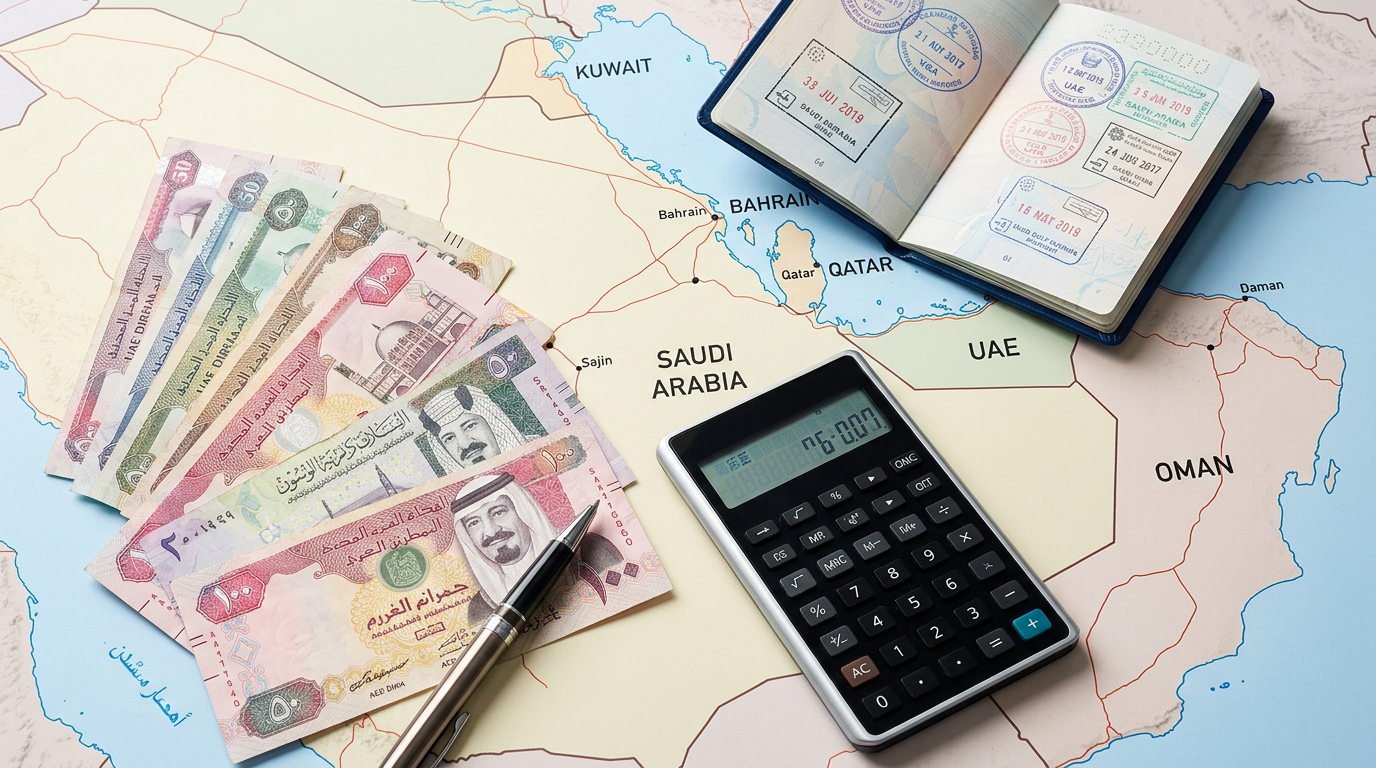
Relying on airport currency exchange kiosks is a widespread mistake. Airport kiosks offer notoriously poor exchange rates and high service fees, instantly eating into your survival budget. Instead, secure your initial foreign exchange (UAE Dirhams, Saudi Riyals, or Qatari Riyals) from reputable local exchanges in your home city a few days before departure. Additionally, consider activating a multi-currency prepaid travel card or a zero-markup international debit card (such as Niyo in India or SadaPay in Pakistan). These modern fintech solutions allow you to swipe for groceries and metro tickets in the GCC without incurring massive foreign transaction fees from your traditional home bank.
You must also carefully navigate the customs limits regarding cash carrying. While you want to ensure you have enough funds to comfortably survive the first 45 days, carrying excessive amounts of undeclared cash violates anti-money laundering regulations. Ensure you research the exact maximum allowable limit for undeclared cash in both your departure country and your destination. If your initial housing requires a substantial deposit (common in cities like Dubai and Riyadh), coordinate with your employer to see if they offer a relocation advance, or ensure your international bank transfers are set up before you travel.
Alternate Travel Routes and Beating High-Season Surges
Flight prices between South Asia and the GCC fluctuate wildly based on seasonality. If your employer requires you to join during a peak travel window—such as right after Eid, during Diwali, or in late December—you may find that direct flights to major hubs like Dubai International (DXB) or King Khalid International in Riyadh (RUH) are astronomically expensive. If your employer is not covering your initial flight upfront, you will need to get creative with your routing to protect your savings.
One highly effective strategy is leveraging the region's expansive network of secondary airports and domestic ground transport. If you are relocating to Dubai, check flights arriving in Sharjah (SHJ) or Abu Dhabi (AUH). Low-cost carriers frequently run heavy discounts to these neighboring emirates, and an intercity bus or taxi ride to Dubai takes less than two hours and costs a fraction of the flight difference. Similarly, if you are moving to Riyadh, look into flying into Dammam (DMM) and taking the modern, high-speed train or a comfortable VIP bus across the country.
However, you must exercise caution when utilizing alternate entry ports. While the UAE is generally flexible—allowing you to enter through any emirate regardless of where your visa was issued—other GCC nations may have stricter localized entry rules. Always consult with your company's PRO (Public Relations Officer) or HR department to confirm that entering through a different city will not disrupt your residency stamping process. They are your primary resource for ensuring that your creative travel hacking remains entirely compliant with local immigration laws.
Frequently Asked Questions About GCC Relocation Logistics
Frequently Asked Questions
Do I need a return ticket if I am traveling to the GCC on an employment entry permit?+
Can I clear Indian immigration with an ECR passport for a UAE or Saudi job?+
What happens if my self-transfer flight has a layover in Oman or Bahrain?+
How much cash should I carry when moving to the GCC for a new job?+
Conclusion: Secure Your Move and Your Career
Successfully navigating the job market and securing a role in the Middle East is an incredible achievement that demands celebration. However, as travel agencies and seasoned expats will attest, the logistics of actually moving across borders can quickly turn into a costly nightmare if not managed with absolute precision. By understanding the intricacies of your specific entry permit, avoiding the hidden traps of self-transfer flights, adhering strictly to home-country emigration clearances, and budgeting wisely for your initial 45 days, you can protect your hard-earned savings and ensure a smooth transition. Relocation is the crucial bridge between securing the offer and actually starting the job; treat it with the strategic planning it deserves. If you are ready to take the leap, optimize your job search, and find verified opportunities across the region, sign up at https://app.basecareer.co/auth today.
Stay ahead of the market. Join Base Career Today.
Turn market shifts into a clearer application workflow with resume tailoring and tracking in one place.
Start freeNo credit card required

James T.
Canada 🇨🇦 → Riyadh 🇸🇦
“50 applications, zero replies with my Canadian CV. Base Career got me 4 Riyadh interviews and a Series B offer.”
Written by Base Career Research Team
Produced by the Base Career Research Team with AI, using Base Career job-market data, and published automatically. How our articles are made
Related Posts

Building 'Wasta' from Scratch: Networking Strategies for Dubai Expats
Frustrated by 1,000+ applicants on LinkedIn? Learn how to build 'Wasta'—your professional network—from zero to access the UAE's hidden job market.

Landing Your First Dubai Job: A Roadmap for Freshers and Graduates
Breaking into the UAE job market with zero experience is tough but not impossible. Here is your strategic roadmap to landing that first role in Dubai.