GCC Jobs in Wartime: The Sectors Hiring Right Now (And the Ones Collapsing) in 2026
.png)
Ankush Wadhwa

The geopolitical landscape of the Middle East has fundamentally shifted, and with it, the expat job market. As the 2026 conflict involving Iran, Israel, and the USA reshapes the Gulf, job seekers in the UAE, Saudi Arabia, and Qatar are facing a deeply polarized labor market. For professionals relying on basecareer.co to navigate their career trajectories, understanding this new economic reality is no longer optional—it is a matter of professional survival.
We are currently witnessing the GCC split into two simultaneous realities. On one hand, historically dominant industries are in rapid decline as foreign investment hesitates and global travel patterns reroute. On the other hand, crisis-driven sectors are experiencing an unprecedented boom, scrambling to hire top talent at premium salaries. In this urgent, data-driven guide, we break down exactly what is happening on the ground, drawing on the latest figures from Oxford Economics, ManpowerGroup, and Gulf International Forum, to help you reposition your job search.
The Freefall: Sectors to Avoid Right Now
For the past decade, the Gulf’s economic diversification relied heavily on consumer-facing mega-projects, luxury tourism, and global connectivity. The current conflict has stress-tested these sectors beyond their limits. If your background is strictly tied to these industries, it is time to consider transferring your skills.
Tourism, Aviation, and Hospitality
The numbers paint a stark picture. Recent data indicates that Dubai hotel bookings are down 60% year-over-year as international travelers delay or cancel leisure trips. The ripple effect across the broader GCC threatens approximately 925,000 tourism-related jobs. Aviation—a cornerstone of the UAE and Qatari economies—has seen massive disruptions due to closed airspaces and soaring insurance premiums. Hiring freezes are rampant across major airlines, and ground operations are significantly scaling back contract renewals.
Mega-Construction and Real Estate
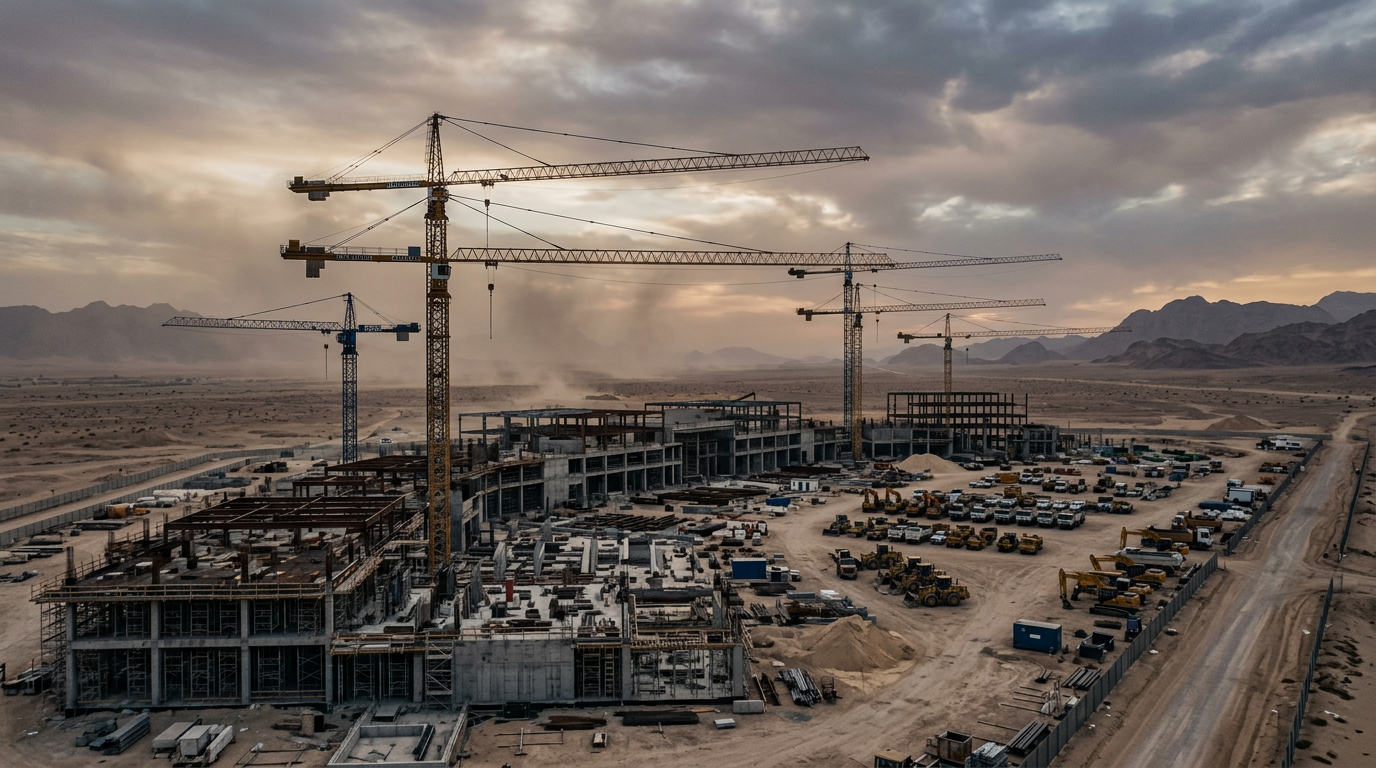
The most visible casualty of the regional instability is the scaling back of hyper-ambitious infrastructure projects. Saudi Arabia’s flagship Vision 2030 project, NEOM, has reportedly been scaled back by 97% in its current phase. With supply chains severed and foreign direct investment cooling, developers are shifting focus from groundbreaking to simply maintaining existing assets. Project managers, architects, and civil engineers in the luxury and commercial space are facing tight bottlenecks.
The Wartime Boom: Where Hiring is Surging
While traditional economic pillars struggle, the geopolitical crisis has ignited a massive demand for professionals who can secure, supply, and defend the region's core assets. If you can pivot your resume to highlight crisis management, technical security, or logistical problem-solving, you will find a highly lucrative market waiting for you.

“I kept getting rejections from London. Base Career rewrote my CV for Dubai, and I landed Emirates in 3 weeks.”
Sarah M. · Marketing Manager · UK 🇬🇧 → Dubai 🇦🇪
No credit card required
- Cybersecurity & Digital Defense: Cyber warfare has escalated alongside physical conflict. Financial institutions, energy companies, and governments are aggressively recruiting threat hunters, SOC analysts, and cloud security architects.
- Logistics & Supply Chain Rerouting: The effective closure and high-risk status of the Strait of Hormuz has created a logistical nightmare. Supply chain directors who can architect alternative overland routes or negotiate complex maritime insurance are commanding premium packages.
- Defense & Aerospace: Military contractors and domestic defense initiatives in the UAE and Saudi Arabia are on a massive hiring spree. Roles in procurement, defense technology engineering, and tactical communications are expanding rapidly.
- Upstream Oil & Gas: To secure national revenues and stabilize global energy markets, GCC states are heavily investing in upstream extraction and secure storage facilities, boosting demand for petroleum engineers and energy risk analysts.
The GCC labor market hasn't shrunk; it has aggressively mutated. We are seeing a 300% spike in demand for supply chain experts who can navigate maritime blockades, while traditional commercial roles sit vacant.
Saudi Vision 2030 Stress-Tested: $840B in Exposed Investment
Saudi Arabia’s transition away from oil was designed for an era of peace and unprecedented global collaboration. Now, with the Iran conflict on its doorstep, Vision 2030 is facing its ultimate stress test. Analysts at Oxford Economics estimate that roughly $840 billion in planned and active investments are currently exposed to regional volatility.
What does this mean for job seekers in the Kingdom? The hiring focus has shifted drastically. The Ministry of Investment and the Public Investment Fund (PIF) are deprioritizing entertainment and luxury tourism gigaprojects in favor of industrial resilience, food security, and domestic manufacturing. If you are targeting the Saudi market, focus on roles related to localizing supply chains, advanced manufacturing, and strategic resource management. The capital is still flowing, but it has been redirected toward national security and self-sufficiency.
The Expat Calculus: Stay or Leave?
For the millions of expatriates living in the Gulf, the psychological toll of a nearby war has prompted deep reflection. Should you pack up and return home, or ride out the storm? Surprisingly, sentiment remains resilient. According to recent surveys, 86% of expats still rate life in the UAE better than in their home countries, citing internal security, lack of income tax, and high standards of living.
However, the inflow pipeline is visibly cooling. New expats are hesitant to relocate, which has created a unique advantage for those already on the ground. Companies prefer hiring locally available candidates to avoid the risks and delays of relocating talent during a geopolitical crisis. If you are already in Dubai, Abu Dhabi, Doha, or Riyadh, you have a distinct competitive edge over overseas applicants.

Your Action Plan: Repositioning for the New Reality
Adapting to a wartime job market requires agility. You cannot rely on the strategies that worked in 2023. Here is a practical action plan to reposition your job search through basecareer.co and secure a role in the current climate:
- Audit and Pivot Your Keywords: Remove fluff related to 'hyper-growth' and 'luxury scaling'. Replace them with crisis-resilient keywords: 'Risk Management', 'Business Continuity', 'Cost Optimization', and 'Supply Chain Resilience'.
- Target B2B and B2G over B2C: Consumer spending is tightening. Shift your applications toward Business-to-Business (B2B) services and, more importantly, Business-to-Government (B2G) contractors. Governments are the biggest spenders during crises.
- Emphasize Cross-Functional Efficiency: With companies hesitant to expand headcounts, they are looking for 'swiss-army knife' employees. Highlight how your background allows you to bridge multiple departments (e.g., HR and Operations, or IT and Logistics).
- Automate Your Applications: In a polarized market, timing is everything. Use automated platforms to ensure you are the first applicant when a rare, high-value role opens in a booming sector.
Conclusion: Navigating the Storm
The 2026 conflict reshaping the Gulf has undoubtedly created an environment of anxiety, but for the strategic job seeker, it is also an environment of concentrated opportunity. The collapse of leisure and mega-construction has been met with an equally powerful surge in defense, cybersecurity, and strategic logistics. Success in this market belongs to those who can objectively assess the macroeconomic shifts and rapidly align their skills with the region's most urgent needs.
You don't have to navigate this volatile landscape alone. By leveraging intelligent job matching and strategic application tools, you can position yourself in front of the companies that are actively hiring right now. Ready to future-proof your career in the Middle East? Sign up for basecareer.co today and let our automation platform connect you with the region's most resilient opportunities.
Frequently Asked Questions
Which sectors are actively hiring in the GCC in 2026 despite regional uncertainty?+
Is it still a good time to move to the UAE or Saudi Arabia for work in 2026?+
Which industries have seen the biggest job slowdowns in the Gulf in 2026?+
Stay ahead of the market. Join Base Career Today.
Turn market shifts into a clearer application workflow with resume tailoring and tracking in one place.
Start freeNo credit card required

James T.
Canada 🇨🇦 → Riyadh 🇸🇦
“50 applications, zero replies with my Canadian CV. Base Career got me 4 Riyadh interviews and a Series B offer.”
Written by Ankush Wadhwa
Helping you accelerate your career with AI-powered tools.
Related Posts

Building 'Wasta' from Scratch: Networking Strategies for Dubai Expats
Frustrated by 1,000+ applicants on LinkedIn? Learn how to build 'Wasta'—your professional network—from zero to access the UAE's hidden job market.

Landing Your First Dubai Job: A Roadmap for Freshers and Graduates
Breaking into the UAE job market with zero experience is tough but not impossible. Here is your strategic roadmap to landing that first role in Dubai.