The Qualification Trap: Why Career Positioning Outperforms Degrees in the UAE
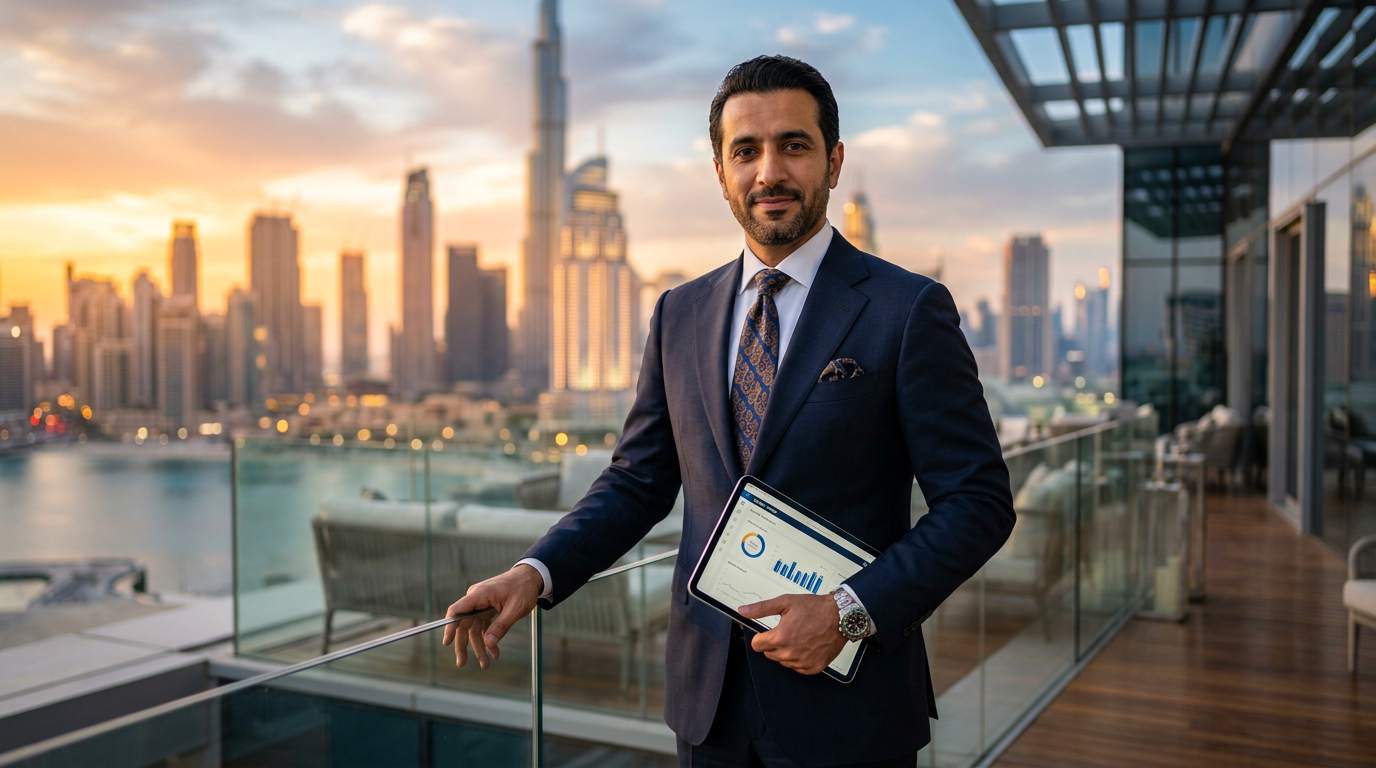
You have a Master's degree from a top-tier university. Your resume boasts a PMP, a Six Sigma Black Belt, and a string of other acronyms that took years of late-night studying to acquire. Yet, your inbox remains empty. You are caught in what career strategists call the Qualification Trap. In a region as hyper-competitive as the Middle East, many expats operate under the false assumption that adding just one more certification to their CV will magically unlock executive-level interviews. The reality of the UAE job market is far more nuanced, and it demands a complete shift in how you market your professional value.
Welcome to Dubai, a city that acts as a global magnet for ambitious talent. When a single Senior Operations Manager role opens up, it attracts thousands of applications. Among those applicants are professionals with degrees from Oxford, INSEAD, and MIT. When everyone is highly educated, education ceases to be a differentiator. It becomes a baseline expectation. This is why career positioning outperforms degrees in the UAE. Degrees get you past the basic human resources checklist, but strategic positioning is what actually seats you at the executive table.
Strategic career positioning is the art of translating your academic background and historical work experience into a targeted, future-focused narrative. It is about moving away from being a passive collector of credentials and transforming into an active solver of high-level business problems. In this comprehensive guide, we will explore why relying solely on your qualifications is actively harming your UAE job search, how to pivot toward a positioning-first strategy, and what it takes to secure high-ticket roles in the GCC's rapidly evolving economy.
What is the Qualification Trap in the Middle East?
The Qualification Trap is a psychological safety net. For many professionals facing rejection or silence in the job market, the easiest explanation to swallow is, "I must not be qualified enough." This belief triggers a cycle of perpetual studying. You enroll in another executive MBA, you pay for another specialized diploma, or you spend weekends cramming for an agile project management certification. You convince yourself that this new piece of paper will be the silver bullet that forces Dubai hiring managers to take notice.
However, the GCC job market operates on speed, execution, and tangible ROI. Companies in the UAE are rapidly scaling to meet the ambitious goals of economic directives like the Dubai Economic Agenda (D33) and Saudi Arabia's Vision 2030. Hiring managers are under immense pressure to deliver immediate results. They do not have the time to read through a chronologically listed academic history and guess how your theoretical knowledge might apply to their current operational bottlenecks. If your application reads like a university transcript rather than a business proposal, you will be passed over. This is a primary reason why Dubai recruiters ignore your CV despite your impressive academic pedigree.
When recruiters look at a senior-level candidate, they are looking for risk mitigation. They want to know that you have successfully navigated the exact challenges their company is facing right now. A degree proves that you can pass an exam in a controlled environment; it does not prove that you can manage a multicultural team of 50 people through a complex digital transformation while maintaining profitability in a tax-evolving landscape.

Degrees vs. Positioning: The Fundamental Difference
To understand why positioning wins, we must clearly define the difference between holding a degree and having a strong market position. A degree is a historical record. It states what you studied, where you studied it, and when you graduated. It is inherently backward-looking. Career positioning, on the other hand, is a forward-looking projection of your value. It dictates how the market perceives you, what niche you dominate, and what specific pain points you eliminate for your employer.
Consider two candidates applying for a VP of Marketing role in a Dubai-based real estate firm. Candidate A brands himself as an "MBA Graduate with 15 years of generic marketing experience." His resume lists every module he studied and every standard marketing task he has ever performed. Candidate B, who only holds a standard Bachelor's degree, positions herself as a "High-Ticket Real Estate Demand Generation Specialist." Her resume highlights how she lowered customer acquisition costs by 40% in a saturated market and built marketing funnels that catered specifically to ultra-high-net-worth individuals in the GCC.
Candidate A is selling a commodity (his time and his degree). Candidate B is selling a highly specific, high-value solution. The real estate firm will almost always hire Candidate B, and they will likely pay her a premium to do so. Candidate B has successfully bypassed the Qualification Trap by leveraging strategic career positioning. She understood that her future employer doesn't care about marketing theory; they care about selling luxury villas on the Palm Jumeirah.
Your degree is the receipt for your education. Your career positioning is the marketing brochure for your future impact. The UAE market pays for impact, not receipts.
How to Shift from 'Listing Qualifications' to 'Strategic Positioning'
Making the leap from an academic mindset to a strategic positioning mindset requires deep self-reflection and a thorough understanding of the local market mechanics. The UAE is a unique business ecosystem characterized by rapid growth, a massive expatriate workforce, diverse cultural dynamics, and heavy government investment in tech, sustainability, and infrastructure. Your positioning must intersect with these realities.
- Identify Your Micro-Niche: Generalists struggle in Dubai. If you are an 'IT Manager,' you are competing with thousands. If you are an 'IT Manager specializing in migrating legacy UAE logistics companies to cloud infrastructure,' you are a rare asset. Find the intersection of your strongest skills and the market's most urgent needs.
- Quantify Your Historical Impact: Look at your past roles and extract the business outcomes. Did your project save money? Did it generate revenue? Did it improve employee retention? Translate your academic knowledge into hard, undeniable metrics.
- Align with Regional Directives: Connect your expertise to the bigger picture. If you are in supply chain, position yourself around the UAE's goal of becoming a premier global logistics hub. If you are in HR, focus on talent retention in a transient expat market. Show that you understand the macro-economics of the Middle East.
- Rewrite Your Professional Narrative: Your resume summary, your LinkedIn headline, and your networking pitch must all tell the same cohesive story. Eliminate generic buzzwords like 'detail-oriented' and 'hardworking.' Replace them with authoritative statements about the specific value you deliver.

“I kept getting rejections from London. Base Career rewrote my CV for Dubai, and I landed Emirates in 3 weeks.”
Sarah M. · Marketing Manager · UK 🇬🇧 → Dubai 🇦🇪
No credit card required
Once you have established this foundation, you must relentlessly protect this new brand. Do not dilute your positioning by applying for roles that fall outside your defined niche just out of desperation. Desperation breeds a scattered resume, which signals to employers that you do not truly know your own value.
The Undeniable Power of Executive Presence
In the Middle East, business is deeply rooted in relationships, trust, and perception. It is a high-context culture where how you present yourself often carries as much weight as what you know. This is where executive presence becomes a critical component of your overall career positioning. You can hold a Ph.D. in organizational psychology, but if you cannot command a room, articulate your vision clearly, and inspire confidence in stakeholders, you will not secure leadership roles.
Executive presence is the amalgamation of your communication style, your emotional intelligence, your physical presentation, and your digital footprint. In Dubai, an optimized LinkedIn profile that showcases thought leadership is the modern equivalent of a glowing letter of recommendation. Senior professionals who regularly publish insights about their industry, comment thoughtfully on market trends, and engage with other leaders are actively building their executive presence. For actionable strategies on developing this crucial trait, you must learn how to master executive presence for UAE leadership roles.
Furthermore, true authority in the UAE market is often validated by third-party platforms. Getting featured in regional publications, speaking at industry conferences like GITEX or The Big 5, or participating in high-level panel discussions elevates you from a 'job seeker' to an 'industry expert.' When employers search your name, they shouldn't just find a list of degrees; they should find proof of your market influence. Discover how you can use UAE media coverage to fast-track your senior job search and establish yourself as an unignorable force in your sector.

Re-engineering Your Resume for Strategic Positioning
Your resume is the most direct manifestation of your career positioning. If your resume still places your education section at the very top (unless you are a recent graduate or working in academia), you are falling into the Qualification Trap. For mid-to-senior professionals, your education should be a footnote at the bottom of the second page. The prime real estate of your CV—the top third of the first page—must be dedicated entirely to your strategic value proposition.
To execute this properly, your resume must pass the 'Six-Second Test' while also satisfying the intricate algorithms of Applicant Tracking Systems (ATS). When a hiring manager in Dubai opens your document, they should instantly understand your niche, the scale of projects you have managed (budget, team size, geographical scope), and the tangible results you have delivered. Instead of listing 'Responsible for team management,' your bullet point should read, 'Mentored and scaled a cross-functional team of 25 across the UAE and Saudi Arabia, reducing operational downtime by 18% within six months.'
Crucially, a positioning-first strategy means your resume cannot be static. Sending the exact same document to fifty different companies is a guaranteed recipe for rejection. Your positioning must dynamically adapt to the specific pain points outlined in each job description. You must mirror the company's language, highlight the specific experiences most relevant to their needs, and seamlessly integrate their target keywords. When you tailor your profile this effectively, you shift the dynamic entirely. Instead of desperately chasing roles, you can implement reverse recruiting in the UAE, ensuring that top-tier headhunters come to you because your specialized positioning perfectly matches their search criteria.
Industry-Specific Examples: Where Positioning Always Wins
To truly grasp the power of positioning over qualifications, let us examine how this dynamic plays out across some of the most prominent industries in the GCC.
1. Digital Transformation & Tech: Having a Master's in Computer Science is commendable, but tech evolves faster than university curriculums. Companies in the UAE are pouring billions into AI, blockchain, and smart city infrastructure. They do not want theorists; they want executioners. A candidate who positions themselves as a "Turnaround Specialist for Enterprise Cloud Migrations" with a portfolio of successful UAE deployments will easily beat a candidate with dual Master's degrees but no specific, localized narrative.
2. Construction and Real Estate: The Middle East is home to some of the most ambitious mega-projects in human history. A generic degree in civil engineering or an MBA in finance won't make you stand out. However, positioning yourself as an "Expert in Cost-Control for Ultra-Luxury High-Rise Developments" or a "Specialist in FIDIC Contracts and GCC Vendor Management" speaks directly to the daily nightmares of property developers. You are offering a specific antidote to their specific pain.
3. Human Resources: With the UAE's continuous updates to labor laws, Emiratization quotas (Nafis), and the introduction of corporate tax, HR has shifted from an administrative function to a core strategic pillar. An HR professional with a CIPD Level 7 who brands themselves generally will struggle against an HR leader who positions themselves as an "Architect of Expat Retention and GCC Compliance Strategies." The latter demonstrates an acute awareness of the regional ecosystem.
Overcoming the Fear of Being 'Underqualified'
Many professionals cling to their degrees because they suffer from imposter syndrome. They believe that unless they have formal academic backing for every skill they possess, they have no right to claim expertise. This mindset is highly detrimental in the GCC. The modern business world values agility, adaptability, and emotional intelligence (often grouped as 'soft skills') far more heavily than rote memorization.
Of course, there are exceptions. If you are a medical surgeon, a structural engineer signing off on blueprints, or a corporate lawyer, strict regulatory qualifications and degrees are mandatory. They are legal requirements to practice. However, for the vast majority of corporate roles—ranging from marketing and sales to operations and general management—your degrees are merely the entry fee to the arena. How you play the game is determined entirely by your strategic positioning, your cultural agility in a diverse expat environment, and your relentless focus on driving measurable business outcomes.
Stop hiding behind your academic transcripts. The market does not pay you for what you know; it pays you for what you can do with what you know. It pays for leadership, clarity, and results. When you finally embrace this truth, you break free from the Qualification Trap and open the door to the high-ticket opportunities that have been eluding you.
Frequently Asked Questions
Does a Master's degree increase my salary in Dubai?+
Why am I not getting interviews despite having a Ph.D. in the UAE?+
What is career positioning in the context of the Middle East job market?+
Do employers in the UAE still verify educational degrees?+
Conclusion: Transform Your Positioning Today
The UAE job market is abundant with opportunities, but those opportunities are reserved for professionals who know how to articulate their exact value. The Qualification Trap keeps you stuck in the past, endlessly proving what you have studied rather than demonstrating what you can conquer. It is time to stop listing your degrees like a menu and start positioning yourself as the bespoke solution that Middle Eastern companies are desperately seeking.
Of course, translating this strategic positioning into perfectly tailored job applications can be incredibly time-consuming. You cannot manually rewrite your narrative for every single opening without burning out. Tools like Base Career automatically tailor your resume for each application—generating an ATS-optimised CV matched precisely to the job description in under 60 seconds, complete with a highly personalized instant cover letter. By letting AI handle the heavy lifting of asset creation, you can focus entirely on building relationships and showcasing your executive presence. Stop relying on a static CV full of degrees, and start applying with a dynamic, positioned strategy.
Try it free at https://app.basecareer.co/auth
Land 4x more interviews in 27 days. Join Base Career Today.
Track applications, tailor resumes, and follow up faster in one UAE job search system.
Start freeNo credit card required

James T.
Canada 🇨🇦 → Riyadh 🇸🇦
“50 applications, zero replies with my Canadian CV. Base Career got me 4 Riyadh interviews and a Series B offer.”
Written by Base Career Research Team
Produced by the Base Career Research Team with AI, using Base Career job-market data, and published automatically. How our articles are made
Related Posts

Is it Easy to Get a Job in Dubai From Overseas? The Honest Truth
Dreaming of a tax-free salary in Dubai but living abroad? We analyze the challenges of international applications and share a strategic roadmap for success.

Landing Your First Dubai Job: A Roadmap for Freshers and Graduates
Breaking into the UAE job market with zero experience is tough but not impossible. Here is your strategic roadmap to landing that first role in Dubai.