Visit Visa or Cancellation? What Immediate Joiners Need in UAE

If you have spent any amount of time scrolling through LinkedIn or local job boards looking for opportunities in Dubai, Abu Dhabi, or the wider UAE, you have undoubtedly encountered a very specific, and often frustrating, disclaimer at the bottom of job descriptions: "Immediate Joiners Only. Visit Visa or Cancelled Visa Preferred." For candidates currently employed in their home countries or comfortably working in the UAE with a standard 30-day notice period, this single sentence can feel like an impenetrable wall.
This heavy preference for immediate availability is a defining characteristic of the Middle Eastern job market. Companies in the UAE operate in a fast-paced, highly dynamic environment where project timelines are aggressive and hiring decisions are often made reactively rather than proactively. When a vacancy opens up, hiring managers rarely have the luxury of waiting three months for a candidate to serve their notice period, relocate, and settle in. They need a warm body in the seat by next Monday. As a result, candidates who hold a visit visa or are currently on a cancelled visa immediately rise to the top of the applicant tracking system.
However, being an "immediate joiner" is a double-edged sword. While it dramatically increases your chances of securing an interview and bypassing the initial screening hurdles, it also puts you in a highly vulnerable negotiating position. The ticking clock of an expiring visa can lead to immense psychological pressure, making candidates susceptible to lowball salary offers, illegal trial periods, and overstay fines. Whether you are actively planning your relocation or you are already in the country getting a job in Dubai, understanding the mechanics of visit and cancelled visas is absolutely critical for your career survival.
Why UAE Employers Obsess Over "Immediate Joiners"
To navigate the immediate joiner phenomenon, you first have to understand the psychology and operational constraints of a typical UAE Human Resources department. In many Western markets, hiring is a slow, methodical process focused heavily on long-term cultural fit, allowing candidates to comfortably serve notice periods that can sometimes stretch up to three months. In Dubai, the hiring culture is distinctly different. The market is driven by rapid growth, sudden project acquisitions, and high turnover rates. When a business wins a new contract or suddenly loses a key employee, the operational gap must be filled instantly.
The Cost of Waiting for Notice Periods
One of the primary reasons employers filter for visit or cancelled visas is the sheer friction associated with standard notice periods. If a company hires an employed candidate, they have to wait a minimum of 30 days for that individual to resign, hand over their duties, and finalize their visa cancellation with their current employer. During this waiting period, a lot can go wrong. The candidate's current employer might counter-offer, the candidate might get cold feet, or the business needs might shift abruptly. By targeting candidates who are already legally detached from an employer, companies mitigate the risk of candidate drop-off and eliminate the agonizing waiting game.
Furthermore, managing the visa transition process for an employed candidate involves coordinating with their previous company to ensure the visa is cancelled smoothly before the new work permit can be applied for. This creates a dependency on a third-party organization (the previous employer) over which the hiring company has zero control. If the previous employer delays the cancellation due to a dispute over final settlement or end-of-service gratuity, the new employer's hiring timeline is entirely derailed.
The Administrative Ease of Visit and Cancelled Visas
From a purely administrative standpoint, a candidate on a visit visa or a cancelled visa is a clean slate. There are no entanglements with the Ministry of Human Resources and Emiratisation (MOHRE) tied to another active labor contract. The hiring HR team can simply draft an offer letter, secure the candidate's signature, and immediately initiate the work permit quota application. For HR managers burdened with high requisition volumes, this streamlined, predictable process is highly attractive.
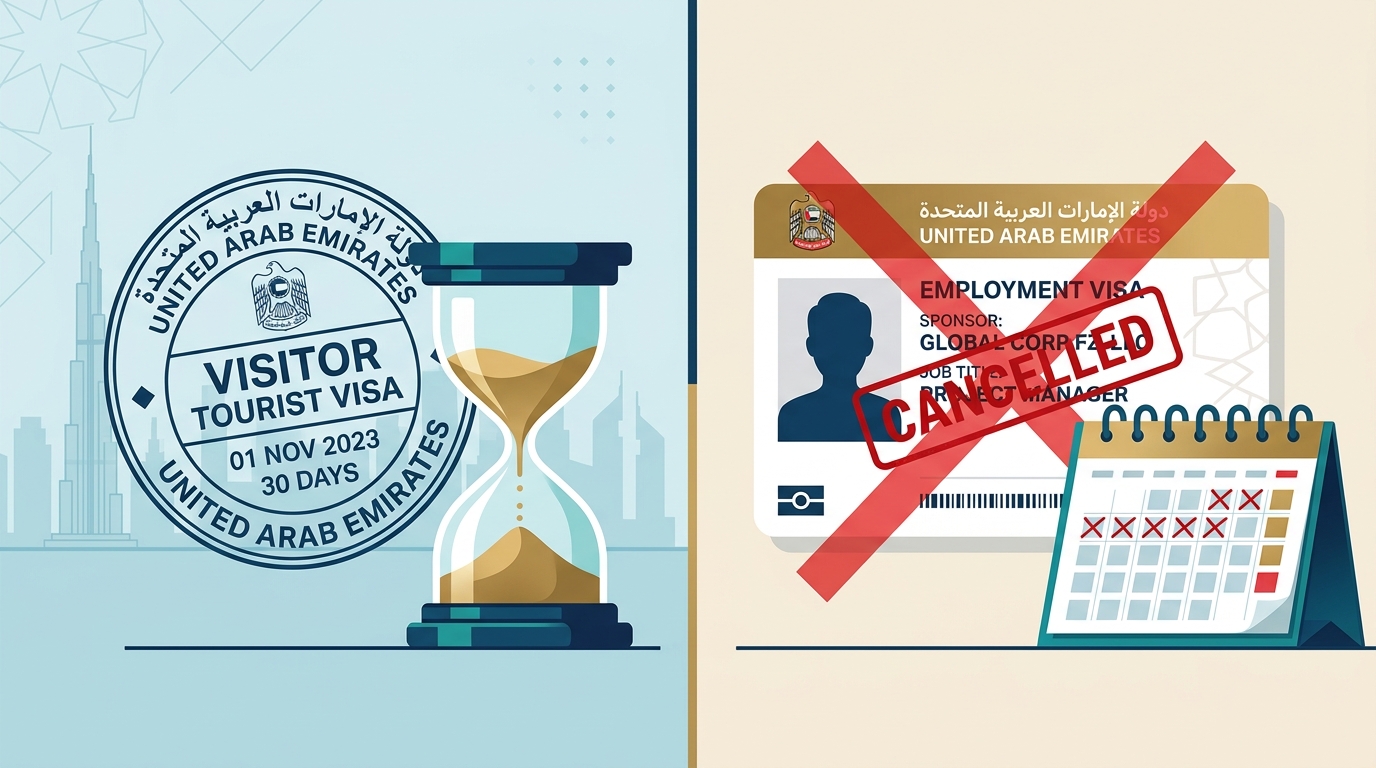
Visit Visa vs. Cancellation Status: What's the Difference?
While job descriptions often group "Visit Visa" and "Cancelled Visa" together under the umbrella of "Immediate Joiner," these two statuses carry vastly different implications for both the employer and the candidate. Understanding these nuances is key to positioning yourself effectively during interviews and knowing exactly what leverage you hold.
The Visit Visa Dynamic
A visit visa (or tourist visa) generally implies that the candidate is either new to the country, actively exploring the market, or attempting a career transition by breaking the cycle of needing a visa to get a job. These candidates usually hold a 30-day or 60-day entry permit. For employers, visit visa holders are often viewed as a vast, highly motivated talent pool. Because they do not have deep local roots or current employment security, they are perceived as highly adaptable and eager to prove themselves.
However, the visit visa status comes with a severe disadvantage: the ticking clock. Once a tourist visa expires, the candidate faces daily overstay fines and the looming threat of having to exit the country. Some unscrupulous employers are well aware of this pressure and intentionally delay the final interview rounds or the issuance of the official MOHRE offer letter, waiting until the candidate reaches a point of desperation to force them into accepting a lower compensation package.
The Cancelled Visa Advantage
A cancelled visa means the candidate was previously employed in the UAE but has either resigned, been terminated, or completed their contract. Following cancellation, the candidate is granted a grace period—typically ranging from 30 to 180 days, depending on their skill level and length of previous service—during which they can legally remain in the country to secure new employment or finalize their exit. Understanding the visa cancellation timeline is crucial for managing this transition smoothly.
In the eyes of a recruiter, a cancelled visa is the golden ticket. It combines the immediate availability of a visit visa holder with the immense value of local experience. A candidate on a cancelled visa has already been "tested" by the UAE market. They understand the local business culture, possess an Emirates ID, likely hold a UAE driving license, and already have an active local bank account. This dramatically reduces the onboarding friction for the new employer. Consequently, candidates on a cancelled visa often have far more negotiating power than those on a visit visa.

“I kept getting rejections from London. Base Career rewrote my CV for Dubai, and I landed Emirates in 3 weeks.”
Sarah M. · Marketing Manager · UK 🇬🇧 → Dubai 🇦🇪
No credit card required
The Financial Leverage Trap: Why You Might Get Lowballed
One of the most frequently discussed pain points on job seeker forums and Reddit communities regarding the UAE market is the feeling of being taken advantage of due to visa status. The unfortunate reality is that the "Immediate Joiner" preference is not solely about operational speed; for some companies, it is fundamentally about financial leverage.
When a hiring manager knows that your visa expires in ten days, they recognize that your alternatives are rapidly shrinking. You are no longer just negotiating for a fair market salary; you are negotiating to avoid exorbitant daily overstay fines and the costly disruption of an unplanned flight back to your home country. This dynamic heavily skews the balance of power in favor of the employer, often leading to salary anchoring that is 20% to 30% below market rate.
So, how do you protect yourself from the financial leverage trap? Here are a few strategic guidelines for managing your negotiations when the clock is ticking:
- Never disclose your exact visa expiry date early in the process. If asked, vaguely state that your visa is valid for an extended period, or simply state your status without providing the exact deadline.
- Be fully prepared to execute a border run (A2A) or extend your visa independently. Showing the employer that you are financially prepared to extend your stay neutralizes their time-based leverage.
- Anchor your salary expectations in the first interview. Do not wait until the offer stage to realize they have discounted your value based on your urgency.
- Understand that any verbal promise is void. Until you have a signed MOHRE offer letter in your hand, you do not have a secure job. Keep applying and interviewing until the official document is generated.

Transitioning to a Work Visa: The Legal Process Explained
Many job seekers are confused about how the actual transition from a visit or cancelled status to an active employment visa works. Understanding this legal process is vital because it helps you set realistic expectations and protects you from exploitative practices, such as illegal "unpaid trial periods."
Inside-Country vs. Outside-Country Status Change
Once you accept an offer, the employer must apply for your work permit through MOHRE. After the work permit quota is approved and you sign the official labor contract, the employer must apply for your entry permit (e-visa). At this stage, your visa status must be legally changed from "tourist/cancelled" to "employment." This can be done in two ways.
The first method is the Inside-Country Status Change. This is the most seamless option for the candidate. Without ever leaving the UAE, your status is updated in the immigration system upon payment of a specific fee by the employer (usually around AED 1,000 to AED 1,500 more than an outside-country application). You remain in your apartment, continue your daily life, and simply wait for the medical fitness test and Emirates ID biometrics appointments.
The second method involves an Outside-Country Status Change. To save on the inside-country processing fees, some employers will require you to exit the UAE and re-enter on the new employment entry permit. This is typically done via an A2A (Airport-to-Airport) run to a neighboring country like Oman or Bahrain. While legally sound, it is physically exhausting and shifts a burden onto the candidate, even if the employer covers the flight cost. Before signing an offer, clarify with the HR department whether they process inside-country or outside-country status changes.
The "Work on a Visit Visa" Trap
One of the most dangerous situations immediate joiners face is the employer who demands you start working immediately while your visa is "under process." It is strictly illegal to perform any form of work, paid or unpaid, on a visit visa in the UAE. If you are caught by a MOHRE inspection, you face immediate deportation, a lifetime ban from entering the UAE, and substantial financial penalties. The employer will also face massive fines, but they will simply replace you. Do not let desperation force you into breaking federal labor laws. You must wait for the official MOHRE work permit approval before logging a single hour of work.
Managing Your Timeline to Avoid Overstay Fines
When your visa is ticking down, timeline management becomes your primary job. The UAE imposes an overstay fine of AED 50 for every day you remain in the country beyond your visa expiration or grace period. These fines accumulate rapidly, and you will not be allowed to change your visa status or exit the country without clearing them in full at the immigration office or the airport.
If an employer is taking too long to process your offer and you are within a week of your expiry date, you must take proactive action. Hoping that the HR department will finalize your paperwork on day 29 is a recipe for disaster. Bureaucratic delays, system maintenance, or a missing attestation can instantly pause the process, leaving you responsible for the fines.
If you find yourself in this situation, you need a backup plan. You can read our comprehensive guide on handling a visa expiry emergency. In short, you will need to decide between purchasing a visit visa extension (which can often be done from within the country via a travel agency) or executing an A2A run to secure a fresh 30-day or 60-day tourist visa. Never rely on a potential employer's verbal assurance that "the visa will be ready tomorrow" if the penalty falls entirely on your shoulders.

How to Market Yourself if You're on an Active Visa
What if you are not an immediate joiner? What if you are currently employed, hold an active residency visa, and have a non-negotiable 30-day notice period? It can feel incredibly discouraging to see the "Immediate Joiner" requirement on every job posting, but it is not an insurmountable barrier.
Firstly, understand that "Immediate Joiner Preferred" is a wish list, not always a hard reality. While companies want someone tomorrow, they also want competence. If your resume perfectly aligns with the required technical skills, ATS keywords, and industry experience, a hiring manager will often bypass the immediate joining requirement to secure top-tier talent. This is why understanding the time it takes to get hired is important; quality candidates hold the power to dictate timelines within reason.
To compete effectively against visit visa candidates, you must emphasize stability. Emphasize your lack of desperation, your deep market integration, and your proven track record within the UAE. During interviews, assure the employer that your notice period is firm but that you will utilize your time to execute a clean handover and arrive at their firm completely unburdened. Some candidates even negotiate to work a few weekend hours or evenings during their notice period to begin onboarding, provided it does not violate their current employment contract or MOHRE regulations. Always position your current employment as a testament to your value, not a hindrance to their timeline.
Frequently Asked Questions
Can I legally start working in the UAE on a visit visa if my employment visa is in process?+
How many days of grace period do I get after my UAE employment visa is cancelled?+
Do employers have to pay for my change of status if I am hired on a visit visa?+
Is it better to apply for jobs on a visit visa or a cancelled visa?+
Conclusion: Navigating the Immediate Joiner Landscape
The demand for immediate joiners is deeply ingrained in the UAE job market's DNA. As a candidate, your goal is to utilize this preference to your advantage without falling victim to the desperation traps that often accompany ticking visas. Whether you are holding a fresh 60-day visit visa or navigating the final weeks of a cancelled visa grace period, your primary defense is knowledge and preparation.
Understand your legal rights, firmly manage your own timelines to prevent overstay fines, and never allow a recruiter's urgency to dictate a severely lowballed salary package. Remember, while an employer may need someone immediately, they ultimately need the right person. If you can confidently articulate your value while maintaining financial and legal leverage, you will transition from a stressed visa-holder to a securely employed professional.
Taking control of your job search in a market as competitive as Dubai requires more than just mass applying; it requires a targeted strategy, real-time market insights, and the right tools. If you are ready to stop guessing and start securing interviews, create your free account today at basecareer.co and automate your journey to a successful UAE career.
If you are deciding whether to enter the market on a short runway, it also helps to understand the broader tradeoff behind Dubai jobs on a visit visa. The right move is not just about speed. It is about whether your CV, application materials, and target roles are strong enough to justify the cost and pressure of searching from inside the UAE.
Land 4x more interviews in 27 days. Join Base Career Today.
Track applications, tailor resumes, and follow up faster in one UAE job search system.
Start freeNo credit card required

James T.
Canada 🇨🇦 → Riyadh 🇸🇦
“50 applications, zero replies with my Canadian CV. Base Career got me 4 Riyadh interviews and a Series B offer.”
Written by Base Career Research Team
Produced by the Base Career Research Team with AI, using Base Career job-market data, and published automatically. How our articles are made
Related Posts

Is it Easy to Get a Job in Dubai From Overseas? The Honest Truth
Dreaming of a tax-free salary in Dubai but living abroad? We analyze the challenges of international applications and share a strategic roadmap for success.

Building 'Wasta' from Scratch: Networking Strategies for Dubai Expats
Frustrated by 1,000+ applicants on LinkedIn? Learn how to build 'Wasta'—your professional network—from zero to access the UAE's hidden job market.