How to Become a BIM Specialist in the UAE Construction Sector

The construction landscape in the Middle East is evolving at an unprecedented pace. From Dubai’s ongoing smart city initiatives to Saudi Arabia’s multi-billion-dollar giga-projects, the demand for precision, efficiency, and sustainability has never been higher. At the heart of this regional transformation is Building Information Modeling (BIM). For engineering and architecture professionals looking to future-proof their careers, becoming a BIM Specialist in the UAE is one of the most lucrative and stable career paths available today.
Whether you are a traditional CAD draftsman looking to upgrade your technical skills or a fresh civil engineering graduate entering the market, mastering tools like Revit and Navisworks can drastically increase your earning potential. In this comprehensive guide by basecareer.co, we will walk you through the exact roadmap to becoming a highly sought-after BIM professional. We will cover the shift toward digital construction, the software you must master, and how to position yourself for roles at top-tier engineering firms across the Middle East.
The Shift Toward Digital Construction in the GCC
The days of relying solely on 2D AutoCAD drawings are rapidly fading. Governments and major developers across the GCC now strictly mandate Building Information Modeling for large-scale infrastructure and commercial projects. For instance, the Dubai Municipality has issued multiple circulars mandating the use of BIM on specific architectural and structural projects based on their height and square footage. This shift toward digital construction minimizes on-site errors, drastically reduces material waste, and allows project stakeholders to visualize the entire lifecycle of a building before a single brick is laid.
As a result, engineering firms across the region are aggressively hunting for talent that can navigate these complex 3D environments. This hiring surge isn't limited to the UAE; professionals based in Dubai and Abu Dhabi are frequently headhunted for remote or relocation roles supporting Saudi Arabia's massive developments like NEOM and the Red Sea Project. If you plan to eventually tap into the Saudi market from the UAE, understanding cross-border credentialing is vital. You can learn more about regional compliance in our comprehensive guide on how to pass the Saudi Skills Verification Program (SVP).

Essential Software: Mastering Revit, Navisworks, and Dynamo
To become a successful BIM Specialist in the UAE, proficiency in the right software stack is absolutely non-negotiable. While the global BIM ecosystem includes dozens of niche tools, the UAE construction market is heavily dominated by Autodesk products. Mastering these core applications is your first step toward securing high-paying roles.
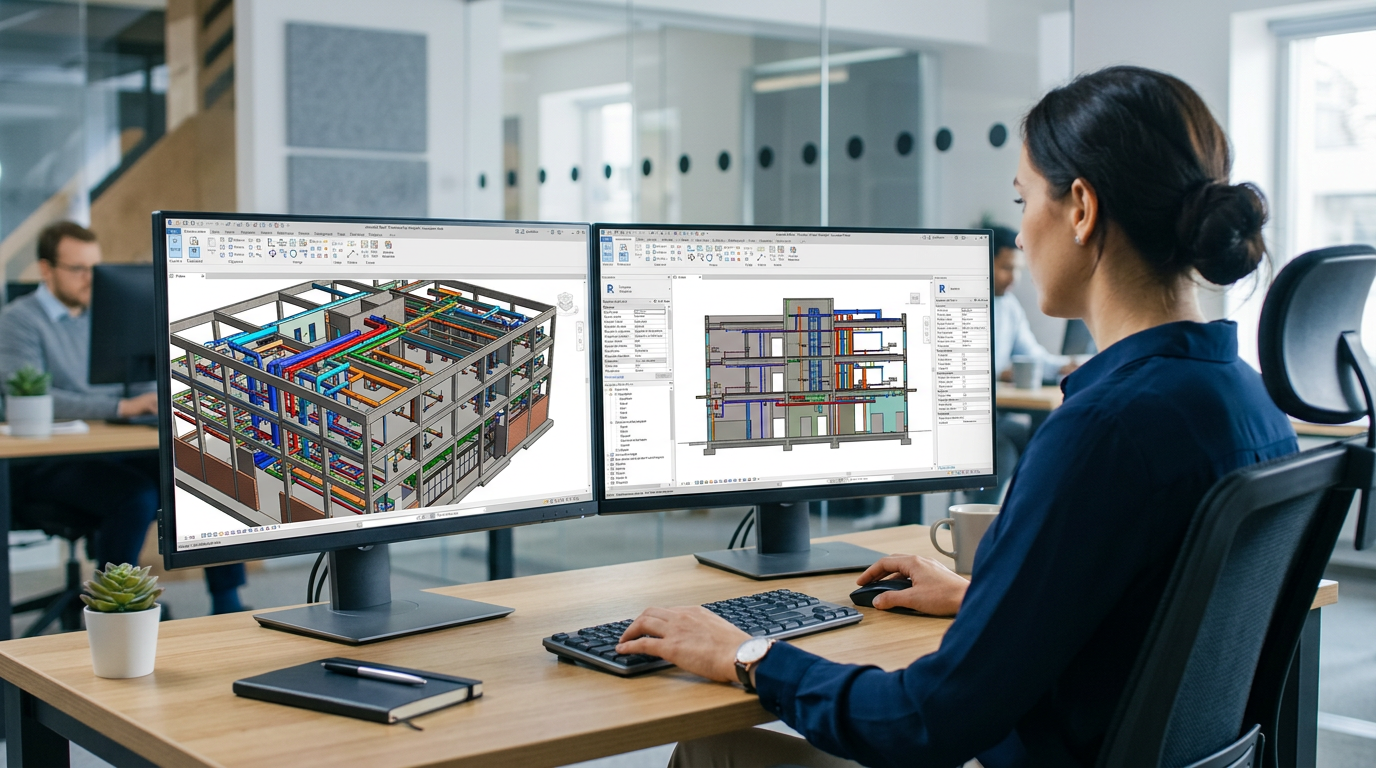
- Autodesk Revit: This is the industry standard for creating 3D models with embedded architectural, structural, and MEP (Mechanical, Electrical, and Plumbing) data. You must understand how to create custom parametric families, manage worksharing across a central model, and adhere to specific Level of Development (LOD) requirements.
- Navisworks: Crucial for project review and clash detection. Navisworks allows specialists to integrate massive models from various disciplines and run the Clash Detective tool to resolve physical conflicts before construction begins. It is also heavily used for 4D scheduling (TimeLiner) and 5D cost estimation.
- Dynamo & Python: For those looking to maximize their salary, learning computational design via Dynamo is a game-changer. It allows you to automate repetitive modeling tasks in Revit, saving your firm hundreds of billable hours.
If your background lies in mechanical, electrical, or plumbing engineering, adding BIM capabilities to your resume provides a massive competitive advantage. Modeling complex HVAC systems and piping networks in 3D is a highly specialized skill. You can explore how these specific technical skills overlap with hiring demand in our detailed guide to Facilities Management & MEP jobs in Dubai.
The BIM Career Progression: Modeler, Coordinator, and Manager
Understanding the career ladder within digital construction will help you set realistic expectations and target the right jobs. The typical trajectory in a UAE engineering firm starts at the BIM Modeler level. A Modeler is responsible for the actual generation of the 3D models and extracting 2D shop drawings for the construction site. This role is heavily software-focused.
As you gain experience, you can transition into a BIM Coordinator role. Coordinators spend less time modeling and more time running federated models in Navisworks. They are responsible for clash detection, generating clash reports, and hosting coordination meetings between architects, structural engineers, and MEP contractors to resolve design conflicts. Eventually, seasoned professionals can step into the role of a BIM Manager, focusing on the overarching BIM Execution Plan (BEP), company-wide software standards, and high-level project management.

“I kept getting rejections from London. Base Career rewrote my CV for Dubai, and I landed Emirates in 3 weeks.”
Sarah M. · Marketing Manager · UK 🇬🇧 → Dubai 🇦🇪
No credit card required
Up-skilling: BIM Training Centers in Abu Dhabi and Dubai
While self-teaching through online video tutorials is an excellent way to grasp the basics, UAE employers highly value formal, accredited certifications. Upgrading your credentials through a recognized institute proves to hiring managers that you understand industry-standard workflows, naming conventions, and local compliance codes rather than just knowing how to click buttons in the software.
Abu Dhabi and Dubai are home to numerous Autodesk-authorized training centers. These institutes offer intensive, hands-on courses covering everything from basic 3D modeling to advanced project coordination. Look for training programs that culminate in an official Autodesk Certified Professional (ACP) credential. Earning your ACP badge acts as a powerful trust signal for leading engineering firms and recruitment agencies across the region, making your CV stand out immediately in a crowded job market.
Positioning Yourself for Top UAE Engineering Firms
Prestigious engineering and architectural firms, such as Das & Partners, WSP, and Khatib & Alami, are constantly on the lookout for top-tier BIM talent to execute their complex portfolios. However, possessing the technical skills is only half the battle; you must also know how to effectively market your expertise to corporate recruiters and senior engineering managers.
In the modern UAE construction sector, BIM is no longer an optional skill or a luxury—it is the foundational language of how mega-projects are designed, coordinated, and delivered.
Your resume needs to clearly highlight the scale and scope of the projects you have successfully modeled. Instead of merely listing 'Revit' under your skills section, mention specific LOD (Level of Development) standards you have worked with, your familiarity with PAS 1192 or ISO 19650 standards, and quantify your operational achievements. For example, state that you 'reduced clash resolution time by 20% using automated Navisworks rules.' Since most major tier-1 firms use automated software to screen applicants, it is crucial to optimize your document format. Ensure you read our detailed breakdown on the Dubai CV format for ATS to guarantee your resume successfully reaches a human recruiter.
Salary Expectations for BIM Professionals in Dubai and KSA
The financial incentive to transition into a digital construction career is substantial. Because BIM directly saves contracting companies millions of dirhams by preventing costly on-site physical errors and rework, specialists command a significant salary premium over traditional 2D AutoCAD draftsmen.
In the current UAE market, a mid-level BIM Modeler with 3 to 5 years of experience can expect to earn between AED 8,000 and AED 15,000 per month, largely depending on the complexity of their discipline (MEP modelers typically earn slightly more than structural or architectural modelers due to the complexity of the systems). Senior BIM Coordinators can earn between AED 15,000 and AED 25,000. Finally, BIM Managers overseeing mega-projects can easily command salaries ranging from AED 25,000 to AED 45,000+, alongside comprehensive family benefits packages.
Furthermore, the rapid expansion of Saudi Arabia's giga-projects has created an unprecedented talent vacuum. Many tier-1 firms in Dubai and Abu Dhabi serve as the primary design hubs for these Saudi projects, allowing UAE-based professionals to leverage this cross-border demand to negotiate even higher pay rates. For a broader look at navigating the local job market, managing timelines, and maximizing your earnings across different sectors, review our complete guide to getting a job in Dubai.

Step-by-Step Roadmap to Your First BIM Role
Transitioning into a dedicated BIM role requires a strategic, step-by-step approach. If you are ready to make the leap, follow this actionable roadmap to launch your digital construction career in the Middle East:
- Assess Your Engineering Foundation: Ensure you have a strong, practical understanding of construction fundamentals in your specific discipline (Architecture, Structure, or MEP). Software skills cannot replace core engineering knowledge.
- Invest in Formal Training: Enroll in an accredited BIM training center in Abu Dhabi or Dubai. Focus entirely on mastering Revit for authoring and Navisworks for coordination.
- Build a Digital Portfolio: Create a comprehensive PDF or online portfolio showcasing your best 3D models, complex parametric families you've created, and detailed Navisworks clash detection reports.
- Optimize Your ATS Resume: Ensure your CV highlights ISO 19650 knowledge, LOD standards, and quantitative achievements to pass corporate resume scanners.
- Network at Industry Events: Attend major construction technology expos like The Big 5 in Dubai to network face-to-face with hiring managers from top engineering and contracting firms.
Frequently Asked Questions
What is the average salary for a BIM Specialist in Dubai?+
Do I need an engineering degree to become a BIM Modeler in the UAE?+
Is Revit or Navisworks more important for UAE construction jobs?+
How do Saudi giga-projects impact UAE BIM hiring?+
Take the Next Step in Your Construction Career
The UAE construction sector is fully embracing the digital revolution, leaving outdated methodologies behind. By mastering advanced tools like Revit and Navisworks, earning your Autodesk certifications, and strategically positioning your digital portfolio for top engineering firms, you can secure a high-paying, future-proof role as a BIM Specialist. Don't let your career stagnate in 2D drafting while the industry moves forward. Start your transition into Building Information Modeling today, and take full advantage of the booming project pipeline across Dubai, Abu Dhabi, and Saudi Arabia.
Ready to find your next lucrative role in digital construction and connect with top-tier engineering firms? Automate your job search, optimize your profile, and apply to the region's best opportunities by signing up at basecareer.co today.
Stay ahead of the market. Join Base Career Today.
Turn market shifts into a clearer application workflow with resume tailoring and tracking in one place.
Start freeNo credit card required

James T.
Canada 🇨🇦 → Riyadh 🇸🇦
“50 applications, zero replies with my Canadian CV. Base Career got me 4 Riyadh interviews and a Series B offer.”
Written by Base Career Research Team
Produced by the Base Career Research Team with AI, using Base Career job-market data, and published automatically. How our articles are made
Related Posts

Landing Your First Dubai Job: A Roadmap for Freshers and Graduates
Breaking into the UAE job market with zero experience is tough but not impossible. Here is your strategic roadmap to landing that first role in Dubai.

Building 'Wasta' from Scratch: Networking Strategies for Dubai Expats
Frustrated by 1,000+ applicants on LinkedIn? Learn how to build 'Wasta'—your professional network—from zero to access the UAE's hidden job market.