Delayed Job Offers in Dubai? How to Navigate UAE Hiring Freezes

You have done everything right. You tailored your resume, navigated three grueling rounds of interviews, completed a complex technical assessment, and finally received the coveted verbal job offer. You are simply waiting for the official contract to land in your inbox. But instead of an onboarding schedule, you receive an apologetic email from HR: "Due to current market conditions and regional situations, leadership has decided to put this role on hold."
For job seekers in the Middle East, particularly in hub cities like Dubai and Abu Dhabi, geopolitical tension can create an immediate ripple effect that halts recruitment overnight. As macro-economic slowdowns and regional uncertainties make headlines, many companies default to a defensive posture, freezing headcount budgets to mitigate financial risk. If you are a candidate caught in this sudden hiring freeze—especially if you are navigating the UAE job market on a ticking visit visa—the situation can feel incredibly stressful and entirely out of your control.
Recently, phrases like "on-boarding after the war" and "indefinite operational pause" have become frequent topics of discussion on professional forums and Reddit threads among Dubai expats. Candidates are being told they are the top choice, but their actual employment start dates are being pushed back by weeks or even months. This leaves job seekers in a dangerous limbo, burning through their savings while waiting for an offer that may never materialize.
In this comprehensive guide, we will decode exactly why Dubai companies freeze hiring during periods of regional tension, what these delayed offer letters actually mean for your career prospects, and most importantly, how you can strategically navigate this waiting game to protect your legal status, your finances, and your sanity.
Why Do Dubai Companies Freeze Hiring During Regional Tension?
When a hiring manager tells you a role is on hold due to "regional tension," it is rarely a reflection of your interview performance or your professional worth. Instead, it is the result of complex corporate risk management. Understanding the internal mechanics of a hiring freeze can help you depersonalize the rejection and assess whether the company will ever actually resume the hiring process.
One of the primary drivers of sudden hiring freezes in Dubai is Head Office Mandates. Dubai is a major hub for Multinational Corporations (MNCs). When geopolitical tension rises in the Middle East, executives sitting in headquarters in New York, London, or Singapore often react to international news headlines by mandating an immediate, blanket freeze on all regional spending. Even if the local Dubai office is highly profitable, fully operational, and desperately needs your specific skillset, local HR teams find their hands tied by global directives designed to limit perceived risk exposure.
Another significant factor is Budget Re-allocation and Cash Flow Protection. During times of macro-economic uncertainty, companies pivot sharply from a "growth and expansion" mindset to a "conservation and survival" strategy. The capital that was previously earmarked for new salaries, visa processing fees, and onboarding costs is swiftly re-routed to emergency financial buffers. Leadership teams prefer to observe the market for 30 to 90 days before committing to long-term operational expenses like full-time employee contracts.
Finally, there are genuine Supply Chain and Operational Pauses. In sectors heavily reliant on regional stability—such as logistics, shipping, FMCG (Fast-Moving Consumer Goods), and heavy manufacturing—regional conflicts can disrupt supply routes and delay large-scale projects. If a company cannot reliably move its goods across borders, or if a major construction project is halted due to material shortages, they simply do not need to onboard new operations managers, engineers, or supply chain analysts until the logistical bottlenecks are resolved.
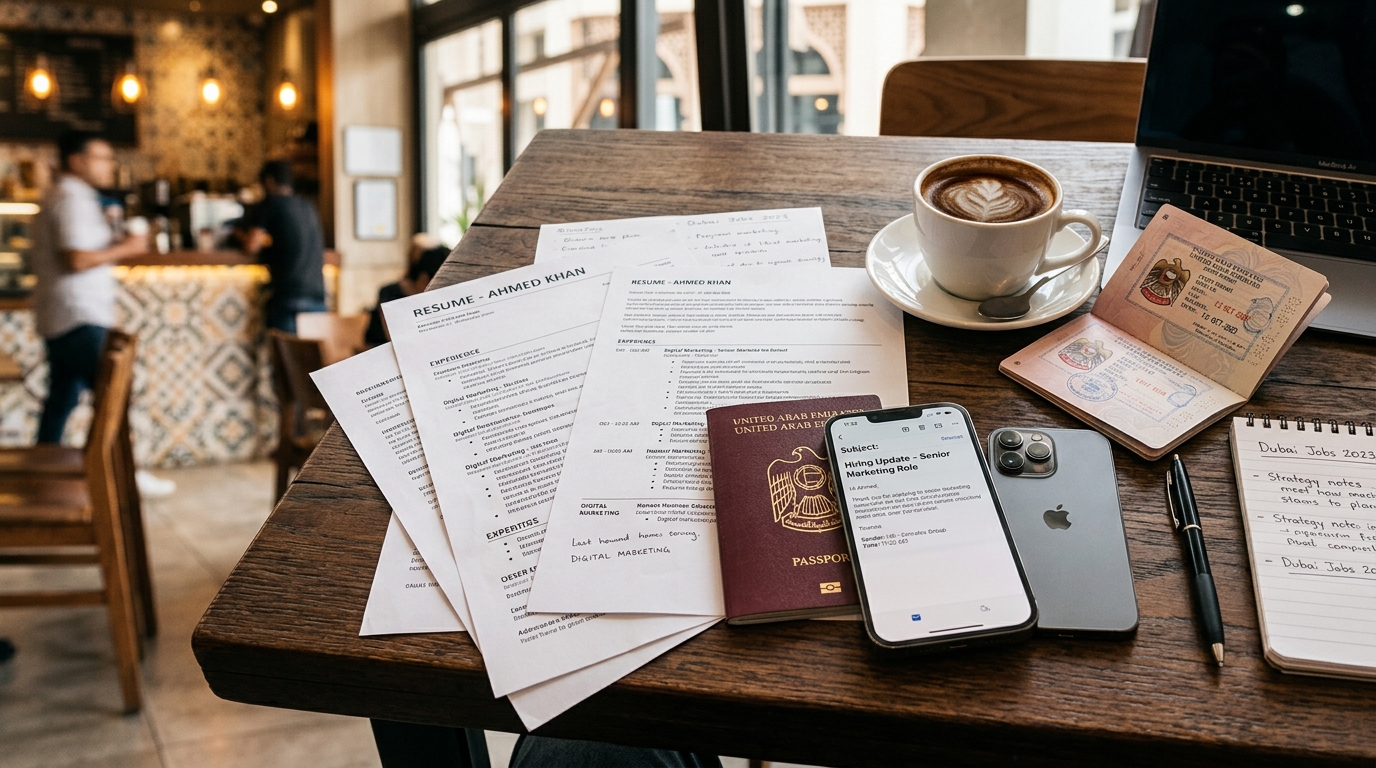
The "On-Boarding After War" Phenomenon: What It Means for You
A disturbing trend has emerged in candidate forums: recruiters informing job seekers that they have successfully passed all rounds, but official onboarding will be delayed until "the geopolitical situation stabilizes" or "after the war." This phenomenon places candidates in an incredibly precarious position, often referred to as being "kept warm" by the talent acquisition team.
To navigate this safely, you must understand the stark difference between corporate intention and UAE labor reality. A verbal offer, a congratulatory WhatsApp message from the hiring manager, or even an unofficial company-headed offer letter PDF holds absolutely no legal weight in the UAE. Your employment is only secure once an official contract is generated through the Ministry of Human Resources and Emiratisation (MoHRE), signed by both parties, and submitted for your residency visa processing.
When HR tells you they are delaying your onboarding, they are essentially asking you to bear the entire risk of the macro-economic slowdown. They want to secure your talent so you are ready the moment budgets unlock, but they are not willing to provide you with financial security or legal residency in the interim. For a candidate, understanding standard timelines versus disrupted ones is crucial. You can read our detailed breakdown on how long it takes to get hired in Dubai to set a realistic baseline and recognize when a delay has turned into a dead end.
A verbal job offer in Dubai is just a conversation. Until you sign an official MoHRE employment contract and your visa is processing, you are still officially unemployed. Never stop applying based on a promise.

“I kept getting rejections from London. Base Career rewrote my CV for Dubai, and I landed Emirates in 3 weeks.”
Sarah M. · Marketing Manager · UK 🇬🇧 → Dubai 🇦🇪
No credit card required
Survival Guide for Candidates on UAE Visit Visas
Hiring freezes are frustrating for UAE residents, but they are a full-blown crisis for candidates job-hunting on visit visas. When you are on a 30-day or 60-day tourist visa, time is literally money. Every day a company delays your offer letter, your personal financial runway shrinks, and the legal expiration date of your visa creeps closer.
The golden rule of the Dubai job hunt is to never overstay your visa. Overstaying incurs daily fines (currently 50 AED per day) and, more importantly, risks an absconding case or a travel ban that could permanently ruin your chances of securing a UAE work permit in the future. If a company puts your offer on hold, you must immediately take control of your own legal status rather than hoping they will speed up the process to save you.
- Assess Your Visa Extension Options: Depending on your nationality, you may be eligible to extend your visit visa from within the country for another 30 days. Alternatively, you might need to perform an Airport-to-Airport (A2A) visa change or a bus run to the Oman border. Budget approximately 800 to 1,500 AED for these renewals.
- Drastically Cut Your Burn Rate: If a company says they are pausing hiring for 60 days, you must adjust your budget immediately. Consider downgrading your accommodation to a shared bedspace in more affordable areas like Deira, Al Nahda, or International City. Cut all non-essential dining and transport costs.
- Communicate Proactively, Not Desperately: Do not hide your visa status from the recruiter, but do not use it to beg for the job. Inform them that your visa is expiring, but clearly state that you are already in the process of renewing it. This shows you are legally responsible and prevents them from assuming you will be forced to leave the country.
If your visa is expiring imminently and you are relying on a delayed offer, you must take immediate action. Review our emergency guide for Dubai job seekers facing visa expiry to understand the exact logistical steps, costs, and timelines for A2A runs and in-country extensions.
How to Handle a Delayed Offer Letter Professionally
When your offer is placed on hold, your immediate reaction might be panic, frustration, or a desire to aggressively demand answers from the HR department. However, your communication strategy during a hiring freeze dictates whether you stay at the top of their list when budgets unlock, or whether you get quietly disqualified for being "difficult to manage."
Establish a professional follow-up cadence. Emailing the recruiter every 48 hours will not force the CEO to unlock the budget faster; it will only annoy the talent acquisition team. Instead, adopt a 10-to-14 day follow-up rule. Send a polite, concise email reiterating your strong interest in the role, asking if there are any updates on the internal timeline, and briefly mentioning a recent industry trend or article to add value to the conversation.
Here is a template you can adapt: "Hi [Recruiter Name], I hope you are having a good week. I wanted to touch base regarding the [Job Title] position. I completely understand that the current regional situation has impacted internal timelines. I remain highly interested in joining the team once operations resume. Please let me know if there is any updated timeline for Q3, or if the role has been permanently closed so I can plan accordingly."
While managing the recruiter relationship is important, managing your own mindset is critical. The psychological toll of waiting for a delayed offer can be immense. It is vital to manage job search burnout and the mental toll of a long hunt so you don't lose your motivation. The only true cure for the anxiety of a delayed offer is a full pipeline of other interviews. Treat the "on-hold" job as a closed door, and channel 100% of your energy into applying for new roles.

Stop-Gap Solutions: Should You Take a "Survival Job"?
As the weeks drag on and the hiring freeze continues, many candidates face a critical crossroad: should they continue burning through savings waiting for their ideal role to unfreeze, or should they accept a "survival job"? A survival job is a role outside your core expertise, or at a significantly lower salary bracket, taken purely to secure a UAE residency visa and generate a basic monthly income.
Taking a survival job has distinct advantages during periods of regional tension. Most importantly, it stops your financial bleeding. It shifts the burden of medical insurance and visa sponsorship to an employer, legally anchoring you in the UAE for up to two years. Furthermore, it completely removes the scent of desperation from your main job search. When you are legally employed and earning a salary, you negotiate from a position of strength rather than a position of impending visa expiry.
However, taking a lower-paying role comes with risks. Survival jobs often demand long hours (typically 9-to-6 with a 6-day workweek in retail or entry-level admin), leaving you with zero time or energy to attend interviews for your actual target roles. Furthermore, resigning during your probation period to take your "dream job" when it finally unfreezes requires careful navigation of UAE notice period laws (typically 14 days during probation). If you are considering this route, read our guide on how to navigate a Dubai survival job and pivot back to your actual career path later without damaging your CV.
Actionable Steps to Future-Proof Your Job Search
While some sectors freeze entirely during regional tension, others actually accelerate their hiring. Your best defense against macro-economic slowdowns is agility. If your core industry (such as luxury hospitality or tourism) is heavily impacted by geopolitical news, you need to identify how your skills transfer to more resilient sectors.
- Target Resilient Sectors: Industries like healthcare, cybersecurity, defense contracting, restructuring consultancy, and essential tech services rarely pause hiring during regional conflicts. In fact, many expand. Tailor your resume to highlight crisis management, operational efficiency, and risk mitigation skills.
- Leverage the Waiting Period for Upskilling: Do not just sit by the phone. Use the weeks of delayed onboarding to acquire certifications that make you undeniable. Whether it's an advanced Excel course, an AI prompt engineering certificate, or a project management credential, add fresh skills to your profile.
- Expand Your Local Network: Hiring freezes often mean roles are pulled from public job boards, but "shadow hiring" still occurs through internal referrals. Use this time to have informal coffee chats with industry peers in Dubai. When budgets unlock, you want to be recommended internally before the job is ever posted on LinkedIn.
Ultimately, navigating a hiring freeze requires emotional resilience and strategic pragmatism. You cannot control the geopolitical landscape, corporate budget mandates, or the speed at which MoHRE processes approvals. You can only control your daily output, your application strategy, and how you manage your financial runway.
Frequently Asked Questions
Can a UAE company cancel a signed offer letter due to a hiring freeze?+
How long do geopolitical hiring freezes usually last in Dubai?+
Should I wait for a delayed job offer or keep applying?+
What should I tell recruiters if my visit visa is expiring while waiting for an offer?+
Take Control of Your UAE Job Search Today
A delayed offer letter or a sudden hiring freeze is one of the most disheartening experiences in the Dubai job market, especially when regional tension makes the future feel entirely unpredictable. However, the worst mistake you can make is hitting pause on your own career momentum. If one company puts your application on ice, it is a signal to aggressively double down on your outreach to organizations that are actively scaling.
Don't let a single frozen offer dictate your future in the Middle East. Keep your pipeline full, optimize your applications, and outpace the competition. Take control of your career trajectory today by signing up at basecareer.co to automate your job search and connect with resilient employers across the UAE.
Land 4x more interviews in 27 days. Join Base Career Today.
Track applications, tailor resumes, and follow up faster in one UAE job search system.
Start freeNo credit card required

James T.
Canada 🇨🇦 → Riyadh 🇸🇦
“50 applications, zero replies with my Canadian CV. Base Career got me 4 Riyadh interviews and a Series B offer.”
Written by Base Career Research Team
Produced by the Base Career Research Team with AI, using Base Career job-market data, and published automatically. How our articles are made
Related Posts

Is it Easy to Get a Job in Dubai From Overseas? The Honest Truth
Dreaming of a tax-free salary in Dubai but living abroad? We analyze the challenges of international applications and share a strategic roadmap for success.

Building 'Wasta' from Scratch: Networking Strategies for Dubai Expats
Frustrated by 1,000+ applicants on LinkedIn? Learn how to build 'Wasta'—your professional network—from zero to access the UAE's hidden job market.