Relocating to Dubai 2026: Navigating the Unified GCC Visa

For Western executives, business development professionals, and senior leaders eyeing the Middle East, the landscape of regional mobility is about to undergo a seismic and highly anticipated shift. If you are planning on relocating to Dubai in 2026, the introduction of the new Unified GCC Travel Access Benefit—frequently dubbed by regional media as the "GCC Schengen visa"—stands as the ultimate game changer. This monumental policy shift is not merely a travel convenience; it is fundamentally rewriting the playbook on how multinational corporations structure their Middle Eastern operations and how expatriate professionals manage their careers.
For decades, Dubai has successfully positioned itself as the preeminent commercial hub of the Middle East, attracting global talent through unparalleled tax incentives, world-class infrastructure, and a cosmopolitan lifestyle. However, regional travel for expatriate residents historically came with layers of bureaucratic friction. Coordinating multi-country roadshows or attending sudden client meetings in Riyadh, Doha, or Muscat often meant navigating disparate e-visa portals, tracking varying processing times, and dealing with inconsistent entry requirements. The 2026 unified visa dismantles these barriers entirely.
By allowing seamless movement across the six member states of the Gulf Cooperation Council (UAE, Saudi Arabia, Qatar, Bahrain, Kuwait, and Oman), this unified system cements Dubai's status as the ultimate basecamp for regional executives. In this comprehensive guide, we will explore exactly how the unified GCC visa is reshaping the 2026 job market, what it means for high-ticket business development roles, and how incoming Western professionals can leverage this frictionless mobility to negotiate better compensation packages and fast-track their relocations.
The Dawn of the GCC 'Schengen': What the 2026 Unified Visa Actually Means
To fully grasp the magnitude of the Unified GCC Visa, it is essential to look at the historical context of travel within the Gulf. While citizens of the GCC have long enjoyed freedom of movement across member borders, expatriate residents—even those holding high-level executive positions and golden visas in the UAE—were historically required to secure separate visas for every neighboring country they wished to visit. For a business development director managing a portfolio across Saudi Arabia, Qatar, and Bahrain, this meant significant administrative overhead and inevitable delays.
The unified visa initiative, unanimously approved by the GCC Supreme Council, is designed specifically to harmonize the regional tourism and business travel ecosystem. Modeled heavily on the European Schengen area, a single approved visa will grant the holder access to all six member nations. This sweeping regulatory change is part of a broader macroeconomic strategy aimed at boosting the regional tourism sector's contribution to GDP, facilitating cross-border trade, and presenting the Arabian Peninsula as a cohesive, easily navigable economic bloc to foreign investors.
For Western expatriates, particularly those holding passports that already grant visa-on-arrival status in the UAE, the unified visa layers on a crucial benefit: predictability. It eliminates the grey areas of regional travel and the anxiety of waiting for a single-entry Saudi business visa to clear just hours before a critical flight. We are already seeing a massive influx of EU talent recognizing this shift; in fact, moving to Dubai from Germany and other highly regulated European markets is becoming a primary objective for top-tier executives seeking tax efficiency combined with frictionless, multi-jurisdictional travel.
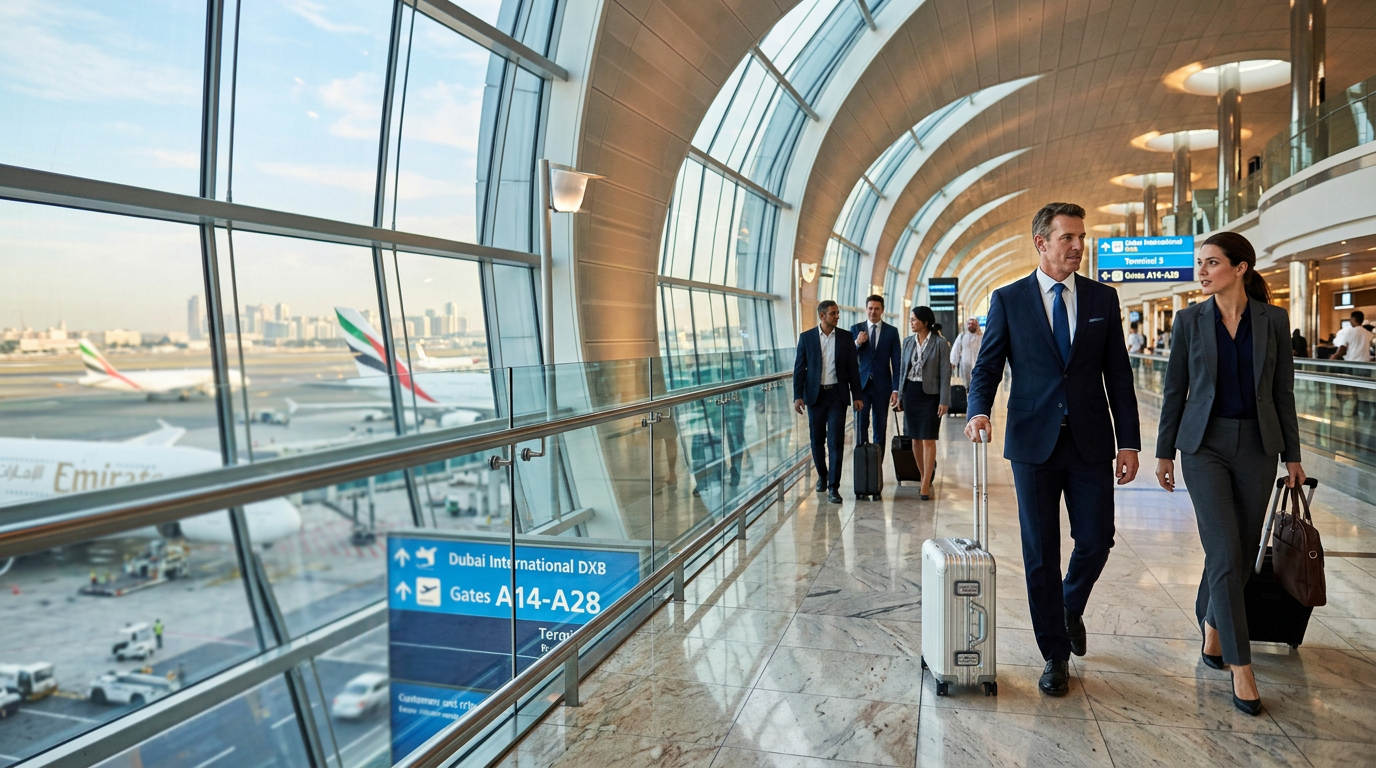
Why Dubai Remains the Undisputed Basecamp for Western Executives
With Saudi Arabia's Vision 2030 driving an unprecedented economic boom and an explosion of mega-projects across the Kingdom, some industry observers speculated that multinational regional headquarters might migrate en masse away from the UAE. However, the introduction of the Unified GCC Visa has functionally neutralized the necessity for an outright physical relocation of executive talent to neighboring markets. Instead, it has solidified a "hub-and-spoke" model where Dubai serves as the lifestyle and logistical epicenter, while executives commute regionally on a weekly basis.
Dubai's infrastructure is specifically engineered to support the sophisticated needs of high-net-worth individuals and senior Western expatriates. The city offers a mature premium real estate market, a globally recognized international school system tailored to British, American, and IB curricula, and a cosmopolitan lifestyle that remains unrivaled in the region. Furthermore, the massive planned expansion of Al Maktoum International Airport (DWC) alongside the existing capacity of Dubai International (DXB) ensures that regional air connectivity remains unparalleled.
For families relocating in 2026, this dynamic is highly reassuring. An executive can establish their family's primary residence in a premium Dubai community like Arabian Ranches or Dubai Hills, ensuring their children have access to top-tier education and healthcare, while the executive themselves can effortlessly hop on a short 90-minute flight to Riyadh for Tuesday and Wednesday boardroom meetings. The unified visa removes the final piece of logistical friction from this equation, allowing expats to "have their cake and eat it too" when it comes to living in the UAE while tapping into the Saudi economic boom.
Frictionless Mobility: A New Era for Business Development
In the Middle East, the speed of business is intrinsically tied to relationships, and those relationships are almost entirely built face-to-face. The cultural emphasis on personal trust, regular physical presence, and in-person negotiation cannot be replicated through remote Zoom calls or lengthy email chains. For business development professionals, sales directors, and regional partners, physical mobility is quite literally the currency of success.
Before the unified visa framework, a common scenario for a Dubai-based BD leader involved fielding a sudden request from a key stakeholder in Doha or Jeddah. If that executive's specific passport nationality required a pre-approved e-visa that took 48 to 72 hours to process, the critical window of opportunity could easily slam shut. Competitors who happened to already hold a multi-entry visa or possessed a GCC passport would inherently gain the upper hand by being able to show up the very next morning.
The unified GCC travel benefit equalizes this playing field entirely for resident expats. It grants Western professionals the agility to operate with the same geographical fluidity as local citizens. A business development director can now finalize a pitch in Dubai on Monday, board a Tuesday morning flight to Riyadh to close a deal, and return to their UAE home by Wednesday evening—all without ever opening a visa application portal or awaiting a government approval email. This level of agility is driving a surge in regional revenue targets and radically changing how sales territories are assigned.

“I kept getting rejections from London. Base Career rewrote my CV for Dubai, and I landed Emirates in 3 weeks.”
Sarah M. · Marketing Manager · UK 🇬🇧 → Dubai 🇦🇪
No credit card required

Rethinking the Executive Commute and Regional Workloads
As the bureaucratic barriers to regional travel evaporate, multinational companies are inevitably recalibrating their expectations for senior leadership roles. The definition of a "regional role" is shifting from a desk-bound strategist overseeing managers in other countries, to a highly mobile operator expected to maintain a physical presence across multiple GCC capitals each month.
This shift brings both opportunities and physical demands. While some professionals previously debated whether the grueling 200km executive commute within the UAE (such as driving daily between Dubai and Abu Dhabi) made sense for their lifestyle, the unified visa effectively replaces highway commutes with regional air travel. Spending three days a week in Saudi Arabia and two days in Dubai is rapidly becoming the standard operational cadence for Vice Presidents and Regional Directors in sectors like management consulting, enterprise software, and infrastructure development.
For expats, this means mastering the art of the "super-commute." It requires a deep understanding of airline loyalty programs, airport fast-track services, and time-management strategies to prevent executive burnout. Companies are simultaneously adapting by offering more flexible remote-work days upon return from heavy travel periods, recognizing that frictionless border crossings do not negate the physical toll of constant flying.
Auditing Your 2026 Regional Job Offer
If you are relocating to Dubai to take advantage of this new era of regional mobility, your employment contract must reflect the realities of the unified GCC ecosystem. A job title that includes "Head of MENA" or "GCC Director" implies heavy travel, and your compensation package must be structured to insulate you from out-of-pocket expenses and travel-related fatigue.
Before accepting a regional role, it is vital to understand exactly how to audit an executive job offer in Dubai to ensure that travel allowances, daily per diems, and regional KPIs are properly structured. Standard considerations for a highly mobile regional role in 2026 should include:
- Business Class Travel Stipulations: For flights exceeding a certain duration, or simply as a standard executive perk to ensure you arrive at client meetings rested.
- Comprehensive Per Diems: Guaranteed daily allowances for meals, incidentals, and ground transport while operating in higher-cost markets like Riyadh or Doha.
- Corporate Credit Cards: Avoiding the need to float thousands of dirhams in regional hotel costs on your personal credit cards while waiting for monthly expense reimbursements.
- Premium Airport Transfers: Monthly allowances for premium taxi services or chauffeur apps like Careem to eliminate friction to and from DXB.
Furthermore, candidates must critically evaluate the revenue targets attached to these roles. If a company is expecting you to double revenue in a neighboring GCC country simply because travel is now easier, ensure you have the marketing budget and local operational support to realistically achieve those numbers. Mobility is a tool, not a substitute for market demand.
Strategic Timing: How to Plan Your 2026 Dubai Relocation
Executing a successful international career move requires meticulous planning, especially when targeting high-visibility leadership roles in a highly competitive market like the UAE. The unified visa is generating immense interest globally, meaning the candidate pool for Dubai-based jobs is wider and more competitive than ever. Timing your transition perfectly is the key to minimizing unemployment gaps and maximizing your negotiating leverage.
Understanding the exact logistics of timing your notice period for a 2026 Dubai relocation is crucial, particularly if you are transitioning from European or UK markets where three to six-month corporate exit clauses are entirely standard. UAE employers frequently demand immediate or 30-day start dates, creating a structural friction point for Western executives. You must initiate your job search and begin networking with UAE headhunters long before you actually hand in your resignation.
For those beginning their search from abroad, reviewing a complete expat guide to job hunting in the UAE will provide the foundational blueprint required for a successful transition. Your primary objective should be building a digital presence that signals you are "Dubai-ready." This involves optimizing your LinkedIn profile for UAE recruiters, stripping out overly dense domestic jargon from your resume, and explicitly highlighting your ability to manage multi-country P&L operations—a skill that the unified visa makes infinitely more valuable.

The Tax and Compliance Nuances of Regional Operations
While the unified visa solves the logistical headache of crossing borders, executives must still be highly mindful of regional labor and tax compliance laws. The GCC tourist visa facilitates business meetings, conferences, networking, and exploratory business development. However, it does not legally replace a localized employment visa if you are spending the majority of your time physically working in another jurisdiction.
If your role requires you to spend more than 183 days a year in Saudi Arabia, for example, you may trigger local tax residencies or labor compliance requirements that your HR department needs to manage. Furthermore, your primary UAE residency dictates your tax-free status in Dubai. Maintaining your UAE Golden Visa or standard employment visa requires adherence to local rules regarding minimum physical presence, though Golden Visa holders now face vastly relaxed requirements regarding consecutive days spent outside the country.
Always consult with corporate HR and international tax advisors when structuring a role that spans multiple GCC countries to ensure that while you leverage the logistical freedom of the new visa, you remain entirely compliant with the labor laws of each individual state.
Frequently Asked Questions About the 2026 Unified GCC Visa
Frequently Asked Questions
What countries are included in the 2026 Unified GCC Visa?+
Does the GCC unified visa allow me to legally work in Saudi Arabia?+
How will the unified visa affect Western expats who already get visa-on-arrival in the UAE?+
Can I hold a UAE residency and use the unified visa to commute to other GCC countries?+
Ready to Capitalize on the 2026 GCC Boom?
The implementation of the Unified GCC Visa in 2026 is structurally transforming the Middle Eastern job market. By entirely removing the friction of regional travel, Dubai is no longer just the most attractive place to live in the Middle East; it is definitively the most efficient place from which to do business across the entire Arabian Peninsula. For Western executives, BD leaders, and senior professionals, this represents a golden era of opportunity to secure high-paying, high-impact regional roles.
However, securing one of these highly coveted regional roles requires more than just an impressive background—it demands a flawless, meticulously tailored application that speaks directly to the specific needs of UAE hiring managers and passes strict local ATS filters. Generic resumes built for the European or North American markets simply will not convert in Dubai's hyper-competitive ecosystem.
This is where leveraging purpose-built AI technology gives you a distinct edge. Tools like Base Career automatically tailor your resume for each specific application, generating an ATS-optimised CV and a highly personalized cover letter matched perfectly to the GCC job description in under 60 seconds. Instead of spending hours tweaking documents, you can focus on building your regional network and preparing for your interviews. Stop letting a generic CV hold back your 2026 relocation.
Take control of your Middle Eastern career transition and ensure you land the executive role you deserve. Try it free at https://app.basecareer.co/auth.
Stay ahead of the market. Join Base Career Today.
Turn market shifts into a clearer application workflow with resume tailoring and tracking in one place.
Start freeNo credit card required

James T.
Canada 🇨🇦 → Riyadh 🇸🇦
“50 applications, zero replies with my Canadian CV. Base Career got me 4 Riyadh interviews and a Series B offer.”
Written by Base Career Research Team
Produced by the Base Career Research Team with AI, using Base Career job-market data, and published automatically. How our articles are made
Related Posts
Moving from the UK to Dubai: Why a Job Offer is Non-Negotiable
Planning a move from the UK to Dubai? Discover why arriving without a job is a financial risk and how to secure a role from home to avoid the 'low-pay trap.'

Building 'Wasta' from Scratch: Networking Strategies for Dubai Expats
Frustrated by 1,000+ applicants on LinkedIn? Learn how to build 'Wasta'—your professional network—from zero to access the UAE's hidden job market.