Is Driving for Keeta & Talabat in Qatar Worth It?

The food delivery landscape in Qatar is undergoing a massive transformation. With the recent aggressive market entry of new players like Keeta and the continued dominance of established giants like Talabat, the demand for delivery drivers in Doha has skyrocketed. If you browse local job boards or social media groups, you will immediately notice a flood of advertisements targeting #dohadrivers and #cardriverqatar, promising high earnings and flexible schedules. However, for expats considering this path, the reality of the job market requires a deep understanding of Qatari labor laws, sponsorship rules, and the actual economics of gig work.
At basecareer.co, we focus on helping professionals navigate the complexities of the Middle Eastern job market. While our primary focus is on corporate and skilled roles, the sheer volume of inquiries regarding the gig economy and delivery jobs—especially concerning visa transfers and real take-home pay—cannot be ignored. The shift from fixed-salary driver positions to purely "per order" commission models has fundamentally changed the financial equation for expats living in Qatar.
This comprehensive guide dives deep into the realities of driving for Keeta, Talabat, Snoonu, and Deliveroo in Qatar. We will unpack the financial mechanics behind "per order" pay, explain the critical legalities of a Sponsor Change (Kafala transfer), and highlight the crucial differences between operating under a limousine visa versus a standard bike permit. Whether you are actively seeking #deliveryjobs or simply weighing your options in the GCC, understanding these mechanics is vital for your financial security.
The Shift to 'Per Order' Pay: Financial Reality vs. Marketing
Historically, many expat drivers in the Gulf were hired on fixed-salary contracts that included basic pay, company-provided accommodation, a food allowance, and a vehicle. However, the modern delivery ecosystem has aggressively pivoted toward a "per order" compensation model. In this setup, your entire income is generated by the number of successful deliveries you complete, shifting the financial risk of downtime, traffic, and slow restaurant preparation entirely onto your shoulders.
When you see recruitment ads boasting earnings of up to 4,000 or 5,000 QAR per month, it is crucial to understand that these figures represent gross revenue, not net profit. The "per order" rate in Qatar typically hovers between 10 to 15 QAR, depending on the platform, the distance, and whether there are peak-hour multipliers in effect. To hit those advertised high figures, a driver must consistently complete 15 to 25 orders a day, working 10 to 12-hour shifts with very few days off.
While Qatar operates under its own Ministry of Labour framework, expats across the region face similar scrutiny regarding performance-based pay models. For context, you can read about the legal risks of commission-only jobs to understand how piece-rate and commission structures work in the broader GCC. Just like in other Gulf states, accepting a job where your baseline survival depends entirely on variable daily volume requires careful financial planning.
Calculating the Hidden Costs
To determine if the "per order" model is worth it, you must subtract the hidden overhead costs from your gross earnings. If you are provided a company bike, your "per order" rate might be lower (e.g., 9 to 11 QAR), but the company covers maintenance and sometimes fuel. If you are driving your own car or a leased motorcycle, you might receive a higher rate (e.g., 14 to 16 QAR), but you are entirely responsible for the operating costs.
- Fuel Costs: Depending on your vehicle (car vs. bike) and the zones you cover (e.g., West Bay vs. Al Wakrah), fuel can eat up 10-15% of your daily earnings.
- Mobile Data and Calls: A robust data package is mandatory. Delivery apps drain battery and consume significant data, and you will frequently need to call customers.
- Vehicle Maintenance: Oil changes, tire replacements, and brake pads wear out much faster when driving 10 hours a day in Doha traffic.
- Traffic Fines: The margin for error is slim. A single speeding ticket or illegal parking fine can wipe out two days of hard-earned income.
- Visa and Admin Fees: While illegal, some unscrupulous third-party fleet operators deduct monthly "admin fees" from your payouts.

Navigating 'Sponsor Change' and #VisaTransfer Rules
One of the most critical aspects of securing a delivery job in Qatar is understanding the sponsorship system. Unlike tourists or those on flexible freelance visas in other countries, most expats in Qatar must be sponsored by a local company. Over recent years, Qatar has implemented significant labor reforms, making it easier for employees to change jobs without requiring a No Objection Certificate (NOC) from their current employer, provided they follow the correct notice periods through the Ministry of Labour (ADLSA) portal.
Understanding regional labor mobility is key for any GCC expat. While Qatar handles employer transfers through its own national systems, you might wonder how it compares to neighboring markets. For instance, you can review the UAE NOC letter rules to see how the broader Gulf is standardizing job mobility and employee rights.
For #VisaTransfer to a delivery company, you are rarely transferring your sponsorship directly to Keeta or Talabat. Instead, these platforms rely on Third-Party Logistics (3PL) providers—essentially fleet management companies that hold your visa, supply your uniform, and act as your legal employer. The 3PL then subcontracts your labor to the delivery apps. This layered structure can complicate matters if disputes arise regarding unpaid wages or delayed visa renewals.
The Transfer Process for Delivery Drivers
If you are already in Qatar working in another sector (e.g., construction, retail, or hospitality) and wish to pivot to delivery driving, you must initiate a "Sponsor Change." The fleet company will provide an offer letter, which you accept through the government portal. Depending on how long you have been with your current employer, you will be required to serve a notice period (usually 1 to 2 months).
It is absolutely vital that you do not resign from your current job until the new fleet company has officially initiated the transfer and you have a legally binding, Ministry-attested contract. Verbal promises from dispatchers or fleet managers mean nothing until the paperwork is processed. Furthermore, never pay a fleet company "upfront fees" to process your visa transfer. Under Qatar Labor Law, the employer is strictly responsible for all recruitment and sponsorship transfer costs.

“I kept getting rejections from London. Base Career rewrote my CV for Dubai, and I landed Emirates in 3 weeks.”
Sarah M. · Marketing Manager · UK 🇬🇧 → Dubai 🇦🇪
No credit card required
Limousine Visas vs. Bike Permits: Which is Better?
A unique quirk of the Qatari delivery market is the widespread use of "Limousine Visas." If you search for #cardriverqatar, you will find hundreds of listings looking for drivers with light vehicle licenses. Because obtaining a commercial delivery license for a standalone car can be bureaucratically complex, many delivery companies partner with or operate as licensed Limousine companies.
Under a Limousine Visa, the driver is technically registered as a chauffeur. However, instead of driving passengers, they utilize the vehicle to deliver food and parcels for apps like Keeta and Talabat. This arrangement provides a legal umbrella for expats to drive cars for commercial purposes. Operating under this system has distinct advantages and disadvantages compared to traditional motorcycle delivery.
The Pros and Cons of Car (Limousine) Delivery
Pros: The most obvious advantage of delivering in a car in Doha is climate control. Surviving the Qatari summer, where temperatures routinely exceed 45°C (113°F), is brutal on a motorcycle. A car provides air conditioning, protection from dust storms, and a significantly higher safety profile on busy highways. Additionally, cars can carry bulkier orders, making drivers eligible for lucrative grocery and catering deliveries that bikes cannot handle.
Cons: Cars suffer terribly in Doha's notorious peak-hour traffic. While a motorcycle can filter through congested lanes and park directly outside a restaurant or an apartment tower, a car driver must find legal parking. Spending 15 minutes searching for parking at The Pearl or West Bay directly eats into your "per order" earning potential. Furthermore, fuel and maintenance costs for a car are substantially higher than those for a 150cc motorcycle.
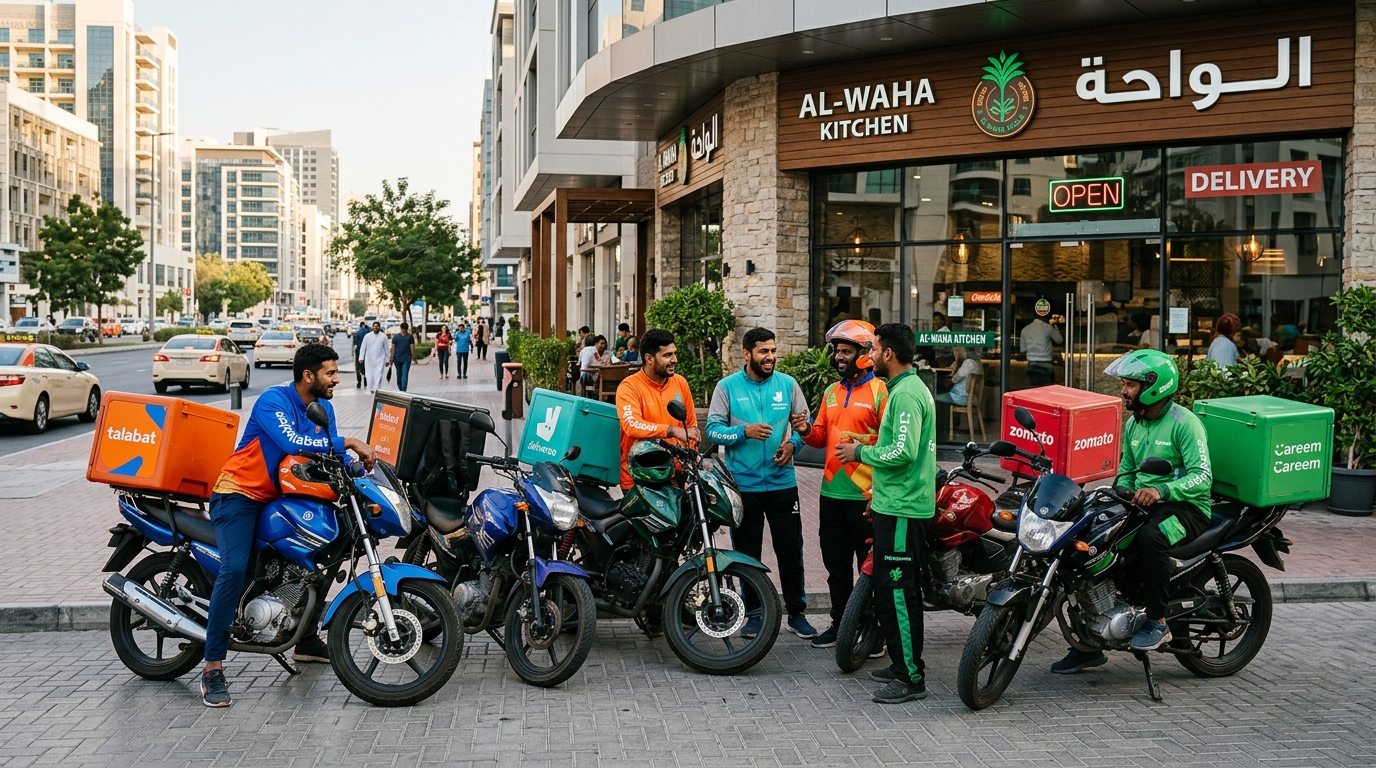
The Pros and Cons of Motorcycle Delivery
Pros: Efficiency and volume. A skilled motorcycle rider who knows the backstreets of Doha can complete nearly double the amount of orders a car driver can during rush hour. Operating costs are minimal, meaning more of your gross income stays in your pocket as net profit.
Cons: Safety is a massive concern. The accident rate for delivery riders is disproportionately high. The physical toll of riding 10 hours a day in extreme heat and humidity is severe. Because of these harsh conditions, motorcycle delivery is generally considered a short-term stepping stone rather than a long-term career for most expats.
Direct Hiring vs. Third-Party Fleet Logistics
It is crucial to set expectations regarding who you actually work for. The platforms themselves—Talabat, Keeta, Snoonu, and Deliveroo—maintain a very small in-house fleet, if any. The vast majority of riders and drivers are employed by 3PL companies. This means the app company provides the technology, the customer base, and the routing algorithm, but your direct HR issues, visa status, and actual paycheck are managed by the fleet operator.
If you want to move beyond fleet suppliers and target the corporate side of these delivery giants (such as operations management, account management, or dispatch coordination), you need a completely different strategy. Understanding how to land a job at Noon or Talabat requires looking past standard HR inboxes and leveraging platforms like basecareer.co to network with regional hiring managers.
When signing a contract with a 3PL, you must scrutinize the fine print. Ensure that the "per order" rate matches what was verbally promised. Check if there are penalty clauses for failing to meet minimum daily order targets, and clarify exactly who is responsible for vehicle insurance deductibles in the event of an accident. A reputable 3PL will have transparent policies; an exploitative one will bury hidden fees in the contract.
Red Flags to Avoid in the Qatar Delivery Market
The high demand for jobs among expats in Doha unfortunately attracts some bad actors. When pursuing a career as a driver, you must be vigilant and recognize the red flags of exploitative recruitment practices. The government of Qatar has strict labor laws designed to protect workers, but enforcement relies heavily on employees knowing their rights and reporting violations.
- Passport Retention: It is illegal for any employer in Qatar to hold your passport. If a fleet company demands your passport as "security" for the vehicle, walk away.
- Illegal Visa Deductions: Employers must pay for your residency permit, medical tests, and ID issuance. If a company tells you these costs will be deducted from your first three months of "per order" earnings, they are breaking the law.
- Unrealistic Promises: If an advertisement promises a guaranteed 6,000 QAR per month working standard 8-hour shifts without any vehicle expenses, it is almost certainly a scam.
- Forced Overtime: While gig work implies flexibility, some 3PLs force drivers to stay logged into the app for 12-14 hours under the threat of visa cancellation.
If you end up in a dispute with a fleet supplier over unpaid wages or illegal deductions, do not simply abandon your post. Similar to the severe absconding consequences for job abandonment in other GCC states, leaving without a formal resignation and Ministry approval in Qatar can result in an absconding case against you, leading to deportation and a permanent ban from re-entering the country. Always handle disputes through the official ADLSA channels.
Strategies to Maximize Your Earnings
If you have carefully considered the costs and legalities and have decided to proceed, there are specific strategies experienced drivers use to maximize their income in Doha. Driving aimlessly waiting for the app to ping is a recipe for low earnings. Success in the gig economy requires treating your daily driving like a highly optimized business.
1. Master the Zones: The delivery algorithms favor proximity. Positioning yourself near high-density restaurant hubs (like West Bay, Msheireb Downtown, or the commercial strips in Al Sadd) just before lunch and dinner rushes will significantly increase your order allocation. Learn which residential areas order the most food and plot the most efficient routes to get back to the commercial hubs.
2. Capitalize on Peak Hours and Weather Adjustments: Platforms like Keeta and Talabat often offer peak-hour multipliers (e.g., 1.5x the standard rate per order) during heavy rain or extreme summer heat. While conditions are tougher, working these specific windows is when the real money is made. Ensure your vehicle is properly maintained so you don't break down during a lucrative surge period.
3. Customer Service Matters: In some apps, your driver rating affects your dispatch priority. A polite demeanor, reading the delivery instructions carefully (e.g., "Please don't ring the doorbell, baby is sleeping"), and ensuring food arrives intact can lead to better app metrics and occasional cash tips, which are 100% yours to keep.
Frequently Asked Questions
How much do Talabat and Keeta drivers earn in Qatar?+
Can I transfer my current Qatar ID to a delivery company?+
Do I need a specific license to drive for food delivery apps in Doha?+
Does the delivery company provide the vehicle?+
Final Thoughts: A Stepping Stone, Not a Destination
Driving for Keeta, Talabat, or Snoonu in Qatar offers immediate entry into the workforce and the potential for decent earnings if you are willing to put in the grueling hours. However, the lack of long-term career progression, the physical toll of the work, and the vulnerability of being tied to a 3PL sponsor mean that it should ideally be viewed as a temporary stepping stone. It provides a way to survive and save money while actively searching for more stable, corporate, or skilled employment in the GCC.
If you are using gig work to bridge a financial gap while looking for your true career path, you don't have to navigate the GCC job market alone. At Base Career, we automate the grueling job search process, ensuring your resume gets in front of the right hiring managers across the Middle East. Ready to transition from the gig economy to a role that matches your actual professional background? Sign up for basecareer.co today and take control of your career trajectory.
Get hired faster in 25 days. Join Base Career Today.
Run a more organized search so you can reach better-fit roles with more leverage.
Start freeNo credit card required

James T.
Canada 🇨🇦 → Riyadh 🇸🇦
“50 applications, zero replies with my Canadian CV. Base Career got me 4 Riyadh interviews and a Series B offer.”
Written by Base Career Research Team
Produced by the Base Career Research Team with AI, using Base Career job-market data, and published automatically. How our articles are made
Related Posts

Moving from the UK to Dubai: Why a Job Offer is Non-Negotiable
Planning a move from the UK to Dubai? Discover why arriving without a job is a financial risk and how to secure a role from home to avoid the 'low-pay trap.'

Building 'Wasta' from Scratch: Networking Strategies for Dubai Expats
Frustrated by 1,000+ applicants on LinkedIn? Learn how to build 'Wasta'—your professional network—from zero to access the UAE's hidden job market.