How to Land Entry-Level Hospitality Jobs in the UAE & Qatar
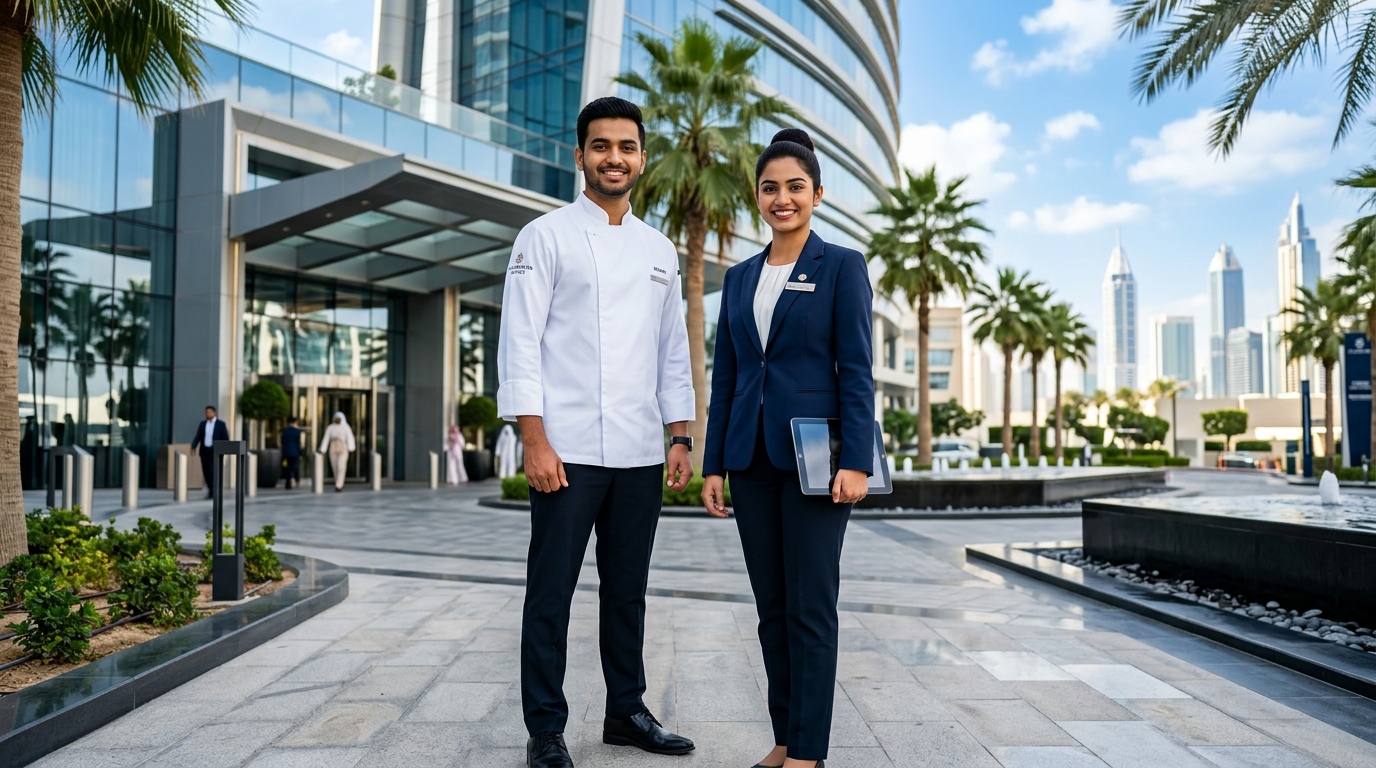
The Middle East is currently experiencing one of the most aggressive hospitality expansions in the world. From the sprawling luxury resorts of Abu Dhabi’s Saadiyat Island to the post-World Cup sustained tourism boom in Doha, Qatar, and the rapidly growing commercial food and beverage sector in Kuwait, the demand for trained hospitality professionals has never been higher. For South Asian students and freshers, this presents an unprecedented opportunity to launch a global career. Mega-employers and catering giants are actively seeking young, energetic talent to fill thousands of entry-level vacancies.
At basecareer.co, we constantly analyze hiring trends across the Gulf Cooperation Council (GCC). What stands out in 2026 is the massive recruitment pipeline being built by industry titans like ADNH Compass and Al-Shamiya. These organizations do not just run individual hotels; they manage entire ecosystems of industrial catering, high-end event management, luxury hotel staffing, and facility management. Because of the sheer volume of their operations, they are highly receptive to hiring freshers directly from skill-based training academies in India, Pakistan, Nepal, and Sri Lanka.
However, landing these entry-level hospitality jobs requires more than just a diploma. It requires an understanding of GCC grooming standards, the ability to pass rigorous trade tests, and a strategic approach to the recruitment process. In this comprehensive guide, we will outline exactly how freshers can transition from local vocational training to securing lucrative, expat-packaged roles in the UAE, Qatar, and Kuwait.
The Boom in Middle East Hospitality Hiring
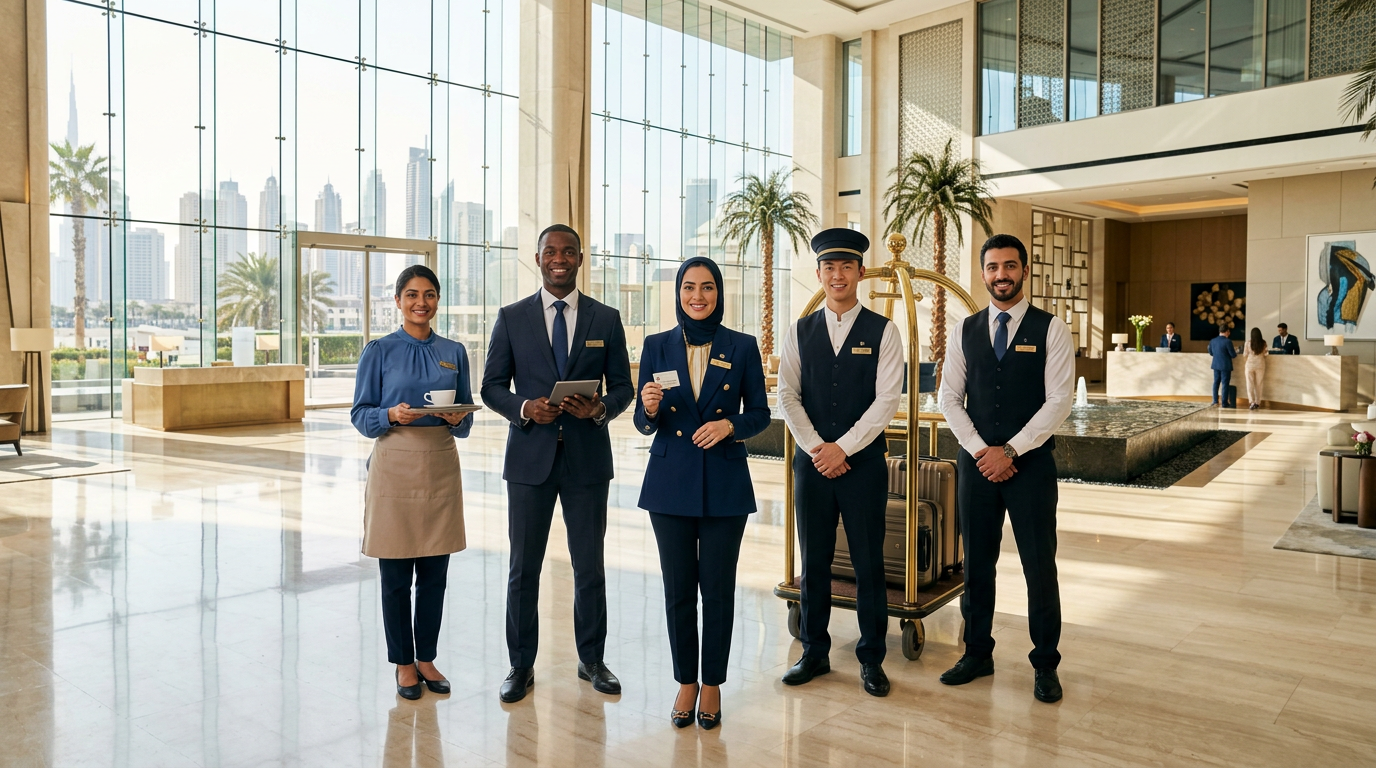
To understand how to get hired, you first need to understand who is hiring and why. The GCC hospitality market is unique because it is heavily reliant on expatriate labor at almost every level of the operational hierarchy. Countries like the UAE and Qatar have positioned themselves as global transit and tourism hubs. Abu Dhabi is aggressively expanding its cultural tourism, while Dubai continues to break its own hotel occupancy records year after year. Meanwhile, Kuwait is seeing a surge in high-end retail and dining concepts that require massive influxes of trained customer service staff.
Central to this boom are massive joint ventures and holding companies. ADNH Compass (a joint venture between Abu Dhabi National Hotels and Compass Group) is one of the largest catering and support services providers in the Middle East. They staff everything from luxury hotels and corporate headquarters to massive hospitals and remote oil and gas sites. Similarly, groups like Al-Shamiya handle vast portfolios of retail, F&B, and hospitality operations. When these companies win a new contract or open a new facility, they do not hire ten people—they hire hundreds. This scale of recruitment is why they heavily target freshers from South Asia who have recently completed skill-based hospitality training.
For South Asian freshers, this means the barrier to entry is entirely focused on foundational skills, attitude, and communication, rather than decades of experience. If you are a young professional figuring out how to apply for jobs in Dubai from India, targeting these massive intake drives is your highest-probability strategy for securing an employment visa.
Top Entry-Level Roles for Hospitality Freshers
When companies recruit directly from academies or via overseas employment promoters, they are typically looking to fill specific, high-turnover, foundational roles. Understanding what these roles entail will help you tailor your resume and interview answers.
- Food and Beverage (F&B) Service: Roles like Waiter/Waitress, Commis Waiter, and Barista are always in demand. These roles require excellent English communication, high energy, and the ability to work long hours on your feet. For companies like Al-Shamiya, F&B staff are the face of their brand.
- Culinary (Kitchen) Staff: If you have technical kitchen training, roles like Commis III or Kitchen Helper are the standard entry points. ADNH Compass hires thousands of Commis chefs to work in their massive catering kitchens, producing thousands of meals daily.
- Front Office and Guest Relations: Receptionists, Guest Service Agents, and Concierge staff require the highest level of grooming and communication skills. These roles often go to candidates who show exceptional confidence and problem-solving abilities during interviews.
- Housekeeping and Facility Management: Room Attendants and Public Area Attendants form the backbone of any hotel operation. While physically demanding, these roles offer a clear pathway to supervisory positions within a few years.
Transitioning from Skill-Based Training to the GCC
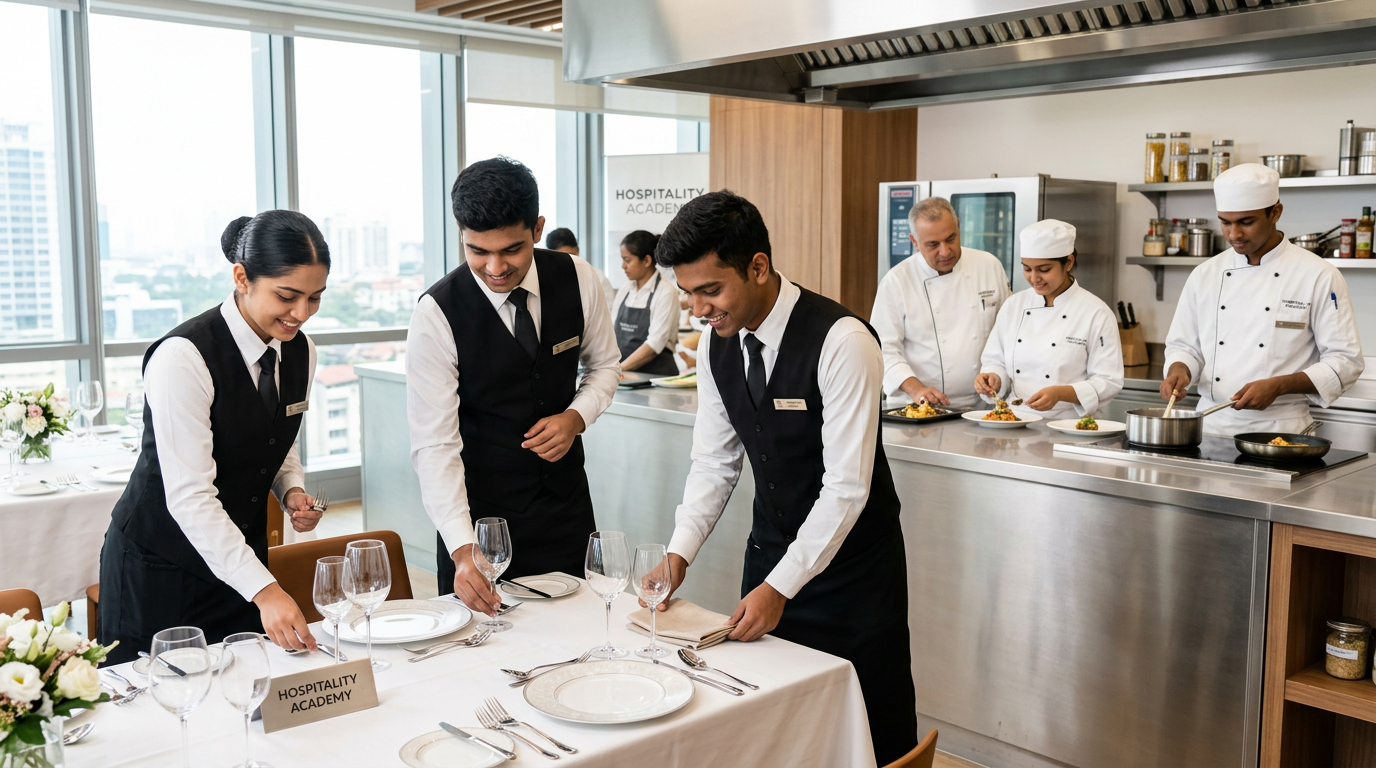
Having a diploma in hotel management is a great start, but it is rarely enough on its own. GCC recruiters look for candidates who can seamlessly transition into a fast-paced, multi-cultural work environment. Many students in South Asia undergo training at institutions like the Skill Hospitality Academy, which focuses heavily on practical, hands-on experience rather than just textbook theory. This practical focus is exactly what employers in Abu Dhabi and Doha are looking for.
To stand out to international recruiters, freshers must focus on three critical pillars: Communication, Grooming, and Cultural Adaptability. English is the absolute baseline language of the GCC hospitality sector. You will be serving guests from Europe, the Americas, Asia, and the Middle East. Furthermore, your grooming must be impeccable. In the hospitality industry, your appearance—how you style your hair, the neatness of your uniform, your posture—is evaluated before you even speak your first word in an interview.
For candidates navigating this transition, understanding the local market nuances is crucial. If you are learning how to apply for jobs in Dubai from Pakistan, for example, you must ensure your CV format highlights your practical academy training, any mock-service hours, and your specific technical competencies (like knowing how to use POS systems or specific culinary knife skills).

“I kept getting rejections from London. Base Career rewrote my CV for Dubai, and I landed Emirates in 3 weeks.”
Sarah M. · Marketing Manager · UK 🇬🇧 → Dubai 🇦🇪
No credit card required
Navigating the Recruitment Pipeline: How Mega-Groups Hire
Mega-groups like ADNH Compass and luxury hotel chains do not usually hire entry-level staff one by one through standard job boards. Instead, they rely on massive recruitment pipelines. Understanding how these pipelines work will save you months of frustration and protect you from potential recruitment scams.
Overseas Employment Promoters (OEP) and Agencies
The most common route for freshers in India, Pakistan, and Nepal is through government-approved overseas recruitment agencies. When a company in Qatar needs 200 Commis chefs, they send a delegation to South Asia. The local agency organizes a massive interview drive, often involving practical "trade tests." For example, if you are applying as a Commis III, you will literally be asked to chop vegetables or prepare a basic mother sauce in front of the hiring managers. To prepare for these drives, make sure you follow a comprehensive step-by-step guide to applying for jobs in Dubai and the wider GCC, ensuring all your documents and passports are ready before you even step into the interview room.
Direct Academy Tie-Ups
Increasingly, GCC employers are bypassing traditional agencies and forming direct partnerships with top-tier vocational institutes. If your hospitality academy has a dedicated placement cell, they are your best resource. Employers prefer this route because they can ensure the curriculum aligns with their standard operating procedures. Students from reputable skill academies often get pre-screened for interviews before graduation.
The Visit Visa Strategy
Some freshers choose to travel to the UAE or Qatar on a tourist visa to attend walk-in interviews. While this shows initiative and allows you to attend open days at major hotel chains, it is an expensive and high-risk strategy. Walk-in interviews in Dubai can attract hundreds of candidates for a single role. If you choose this route, you must understand the legalities and timelines involved. We highly recommend reading up on the visit visa strategy for Dubai jobs to ensure you do not overstay your welcome or fall victim to illegal recruitment fees.
In the hospitality industry, your attitude determines your altitude. GCC employers can teach you how to carry a tray or check in a guest, but they cannot teach you how to smile warmly at the end of a 10-hour shift. Bring the right attitude to the interview, and the technical skills will follow.
Salary Expectations and Expat Benefits
One of the biggest draws of moving to the GCC for entry-level hospitality work is the standard expatriate benefits package. Unlike many Western countries where you are paid an hourly wage and left to figure out your own living arrangements, companies in the UAE, Qatar, and Kuwait typically provide a comprehensive support system for their staff.
For a fresher starting as a Waiter, Room Attendant, or Commis III, the basic monthly salary usually ranges between AED 1,200 to AED 2,000 (or equivalent in QAR/KWD). While this base figure might seem modest to outsiders, it is crucial to understand that this is largely disposable income. Mega-employers like ADNH Compass provide shared, company-maintained accommodation, daily transportation to and from the worksite, and 1-3 duty meals per day. Additionally, the employer covers the cost of your work visa, basic medical insurance, and a return flight ticket to your home country every 1 to 2 years.
Furthermore, F&B and front-office roles often come with a share of the service charge (tips distributed among staff), which can significantly boost your monthly take-home pay, especially during the peak tourist season from October to April. By living frugally within the company-provided infrastructure, South Asian freshers are often able to send a substantial majority of their earnings back home.

Career Progression: From Fresher to Global Leader
The most beautiful aspect of the hospitality industry is its meritocracy. Almost every General Manager or Executive Chef working in Dubai or Doha today started their career carrying bags, chopping onions, or waiting tables. The GCC is a fast-paced market; if you prove your worth, you will be promoted much faster than in more stagnant, traditional markets.
A typical progression for a Commis III involves moving up to Commis I within two years, then stepping into a Demi Chef de Partie role. Similarly, an entry-level Front Desk Agent can become a Duty Manager within four to five years of dedicated service. Once you cross the threshold into supervisory and management roles, the compensation scales dramatically. In fact, seasoned hospitality professionals who master their craft can eventually pivot into the booming ultra-luxury private sector, learning how to land high-paying executive chef or butler roles in places like Riyadh, where salaries can reach up to $90,000 annually.
Your first job with Al-Shamiya or ADNH Compass is not the final destination—it is the launchpad. The training and discipline you acquire in these massive, standard-driven organizations will make your resume attractive to any luxury hotel brand in the world, from the Maldives to London.
Frequently Asked Questions
What is the starting salary for hospitality freshers in the UAE and Qatar?+
Do hotel companies in the Middle East provide accommodation?+
How can South Asian students apply for these entry-level jobs?+
Do I need to speak Arabic to get a hospitality job in the GCC?+
Conclusion: Your Global Career Starts Here
Landing an entry-level hospitality job in the UAE, Qatar, or Kuwait is a proven pathway to financial independence and a truly global career. Mega-employers like ADNH Compass and Al-Shamiya are constantly on the lookout for fresh, well-trained talent from South Asian academies. By focusing on your practical skills, perfecting your grooming, and understanding the recruitment pipelines, you can easily stand out in a crowded applicant pool.
The initial months will be physically demanding as you adjust to the rigorous standards of GCC hospitality, but the long-term rewards are undeniable. From your first role as a Commis or Front Desk Agent, the sky is the limit. Ready to take the first step towards your international career? Streamline your job search, build an ATS-friendly profile, and connect with top employers by signing up at basecareer.co today.
Land 4x more interviews in 27 days. Join Base Career Today.
Track applications, tailor resumes, and follow up faster in one UAE job search system.
Start freeNo credit card required

James T.
Canada 🇨🇦 → Riyadh 🇸🇦
“50 applications, zero replies with my Canadian CV. Base Career got me 4 Riyadh interviews and a Series B offer.”
Written by Base Career Research Team
Produced by the Base Career Research Team with AI, using Base Career job-market data, and published automatically. How our articles are made
Related Posts

Is it Easy to Get a Job in Dubai From Overseas? The Honest Truth
Dreaming of a tax-free salary in Dubai but living abroad? We analyze the challenges of international applications and share a strategic roadmap for success.

Building 'Wasta' from Scratch: Networking Strategies for Dubai Expats
Frustrated by 1,000+ applicants on LinkedIn? Learn how to build 'Wasta'—your professional network—from zero to access the UAE's hidden job market.